
Hemifacial spasm causes involuntary twitching on one side of the face. Our neurosurgical specialists offer treatments such as microvascular decompression surgery to relieve symptoms and address the underlying nerve compression.
What is Hemifacial Spasm
Hemifacial spasm causes muscles on one side of the face to move involuntarily. Most people first notice small twitches that come and go. At first, these movements may seem minor. Over time, they happen more often and become easier to see.
Spasms can cause the eyelid to close on its own. They can also pull at the cheek or corner of the mouth. These movements can feel uncomfortable or embarrassing, especially around other people.
In many cases, a small blood vessel presses on the facial nerve near the brainstem. This pressure sends mixed signals to the facial muscles. Because of this, muscles tighten even when you are not trying to move them.
Neurosurgeons can treat hemifacial spasm. Treatment works to reduce symptoms, improve daily comfort, and fix the root cause when possible. Most patients find meaningful relief with the right care.
What Are the Symptoms of Hemifacial Spasm?
Hemifacial Spasm Symptoms
Symptoms of hemifacial spasm often start around the eye. Many people notice quick blinking, fluttering, or twitching. These movements come and go. At first, they may only show up when you feel stressed or tired.
Over time, spasms can spread to the lower face. This may include the cheek, mouth, or jaw. Some people feel tightness or a pulling sensation. Others notice brief facial movements they cannot control.
Symptoms usually affect only one side of the face. They can range from mild twitching to longer muscle contractions. In more serious cases, spasms can make it harder to read, drive, or work.
During an exam, we look for warning signs. These include numbness, weakness, hearing changes, or new headaches. These symptoms are less common. But they may point to another condition that needs more testing.
What Causes Hemifacial Spasm?
Hemifacial Spasm Causes
Hemifacial spasm is most commonly caused by a nearby blood vessel pressing on the facial nerve. This pressure disrupts normal nerve signals and causes muscle spasms.
The facial nerve controls facial movement and expression. When it gets irritated, the nerve sends signals at the wrong time or at the wrong strength. This causes muscles to move on their own.
Less common causes include past facial nerve injury, swelling, or tumors. Blood vessel problems or changes after Bell’s palsy can also play a role. Each of these causes needs careful review. That review helps guide the right treatment plan.
We perform a neurologic exam during your visit. We may also order an MRI when needed. Knowing the cause helps us pick the best path forward for your care.
Hemifacial Spasm Diagnosis
How Is Hemifacial Spasm Diagnosed?
We start with a detailed exam. We ask when your symptoms started. We also ask how they have changed over time. We want to know what makes them better or worse.
We review your medical history and check your neurologic function. This gives us a full picture of what you are experiencing.
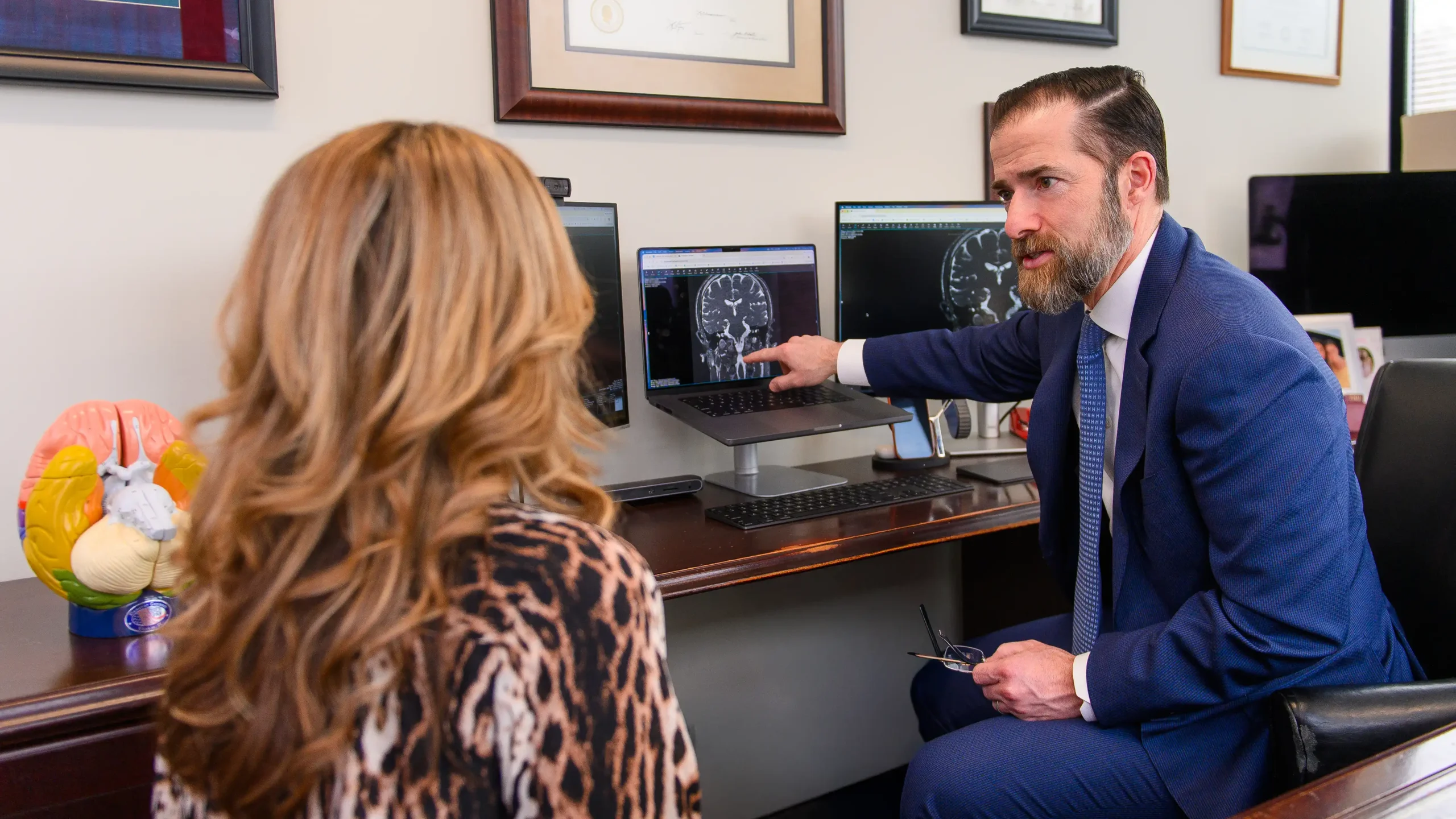
MRI imaging helps us study the facial nerve and nearby blood vessels. It shows us whether a blood vessel is pressing on the nerve. It also helps us rule out other causes, such as tumors.
We work carefully to tell hemifacial spasm apart from other facial movement conditions. Some conditions affect both sides of the face. Others involve different muscle patterns entirely. A clear diagnosis helps us guide treatment and get better results for you.
Hemifacial Spasm Treatment Options
Hemifacial Spasm Treatment
Treatment depends on a few key factors. We consider how bad your symptoms are. We also look at your overall health. We think about how much the condition affects your daily life.
Many patients start with botulinum toxin injections, often called Botox injections. These injections target specific facial muscles. They reduce spasms by briefly weakening muscle activity. Most patients feel relief for several months. Botox is a repeatable treatment, with potential side effects including temporary facial weakness, eyelid drooping, or dry eye. These effects usually go away over time.
If injections stop working, we look at other options. If side effects become too much to manage, surgery may become the right choice. Some patients simply prefer a longer-lasting solution.
Our goal is always to reduce spasms. We also work to protect your comfort, facial balance, and quality of life. We help each patient make treatment decisions based on their symptoms, lifestyle, and personal goals. No two treatment plans look exactly the same.
What Surgery Treats Hemifacial Spasm?
Hemifacial Spasm Surgery: Microvascular Decompression
When symptoms are persistent and nerve compression is confirmed, surgery can provide lasting relief. The standard procedure is microvascular decompression surgery, also called MVD.
During surgery, you will be under general anesthesia. The neurosurgeon then carefully exposes the facial nerve near the brainstem. The surgeon then gently moves the blood vessel away from the nerve. After that, the surgeon places a small soft pad between the nerve and vessel. This pad relieves the pressure that causes spasms.
This procedure treats the root cause of many hemifacial spasms. Many patients see major improvement after surgery. Some notice a difference shortly after the procedure.
Recovery time varies from person to person. Some patients return to normal activities within a few weeks. Others need more time to heal fully.
Experienced neurosurgeons perform this procedure with low risk. Possible complications include hearing changes and facial weakness. Spinal fluid leak, infection, or stroke are also possible but uncommon. Careful planning and surgical skill help lower these risks significantly.
We talk through expected results before surgery. We also cover recovery timelines and long-term goals. We want you to feel informed and confident before moving forward.
When Should you Contact A Neurosurgeon for Hemifacial Spasm?
When to See a Neurosurgeon for Facial Spasms
Getting checked early can make a big difference. Reaching out to a specialist is a simple first step. It is worth scheduling an evaluation if:
Facial spasms get worse or happen more often
Eyelid closure affects your vision or daily activities
Botulinum toxin injections no longer provide enough relief
New neurologic symptoms develop
The good news is that help is available. Seeing a specialist early gives you more options and a clearer path forward. You do not have to manage these symptoms on your own.
If facial spasms are affecting your daily life, our team is here for you. A consultation gives you the chance to ask questions, understand your diagnosis, and explore what treatment might look like. Our neurosurgical team provides expert, personal care for hemifacial spasm. Schedule a consultation today to start moving toward relief.
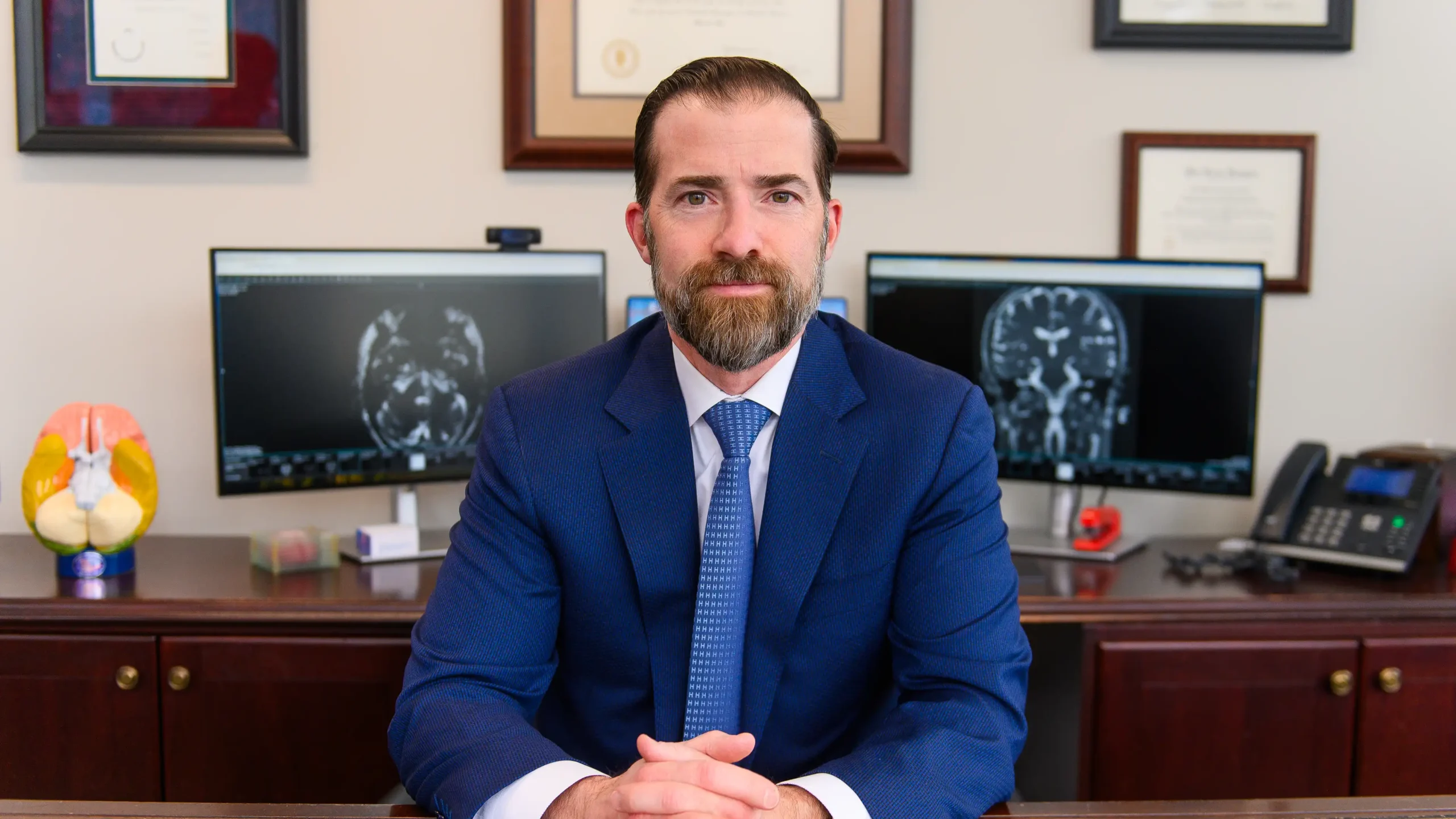
Meet Our Hemifacial Spasm Expert – Dr. Anthony D’Ambrosio
Dr. Anthony D’Ambrosio is a nationally recognized neurosurgeon with specialized skull base fellowship training, giving him deep familiarity with the delicate cranial anatomy surrounding the facial nerve.
Dr. D’Ambrosio is dedicated to delivering lasting relief for patients suffering from hemifacial spasm through Microvascular Decompression (MVD).
His expertise combines advanced training, refined surgical precision, and a focused commitment to achieving the best possible long-term outcomes.
Ready to talk about your treatment options? Call 201-574-1680 to schedule your visit with Dr. D’Ambrosio.

We Take Your Insurance
At Neurosurgeons of New Jersey, we’re one of the few neurosurgical practices in the state that accepts all major insurance plans. Partnered with a vast network of in-network insurance providers, we work with you to get the care you deserve, making high-quality lumbar spine care more accessible. Our insurance specialists can check your coverage and help navigate the approval process with you.





Can Hemifacial Spasm Go Away? Facts From a Neurosurgeon
The Pros and Cons of Hemifacial Spasm Surgery

What Are the Symptoms of Hemifacial Spasm?
Location

Need more info? Check out our most frequently asked questions.
Need more information? Contact us at 201-574-1680 to schedule a consultation with Dr. D’Ambrosio.
Is Hemifacial Spasm Dangerous?
Hemifacial spasm is usually not life-threatening. However, it can affect daily life and emotional well-being. It can also make simple tasks more difficult. The main concern is impact on quality of life and confirming there isn’t a secondary cause that needs treatment.
Can Hemifacial Spasm Go Away?
Symptoms may improve at times on their own. But they rarely go away completely without treatment. Long-term control often requires injections or surgery. Talking to a specialist is the best way to understand your options.
Can Stress Cause Hemifacial Spasm?
Stress does not usually cause hemifacial spasm. But it can make symptoms more noticeable. Managing sleep and stress levels may help reduce flare-ups. It will not cure the condition, but it can make day-to-day life easier.
Can Hemifacial Spasm Come and Go?
Yes. Symptoms often change over time. This is especially true early in the condition. Many cases become more frequent and severe if left untreated. Tracking your symptoms can help your doctor understand your pattern.
How Rare Is Hemifacial Spasm?
Hemifacial spasm is uncommon. It affects a small number of people. Doctors most often diagnose it in middle age. If you are experiencing facial spasms, it is worth getting evaluated even if the condition is rare.