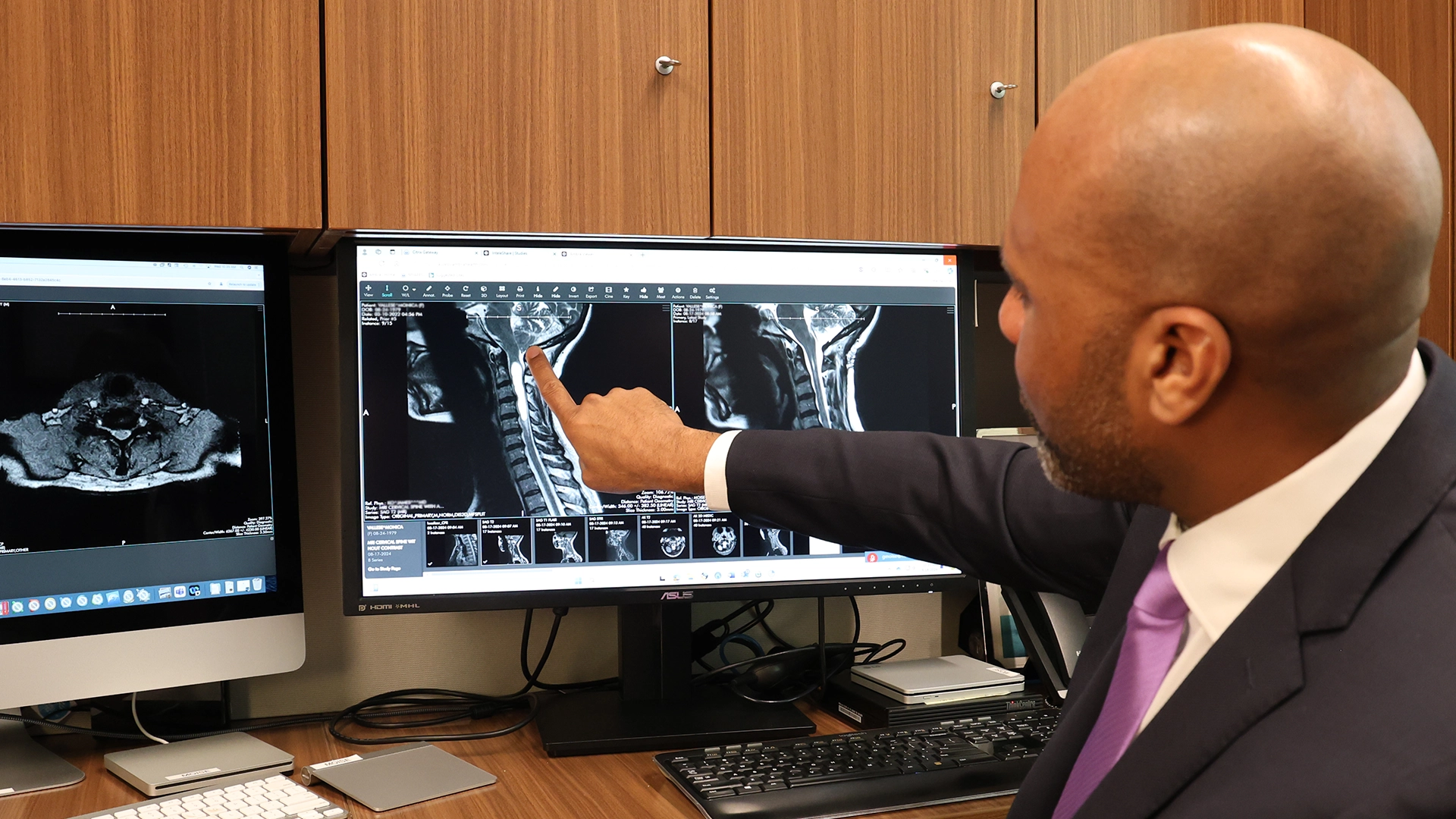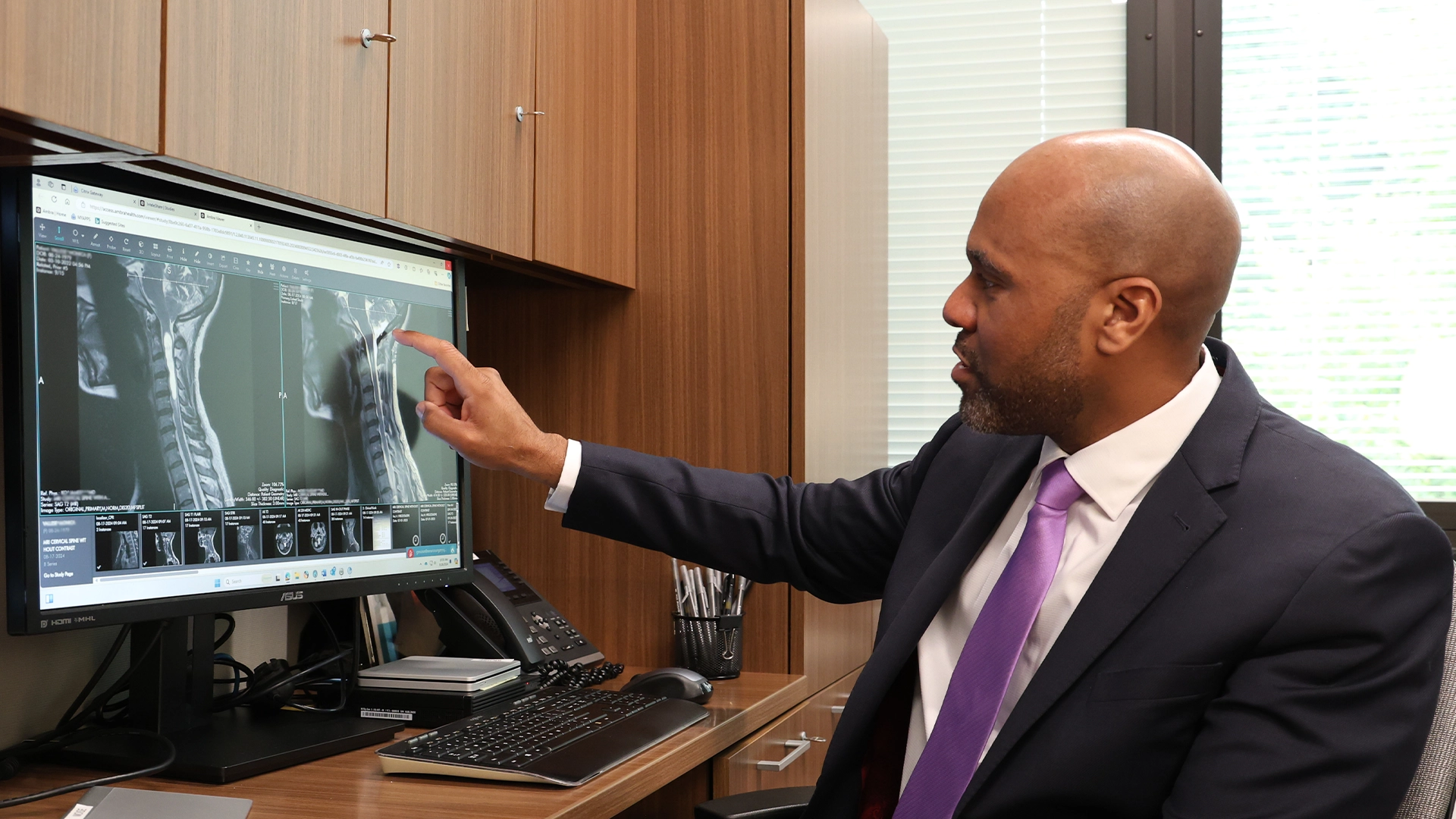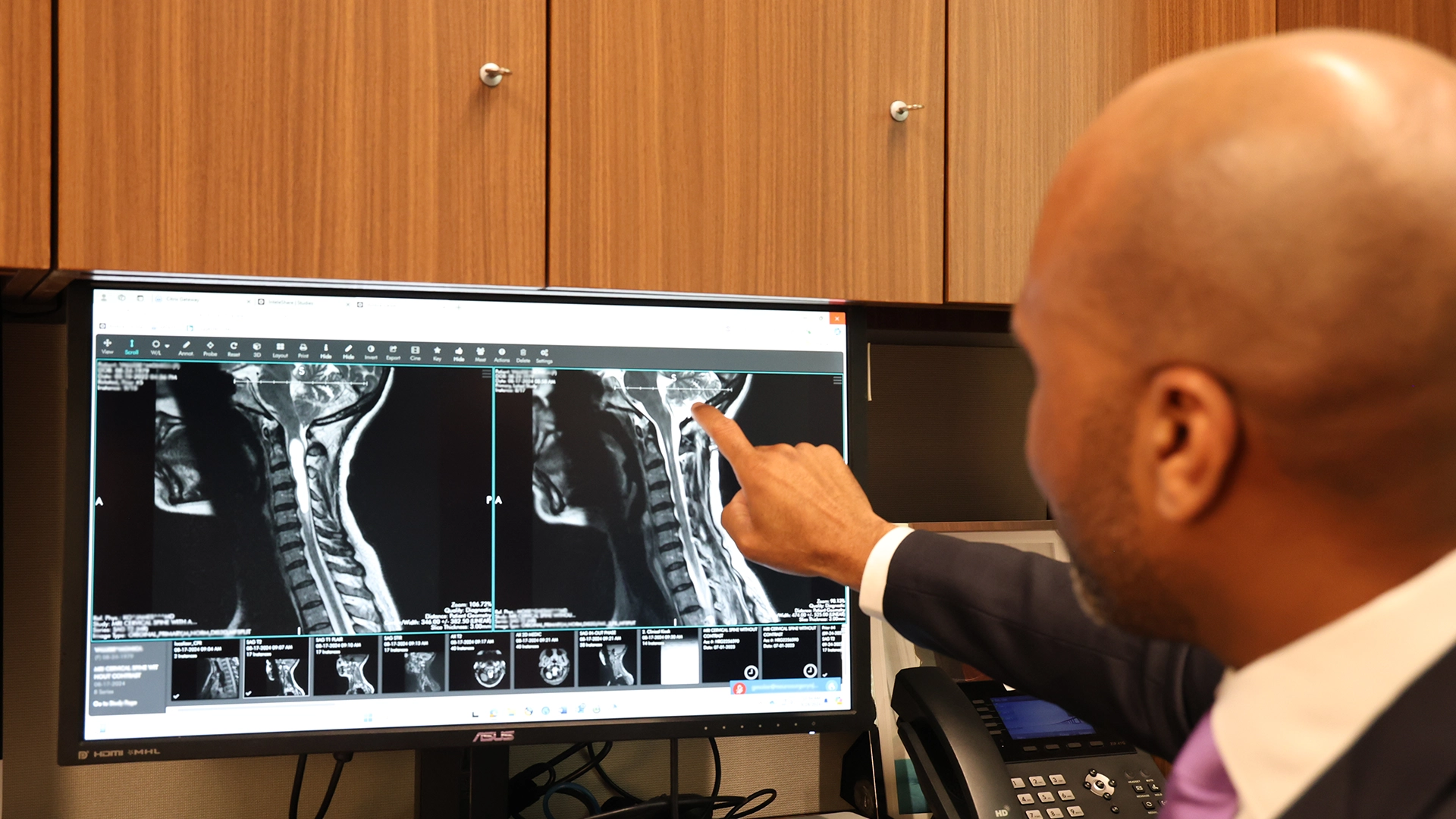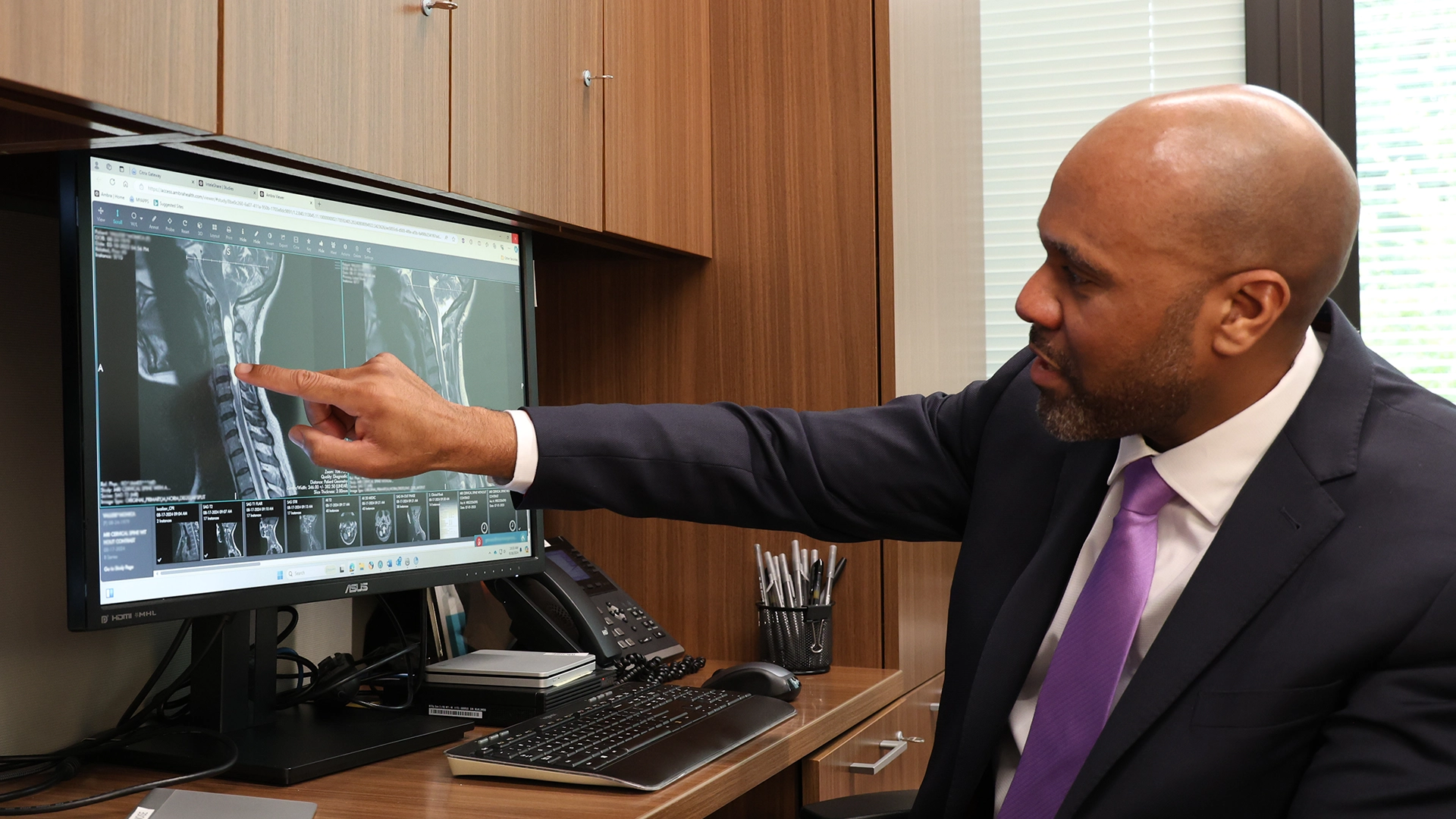

Chiari malformation type 1 affects people differently, and an MRI finding does not always mean someone needs surgery. Dr. Gaetan Moise addresses 10 common myths about symptoms, diagnosis and treatment, while one patient shares her path to care.
Chiari malformation type 1 affects people differently, and an MRI finding does not always mean someone needs surgery. Dr. Gaetan Moise addresses 10 common myths about symptoms, diagnosis and treatment, while one patient shares her path to care.
Explore the two most common types of Chiari malformation, typical symptoms, and how the conditions are diagnosed and treated.
Chiari malformation is a neurological condition that can cause a range of symptoms, from headaches to difficulty with coordination and balance. Understanding what this condition entails, its causes, symptoms, and how it’s diagnosed, can help patients better manage their health.
Chiari Malformation is a condition where part of the brain, specifically the cerebellum, extends into the spinal canal through an opening in the base of the skull, known as the foramen magnum.
Chiari Malformation is a complex neurological condition that involves the structural relationship between the skull, brain and spinal cord. It occurs when a part of the skull near the base is too small or misshapen, causing the lower part of the brain, called the cerebellar tonsils, to extend into the spinal canal.