
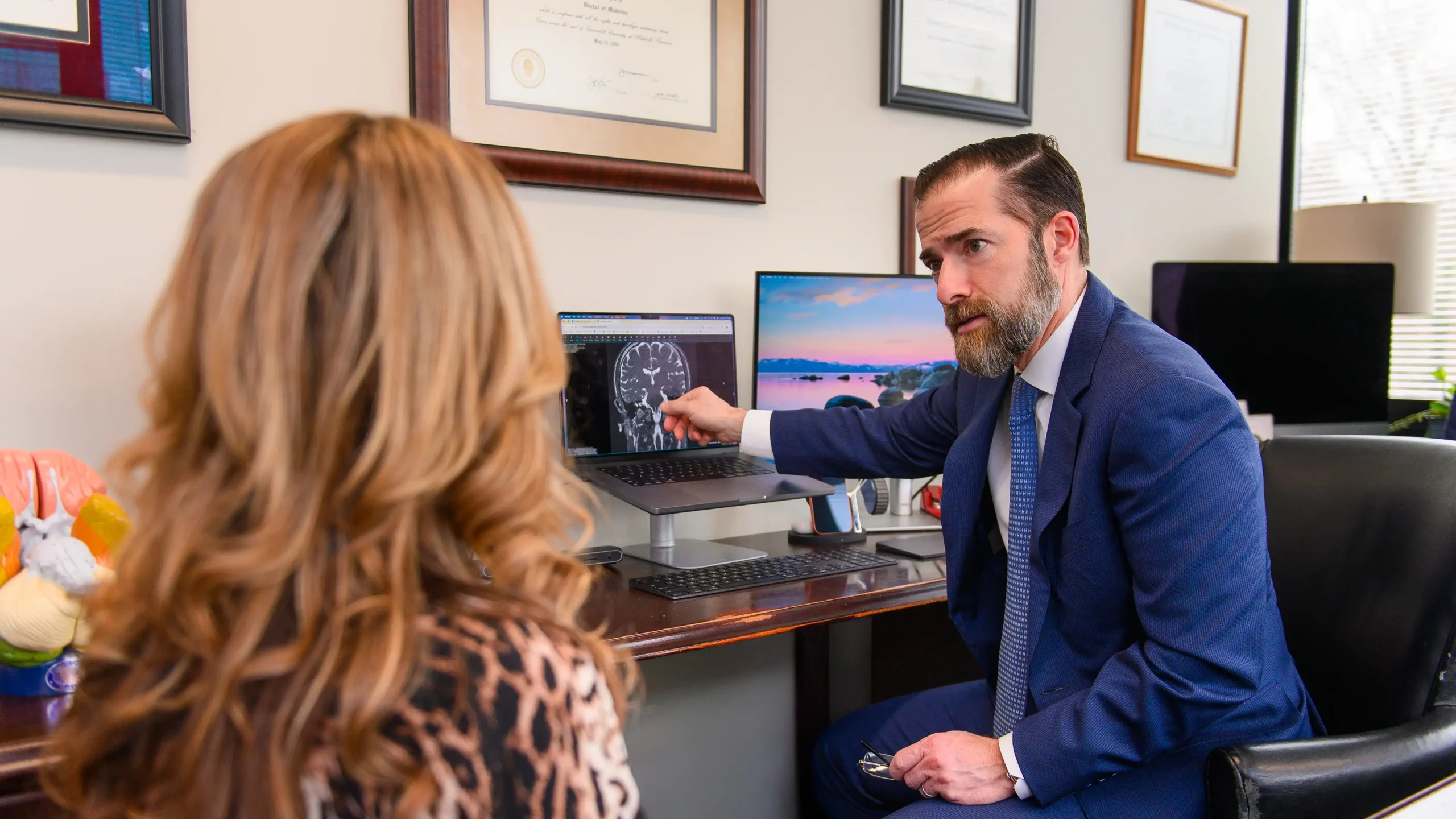

A hemifacial spasm causes muscles on one side of your face to twitch without control. It often starts near the eye and may spread to the cheek or mouth over time.
A hemifacial spasm happens when irritation affects the facial nerve, most often from a nearby blood vessel.
These movements can feel frustrating or distracting. While the condition is usually not dangerous, understanding the cause can help you feel more in control and know what to do next.
The Most Common Cause: Pressure on the Facial Nerve
A small blood vessel pressing on the facial nerve causes most hemifacial spasms.
The facial nerve controls how your face moves, including blinking, smiling, and making expressions. When a nearby blood vessel comes into contact with this nerve, it can place pressure on it over time.
This pressure can irritate the nerve and disrupt how it sends signals. As a result, the nerve may send signals at the wrong time, causing the twitching you see and feel.
This process usually develops slowly and is not something you caused or could have prevented.
Hemifacial spasm can affect both men and women, but it is more common in women. About three women develop the condition for every one man. The reason for this difference is not fully understood. It has also been observed more often in people of Asian descent.
Why This Causes Twitching
The facial nerve acts as a pathway that sends signals from your brain to control facial movement. When something presses on that wire:
- It can mix up the signal
- It can make the nerve fire at the wrong time
- It can cause muscles to move without you trying
This is why hemifacial spasms:
- Often start small, like eye twitching
- Come and go at first
- Become more frequent over time
For some people, the twitching stays mild. For others, it becomes more noticeable.
Other Possible Causes of Hemifacial Spasm
While nerve compression causes most cases, other, less common issues can lead to symptoms.
Previous Nerve Damage
A previous injury or condition can change how the facial nerve functions. When the nerve does not send signals correctly, it can lead to involuntary muscle movements.
Facial Nerve Conditions
Conditions like Bell’s palsy can affect how the nerve heals. In some cases, this can lead to ongoing twitching or tightness.
Growths Near the Nerve
In rare cases, a tumor or growth near the facial nerve can press on it. Your doctor may check for this during an evaluation.
Does Stress Cause Hemifacial Spasm?
Stress does not cause a hemifacial spasm.
However, it can make symptoms feel worse or happen more often. Many people notice more twitching when they are:
- Tired
- Stressed
- Drinking caffeine
Managing stress can help you feel better, but it does not treat the root cause.
Are you out of options
to eliminate your pain?
Who Is More Likely to Develop It?
Hemifacial spasm can affect anyone, but it shows up more often in certain groups.
Adults over age 40 develop it more often. Blood vessels and nerves change over time, which can increase the chance of pressure on the nerve.
Women experience hemifacial spasm more often than men, though it can happen to both.
People with high blood pressure may also have a higher risk. Changes in blood vessels can increase the chance of contact with the facial nerve.
In most cases, the condition affects only one side of the face. It is very rare for both sides to be involved.
Even if you fall into one of these groups, it does not mean you will develop a hemifacial spasm. It only shows who may have a higher chance.
When Should You See a Specialist?
You should consider getting checked if you notice:
- Ongoing twitching on one side of your face
- Symptoms that spread or get worse
- Movements that interfere with daily life
An evaluation does not mean you will need surgery. It helps you understand the cause and your options.
If you are experiencing ongoing facial twitching and want answers, a neurosurgical evaluation can help. Our team at Neurosurgeons of New Jersey provides specialized care for patients across New Jersey.
Getting Clarity on Your Symptoms
A small blood vessel pressing on a nerve causes most hemifacial spasms. While that may sound concerning, doctors understand this condition well and can treat it.
The most important step is getting a clear diagnosis. From there, your care team can guide you through options that fit your needs.
You do not have to manage it on your own.
FAQs
What is the main cause of a hemifacial spasm?
A small blood vessel pressing on the facial nerve causes most hemifacial spasms. This pressure irritates the nerve and makes it send signals at the wrong time, which leads to twitching.
Can a hemifacial spasm go away on its own?
Mild symptoms may come and go at first. However, hemifacial spasms often continue if you do not treat the cause. The nerve stays irritated, even when the twitching pauses.
You can think of it like a light switch that flickers when the wiring is loose. It may stop for a moment, but the problem is still there. A specialist can help you understand what to expect.
Can stress cause a hemifacial spasm?
Stress does not cause the condition, but it can make twitching happen more often or feel worse. Managing stress can help with symptoms, but it does not fix the cause.
What is the difference between eye twitching and hemifacial spasm?
Eye twitching is usually temporary and often linked to fatigue, caffeine, or stress. A hemifacial spasm involves repeated twitching on one side of the face and often spreads beyond the eye.
How is the cause of a hemifacial spasm diagnosed?
A specialist reviews your symptoms and may order imaging, such as an MRI. This helps them see the facial nerve and check for pressure from a blood vessel or another issue.
Does everyone with a hemifacial spasm need surgery?
No. Many people start with non-surgical options. Your doctor may discuss surgery if symptoms become severe or do not improve.
When should I see a doctor for facial twitching?
You should get checked if twitching:
- Happens often
- Does not go away
- Spreads across your face
- Affects your daily life
Early answers can help you feel more in control.
Where can I get treatment for hemifacial spasm in New Jersey?
If you are in New Jersey, a neurosurgeon can evaluate your symptoms and explain your options. Care usually starts with a diagnosis and a clear plan that fits your needs.
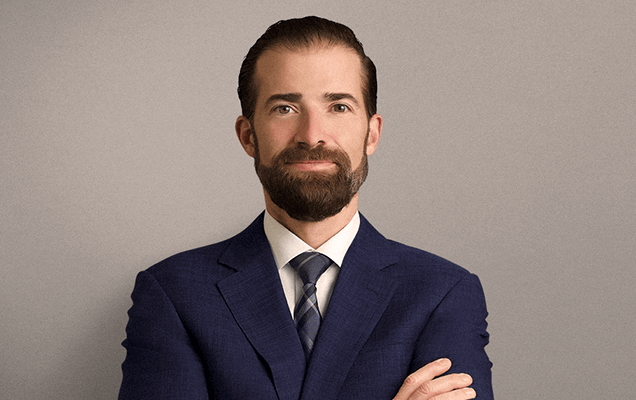
About Dr. Anthony D'Ambrosio
Dr. Anthony D'Ambrosio is an accomplished neurosurgeon in North Jersey and a proud member of Neurosurgeons of New Jersey practicing primarily out of their Ridgewood office conveniently located on East Ridgewood Avenue. Dr. D’Ambrosio focuses his clinical practice on brain tumors, nervous system disorders, and facial pain disorders. He has expertise in a variety of complex surgical and radiosurgical techniques as well as minimally invasive procedures intended to successfully treat complex diseases of the brain. These techniques include micro-neurosurgery, microvascular decompression surgery and Gamma Knife radiosurgery. He's authored over 25 peer-reviewed journals and is the recipient of many awards.



Please call today to schedule a consultation with me.
(551) 284-3265
Request a consultation with Dr. D'Ambrosio