
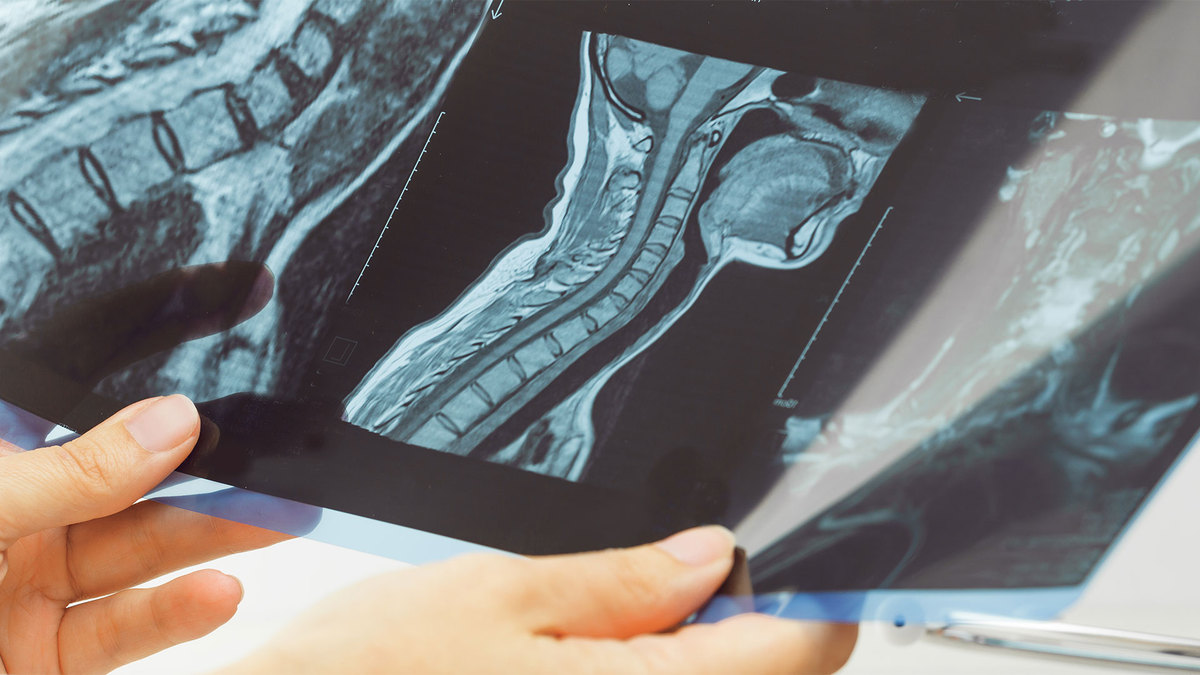

Dropping things more often, struggling with shirt buttons, or feeling a little unsteady on your feet can be easy to blame on getting older. Sometimes, though, these changes point to a problem in the neck called cervical myelopathy. It happens when the spinal cord is squeezed inside the spinal canal, and it often develops so slowly that people don’t notice it at first. Because the spinal cord carries signals for movement and feeling throughout your body, getting answers early matters.
Below, cervical spine expert, Dr. Michael Kaiser, explains what causes cervical myelopathy, which symptoms to watch for, how it’s diagnosed, and how doctors decide between careful monitoring and surgery.
Cervical Myelopathy Explained
What Is Cervical Myelopathy?
Cervical myelopathy is the clinical term used to describe symptoms related to problems of the spinal cord within the neck. “Cervical” refers to the neck, and “myelopathy” means the spinal cord isn’t working the way it should. The condition is not the same as a pinched nerve. A pinched nerve in the neck affects one part of one arm, while cervical myelopathy involves the spinal cord, which supplies your entire body, and can affect the way your arms, hands, legs, and bladder function.
The neck, or cervical spine, is made up of bones called vertebrae stacked on top of each other. The vertebrae are connected by ligaments and joints. An opening through the center of the vertebrae is known as the spinal canal. The spinal cord travels through the spinal canal. When that canal becomes too narrow, the space for the spinal cord is compromised and the cord can become compressed.
What Causes Cervical Myelopathy?
Degeneration of the spine is a natural process of aging. Like any other joint, the joints of the cervical spine can “wear out.” Spondylosis is the medical term used to describe these age-related changes. Over time, discs can bulge, bone spurs can form, and ligaments can thicken and stiffen. When these changes press on the spinal cord, they squeeze the spinal cord and reduce its blood supply which interferes with the signals it sends between your brain and body.
When aging changes are the cause, doctors call the condition degenerative cervical myelopathy, or DCM as well as cervical spondylotic myelopathy. DCM is the most common cause of spinal cord dysfunction in adults. Another cause is ossification of the posterior longitudinal ligament (OPLL), a condition in which a ligament in the spinal canal hardens into bone.
What Are the Symptoms of Cervical Myelopathy?
Cervical myelopathy symptoms often start small and build gradually over months or years. Because the changes are subtle, they’re easy to mistake for arthritis, carpal tunnel syndrome, or normal aging. Many people notice problems in their hands first, while others notice changes in how they walk. Common symptoms include:
- Numbness or tingling of the arms and legs
- Loss of hand coordination, such as trouble buttoning a shirt, writing, typing, or picking up small objects
- Dropping things more often or feeling that your hands are clumsy
- Balance problems or walking difficulty, including feeling unsteady or needing to hold a railing
- Weakness in the arms, hands, or legs
- A sense of urinary urgency and, in more advanced cases, changes in bladder or bowel control
- An electric, shock-like feeling down the spine or into the arms when you bend your neck
Patients are often surprised to learn that cervical spondylotic myelopathy does not have to be associated with neck pain. Some people have neck stiffness or arm pain, but many have no pain at all. That’s one reason the condition is sometimes found later than it should be.
It's time to get back
to doing what you love.
How Is Cervical Myelopathy Diagnosed?
Diagnosing cervical myelopathy requires a detailed neurological history and exam. It is essential that patients are evaluated by a doctor with experience in identifying and treating spinal cord conditions. During the exam, your doctor may check your strength, sensation, reflexes, hand function, and the way you walk. Brisk reflexes and certain reflex signs in the hands or feet can suggest that the spinal cord is under pressure.
The patient’s presentation needs to be correlated with findings on imaging of the cervical spine. Magnetic resonance imaging (MRI) is the most common imaging technique to identify pressure on the spinal cord. An MRI can also show whether the cord itself has changed, which may help your surgeon understand how long the pressure has been present. You may also receive a computed tomography (CT) scan to better define the bones of the cervical spine, as well as X-rays to define the curvature and mechanics of the cervical spine. Some patients also have nerve testing, such as an EMG, to rule out other conditions that cause similar symptoms.
How Doctors Measure Severity
Findings on the neurological exam and the time of symptom progression are key factors in determining the severity of cervical myelopathy. Many spine specialists also use a scoring tool called the modified Japanese Orthopaedic Association (mJOA) scale to rate how myelopathy affects your daily life. It looks at hand and arm function, walking, sensation, and bladder control. Scores help categorize myelopathy into mild, moderate, or severe categories, and they give your care team a baseline to track over time. These factors are important because treatment recommendations often depend on symptom severity and timing of progression. In addition, these tools are a key element to determine a patient’s response to treatment.
Cervical Myelopathy Treatment Options
Cervical myelopathy is usually a progressive condition, which means it tends to worsen over time. The timing of progression can be variable. Patients can remain stable for long stretches, decline slowly or in a step wise fashion, or rapidly decline. Because surgery does not repair a damaged spinal cord, only prevent further damage, the goal of treatment is to protect the function you have and, when possible, provide the possibility to regain some of what was lost. The urgency of treatment depends on:
- How quickly symptoms have developed
- The severity of the symptoms
- How long the symptoms have existed
- Whether symptoms are getting worse
Nonsurgical Treatment and Monitoring
For neck pain, your doctor may recommend nonsurgical treatments, such as physical therapy, pain medicine, and injections. Unfortunately, once symptoms develop from pressure on the spinal cord, these nonsurgical treatments provide less benefit. These treatments are intended to ease pain, but cannot relieve pressure on the cord. The American Academy of Orthopaedic Surgeons also advises that chiropractic manipulation should not be used for spinal cord compression. For some people with mild myelopathy, a structured, supervised program of physical therapy and regular follow-up exams may be a reasonable starting point. If symptoms get worse or don’t improve, surgery is typically recommended. People whose imaging shows cord compression but who have no myelopathy symptoms usually don’t need preventive surgery. Instead, they’re monitored and taught which warning signs to report.
When Is Surgery Recommended?
For symptoms related to spinal cord compression, spine surgery is often required. Cervical myelopathy surgery relieves pressure on the spinal cord. For moderate or severe myelopathy, surgery is generally recommended because it offers the best chance of stopping further decline. For mild myelopathy, recent expert reviews have found surgery to be an effective option, so the choice between surgery and monitoring is made together with your surgeon. That conversation should weigh your symptoms, the progression over time, overall health, MRI findings, and how the condition affects your quality of life.
Types of Cervical Myelopathy Surgery
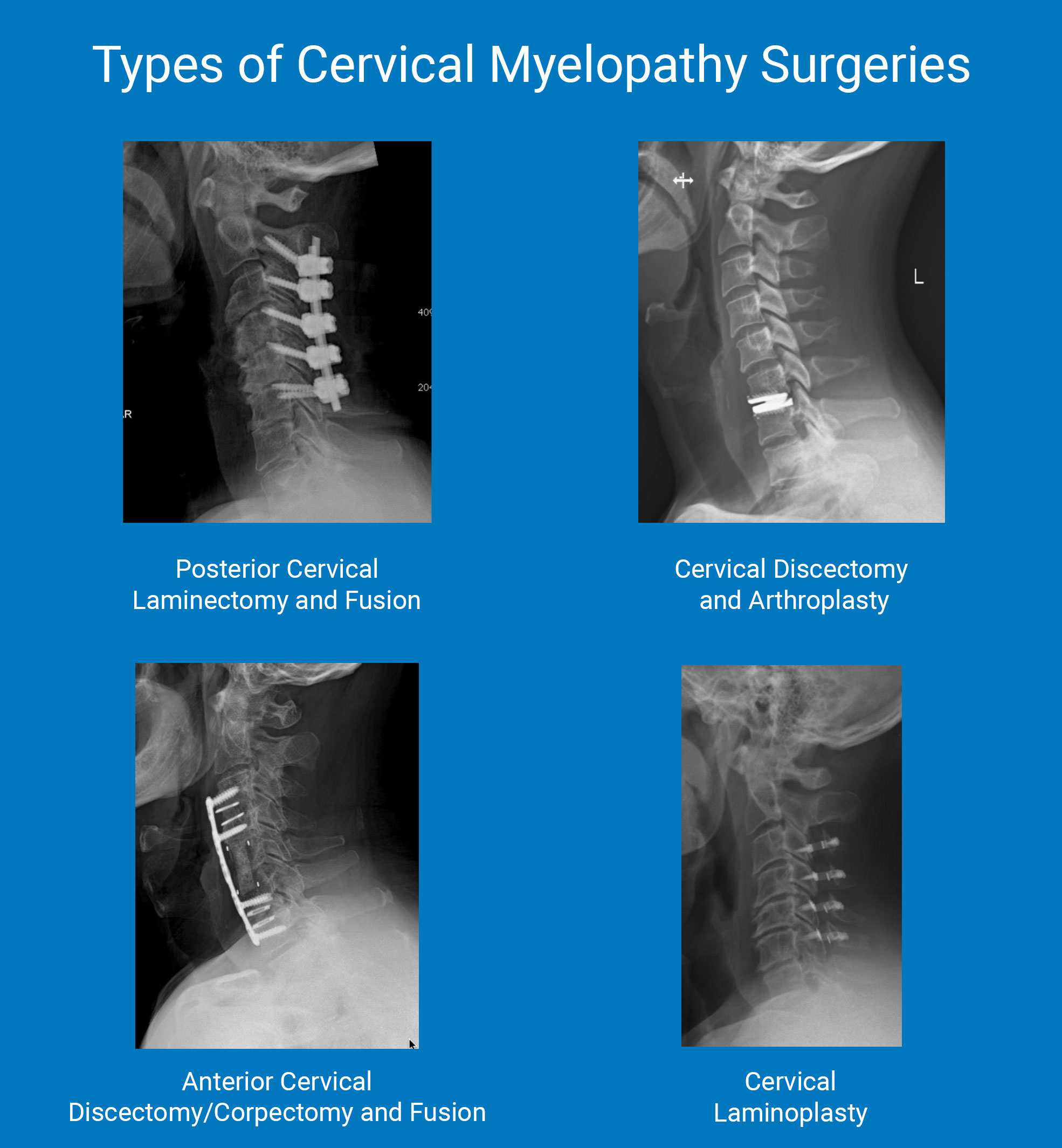
There are a variety of surgical procedures to treat cervical myelopathy from degenerative changes of the cervical spine. It is important to remember that there is no standard surgical procedure to address pressure on the spinal cord. Every approach shares the same goal, which is to give the spinal cord more room. Some of the more common surgical treatments to relieve pressure on the spinal cord include:
- Anterior cervical discectomy and fusion (ACDF)
- Anterior cervical discectomy and arthroplasty (cervical disc replacement)
- Cervical laminoplasty
- Cervical laminectomy and fusion
Surgery From the Front of the Neck
Anterior cervical procedures are performed from the front of the neck. The disc and portions of the vertebrae are removed to relieve pressure on the spinal cord. The cervical spine is then rebuilt to maintain support and avoid neck pain. A fusion connects two cervical vertebrae, while an arthroplasty uses a mechanical device that imitates normal cervical spine movement. Front-of-the-neck surgery often works well when the pressure comes from discs or bone spurs at one to three levels.
Surgery From the Back of the Neck
Cervical laminoplasty and laminectomy with fusion are performed from the back of the cervical spine. The lamina, or bony roof of the spinal canal, is either removed (cervical laminectomy) or repositioned (laminoplasty). As with the anterior cervical procedures, a fusion will connect spinal bones, while movement is maintained with a laminoplasty. Back-of-the-neck surgery is often used when compression spans multiple levels of the spine or if fusion is to be avoided.
Choosing the Right Approach
There are pros and cons with each of these surgical procedures. Your doctor may recommend one spine surgery versus another based on a careful clinical assessment and evaluation of your imaging. Factors include how many levels are affected, where the pressure is coming from, the natural curve of your neck, bone quality, and your overall health. In a randomized clinical trial published in JAMA in 2021, researchers at 15 North American hospitals compared front and back surgery in 163 patients whose myelopathy affected several levels of the neck. Physical function reported by patients one year later was similar with both approaches, so the best option is the one that fits your specific situation.
Life After Cervical Myelopathy Surgery
All of these surgical procedures are generally well tolerated and effective at relieving pressure on the spinal cord. Even so, every surgery carries risks. Depending on the approach, these may include temporary trouble swallowing or a hoarse voice after front-of-the-neck surgery, neck pain or stiffness, infection, weakness in the shoulder muscles, or the need for another procedure in the future.
For a period after surgery, patients may require pain medicine. After a month or two, physical therapy may be useful to address any neck stiffness or discomfort. Physical therapy is also useful to address any loss of neurological function from weakness or walking problems. Improvement of function will vary depending on how severe symptoms are prior to surgery, but many patients notice some form of improvement during the early post-operative course. This may include improved hand function, less numbness or tingling, and/or improved walking and balance.
Unfortunately, some symptoms may remain after surgery since the spinal cord has a limited capacity to heal. That’s why it’s important to understand that the main goal of surgery is to stop the condition from getting worse, with any improvement seen as an added benefit. Most patients will be able to return to their normal activities several months after spine surgery. Your recovery will depend on the procedure, the severity of your symptoms before surgery, and your overall health.
When to See a Neurosurgeon
If you or your doctor think you suffer from cervical myelopathy, it is very important to see an experienced spine surgeon with expertise in treating spinal cord compression. You should also consider an evaluation if an MRI has shown pressure on your spinal cord, even if your symptoms seem mild. A specialist can tell you whether your symptoms come from the spinal cord, a pinched nerve, or something else, and whether treatment or monitoring makes more sense. If you’ve already been told you need surgery, requesting a second opinion can help you feel confident in your plan.
Some symptoms need prompt attention. Call your doctor right away if hand clumsiness, weakness, or walking problems are getting worse over days or weeks. Go to the emergency room if you suddenly lose control of your bladder or bowels, develop sudden weakness in your arms or legs, or have new symptoms after a fall or neck injury. People with known spinal cord compression can be more vulnerable to injury from falls, so treat any new neurological changes seriously.
Protecting Your Spinal Cord Starts With the Right Evaluation
Cervical myelopathy can be hard to spot because its early signs look like everyday clumsiness or slowing down. The most important thing to know is that changes in hand function, balance, or walking deserve a closer look, especially if they’re getting worse. Not everyone with spinal cord compression needs surgery right away. What everyone needs is an accurate diagnosis and a clear plan, whether that means careful monitoring, therapy, or an operation to give the spinal cord room.
Schedule a Consultation
Dr. Michael Kaiser specializes in complex spine surgery and in helping patients understand when surgery is the right choice and when it isn’t. If you’ve noticed changes in your hands, balance, or walking, or an MRI has shown pressure on your spinal cord, schedule a consultation with Dr. Kaiser to talk through your diagnosis and your options.
Please call today to schedule a consultation with me. (551) 284-3265
Frequently Asked Questions About Cervical Myelopathy
Can cervical myelopathy get better without surgery?
Physical therapy, medication, and other nonsurgical treatments can ease pain, but they can’t remove the pressure on the spinal cord. Some people with mild myelopathy can remain stable for a long time and monitoring and therapy is appropriate. Others get worse, which is why regular follow-up exams are important. If your symptoms progress, your surgeon will likely recommend surgery to protect your spinal cord function.
Is cervical myelopathy the same as a pinched nerve?
No. A pinched nerve, called cervical radiculopathy, affects a single nerve root as it leaves the spine and usually causes pain, numbness, or weakness in a single area of one arm. Cervical myelopathy affects the spinal cord itself which receives and delivers signals to your entire body. It can cause symptoms in both hands, both legs, urination, and your balance. Some people have both conditions at the same time, so a careful neurological exam is important.
How fast does cervical myelopathy progress?
It varies from person to person. According to a review in American Family Physician, most people with DCM slowly get worse over time, but the pace is hard to predict. Many decline gradually over months or years, sometimes with long periods where nothing seems to change. Others have a sharper drop in function, sometimes after a minor fall or neck injury. That’s why specialists track symptoms and exam findings over time to decide when treatment is needed.
Will my symptoms go away after cervical myelopathy surgery?
Surgery is designed to stop further damage to the spinal cord. Many patients see some improvement in walking, balance, or hand function, but results vary. Symptoms that have been present for a long time or are severe before surgery may not fully resolve. Your treating surgeon should provide a comprehensive explanation of your condition and provide realistic treatment expectations.
Can cervical myelopathy cause problems in my legs?
Yes. Even though the pressure is in your neck, the spinal cord within your neck carries signals to your legs as well as your arms. This is why cervical myelopathy can cause leg stiffness, weakness, an unsteady walk, or frequent tripping. Many patients are surprised to learn that their balance problems began in the neck.

About Dr. Michael G. Kaiser
Dr. Michael G. Kaiser is a nationally recognized neurosurgeon in North Jersey and is a proud member of Neurosurgeons of New Jersey, practicing out of their Ridgewood office conveniently located on East Ridgewood Avenue. Dr. Kaiser specializes in complex and minimally invasive spine surgeries.
Recent Posts: