
Living With Essential Tremor From an Early Age
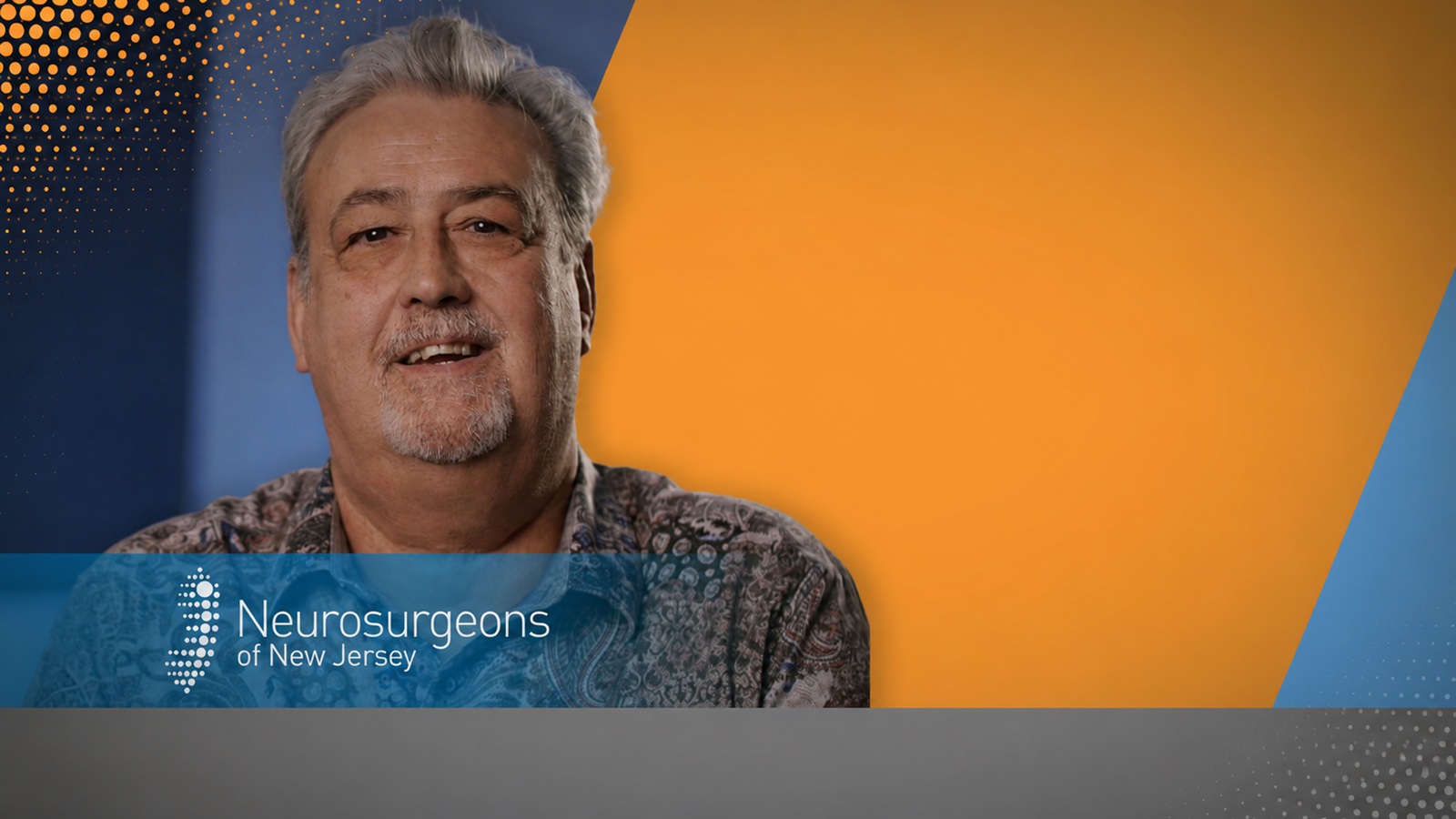
Juan doesn’t remember a time before the shaking began.
When he was just 12 years old, he started bussing tables at a local restaurant. Every shift involved carrying bowls of soup, pouring water into glasses, and weaving between crowded tables. It was during those early days that he first noticed his hands wouldn’t stay still.
“I started bussing tables when I was maybe 12 or 13 years old,” Juan recalls. “Whenever I served soup or poured water into a glass, my hands would shake.”
Because both his mother and grandfather had tremors, Juan assumed it was simply something that ran in the family. He learned to work around it and rarely talked about it. At first, the shaking felt like an inconvenience rather than a medical condition.
As the years passed, however, the tremors became harder to ignore. His coworkers even gave him a nickname.
“They used to call me ‘Shaky Mo.'”
Juan laughed along with everyone else, but behind the jokes he couldn’t ignore a growing question. Would it always get worse?
When Essential Tremor Made Everyday Tasks Difficult
Over time, the tremors spread beyond Juan’s hands. His head began shaking, followed by his legs, making it increasingly difficult to keep his balance. Tasks most people perform without thinking suddenly required careful planning and complete concentration.
Simple things like signing his name, carrying an empty glass across the room, or eating in a restaurant became sources of frustration.
“I could carry a heavy tray better than an empty glass,” Juan says. “If the tray had weight on it, it didn’t shake as much.”
Living with tremors affected far more than Juan’s physical abilities. Every new limitation chipped away at his confidence and independence. He began wondering how much worse the condition would become and whether he would eventually lose the ability to care for himself.
“I was afraid I’d end up in a wheelchair,” he says. “I was afraid of dying young because of the disease.”
Essential Tremor vs. Parkinson’s Disease: Understanding the Difference
Many people assume every tremor is caused by Parkinson’s disease, but several neurological conditions can produce similar symptoms. One of the most common is essential tremor, a movement disorder that frequently runs in families and typically causes shaking during activities like writing, eating, drinking, or holding objects.
Parkinson’s disease can also cause tremors, but they often occur while the body is at rest and are accompanied by other symptoms such as stiffness, slowed movement, and balance problems.
Regardless of the underlying diagnosis, tremors can become progressively more disruptive over time. When medications no longer provide enough relief, specialists may recommend advanced treatments such as deep brain stimulation (DBS).
It's time to get back
to doing what you love.
When Medication Stopped Working
Like many patients with movement disorders, Juan spent years trying medications before considering surgery. Initially, they helped reduce his symptoms and allowed him to continue working and living independently.
Over time, however, their effectiveness faded.
Instead of improving his quality of life, the medications began creating new problems.
“They turned me into a zombie,” he says.
As his tremors continued worsening, Juan felt like his world was becoming smaller. Activities he once enjoyed disappeared one by one, replaced by workarounds and quiet frustration. By the time he met with a neurosurgeon, he wasn’t simply looking for another prescription.
He was looking for hope.
“I was up for anything,” he says. “I was going nowhere.”
Finding a Deep Brain Stimulation Surgeon He Trusted
Everything changed when Juan met Dr. Gigante.
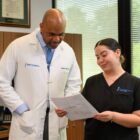
After years of appointments centered around medications and symptom management, Juan finally met a physician who took the time to explain every step of the process. Rather than feeling rushed through another consultation, he found himself having an honest conversation about what surgery could realistically accomplish and what life might look like afterward.
More importantly, he felt comfortable.
“He made me feel like I was sitting in my living room talking to a friend,” Juan says.
That trust changed everything.
Brain surgery is an overwhelming idea for most people, but Juan says this was the one operation he never felt nervous about. Knowing he understood the plan and trusted the surgeon made one of the biggest decisions of his life feel surprisingly straightforward.
“That’s how comfortable he made me feel.”
How Deep Brain Stimulation Helps Treat Essential Tremors
One of Juan’s biggest questions before surgery was simple.
How could brain surgery possibly stop his hands from shaking?
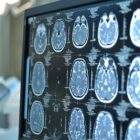
Deep brain stimulation, commonly called DBS, is an advanced surgical treatment used for conditions such as essential tremor and Parkinson’s disease. During the procedure, a neurosurgeon places thin electrodes into carefully targeted areas of the brain that help control movement. Those electrodes connect to a small battery-powered device, called a neurostimulator, that is implanted beneath the skin in the chest.
The neurostimulator sends carefully programmed electrical signals that help regulate the abnormal brain activity responsible for tremors. Although DBS doesn’t cure the underlying neurological condition, it can significantly reduce symptoms and improve quality of life for patients whose medications are no longer providing enough relief.
The Moment DBS Stopped Juan’s Tremor
During the first stage of surgery, Juan briefly woke up while the surgical team tested the placement of the electrodes. Although the experience initially felt intimidating, the team calmly guided him through several familiar tasks.
First, they asked him to write his name. Then they handed him a glass of water.
Juan looked down at his hand. It wasn’t shaking.
“I was like, ‘Wait a second…I’m not shaking.'”
For someone who had spent decades adapting every movement around tremors, the moment felt almost impossible to believe. While Juan was still in the operating room, Dr. Gigante shared the news with his wife that the procedure had gone exactly as planned.
Programming Deep Brain Stimulation for Better Tremor Control
Several weeks later, Juan returned for the second stage of treatment, when the neurostimulator was connected beneath the skin in his chest. After allowing his body to heal, he returned again for device programming, an important step that allows specialists to personalize the stimulation based on each patient’s symptoms.
During the appointment, the team adjusted the settings while asking Juan to repeat many of the same activities that had been difficult before surgery. As the programming became more precise, his tremors continued improving.
“I was in tears,” he says.
Unlike many treatments, DBS isn’t static. Physicians can continue adjusting the device over time as symptoms change, helping many patients achieve long-term symptom control without relying entirely on medication.
Life After DBS: Juan’s First Bowl of Soup in Nearly Ten Years
Some victories seem small until they’re taken away.
For nearly ten years, Juan stopped ordering soup whenever he went to a restaurant. He knew what would happen if he tried to lift a spoon. His hands would shake, the soup would spill, and he would feel embarrassed all over again.
It became easier to simply avoid it.
After his DBS programming appointment, Juan and his wife decided to stop for lunch at a friend’s restaurant.
For the first time in nearly a decade, Juan ordered soup.
He picked up the spoon. His hands stayed steady.
He even lifted a glass of wine with one hand, something he hadn’t been able to do in years.
To someone else, it might have looked like an ordinary lunch.
To Juan, it felt like getting his life back.
How Deep Brain Stimulation Changed Juan’s Life
Today, Juan occasionally demonstrates what happens when he temporarily turns off his neurostimulator. Within moments, the tremors begin returning. When he turns the device back on, the shaking improves again, providing a powerful reminder of just how dramatically his life has changed.
More importantly, he no longer measures his days by what his tremors prevent him from doing. He enjoys meals with family, spends time with his grandchildren, and tackles everyday tasks without constantly worrying about spilling a drink or struggling to write his name.
Looking back, Juan says deep brain stimulation gave him much more than steadier hands. It restored his confidence, his independence, and the freedom to enjoy life’s ordinary moments again.
“He did something for me that there’s no money in the world I could repay him for,” Juan says.
“They saved my life.”
Could Deep Brain Stimulation Help You Regain Control?
Living with tremors doesn’t mean you have to accept a shrinking world. If shaking is making it difficult to eat, write, work, or enjoy everyday activities, it may be time to speak with a movement disorder specialist.
At Neurosurgeons of New Jersey, our team provides comprehensive evaluations for patients with essential tremor, Parkinson’s disease, and other movement disorders. We begin with conservative treatment whenever appropriate and recommend deep brain stimulation only when it offers the best opportunity to improve long-term quality of life.
If medications are no longer providing enough relief, schedule a consultation with Dr. Gigante to learn whether deep brain stimulation may be the right treatment for you.
Frequently Asked Questions
What is deep brain stimulation (DBS)?
Deep brain stimulation is a surgical treatment that uses implanted electrodes and a small neurostimulator to regulate abnormal brain signals responsible for movement disorders such as essential tremor and Parkinson’s disease.
Who is a candidate for DBS?
DBS is often recommended for patients whose tremors or movement symptoms are no longer adequately controlled with medication or whose medications cause significant side effects.
Does deep brain stimulation cure essential tremor or Parkinson’s disease?
No. DBS does not cure the underlying condition, but it can significantly reduce tremors and improve quality of life for many patients.
How long does it take to recover from DBS surgery?
Recovery varies from person to person, but many patients return to normal activities within a few weeks. Device programming continues after surgery to optimize symptom control.
Can DBS settings be adjusted after surgery?
Yes. One of the biggest advantages of deep brain stimulation is that the neurostimulator can be programmed and adjusted over time as a patient’s symptoms change.
Will I still need medication after DBS?
Some patients continue taking medication after DBS, although many are able to reduce their dosage. Your treatment plan will depend on your diagnosis and how you respond to therapy.
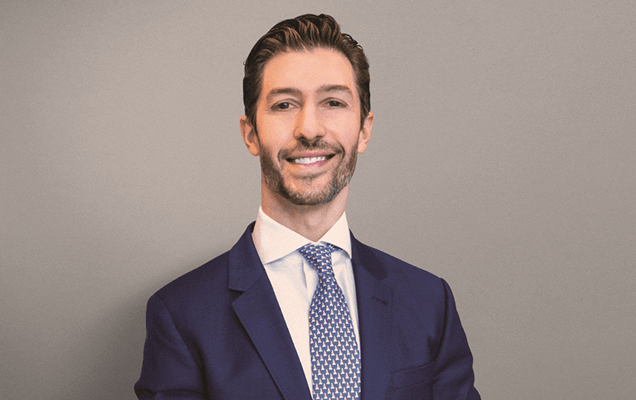
About Dr. Paul R. Gigante
Dr. Paul Gigante is an accomplished neurosurgeon in Central Jersey and a proud member of Neurosurgeons of New Jersey, practicing out of their Livingston office located conveniently on South Orange Avenue. He is recognized as a leading spine surgeon for both minimally invasive and complex procedures. Dr. Gigante is a graduate of Harvard Medical School and completed his fellowship at Stanford University in functional neurosurgery. His specialties are deep brain stimulation for Parkinson’s Disease and other nervous system disorders, spinal cord stimulation for chronic pain disorders, and surgical treatments for chronic nerve pain conditions. He also specializes in brain tumor surgeries. Dr. Paul Gigante is currently accepting new patients.