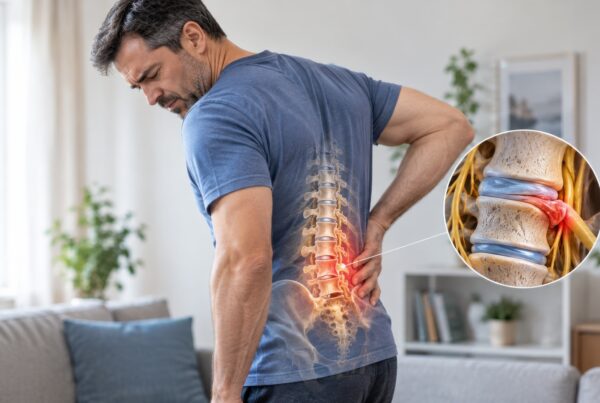


That nagging back pain radiating down your leg has you wondering: will a herniated lumbar disc heal on its own? Or are you facing months of misery? It’s a question we hear constantly from patients dealing with lumbar disc herniation.
The reality is that most herniated discs in the lower back do heal without surgery. Your body has a remarkable ability to shrink and reabsorb the bulging disc material over time.
This guide covers how that healing process works, what symptoms to watch for, and how long recovery typically takes. It also explains when you might need to consider other options.
Will a Herniated Lumbar Disc Heal on Its Own
The short answer is yes. Most lumbar herniated discs heal without surgery. Your body has a built-in repair system that works to resolve disc injuries over time.
For most people, conservative care is all that’s needed.
So what actually happens inside your spine when a disc heals? Your body treats the escaped disc material like something foreign. White blood cells move in and start breaking down the bulging tissue. Meanwhile, the herniated portion loses water and shrinks. As it pulls back, pressure on the nearby nerve decreases. Over weeks to months, your body gradually absorbs the disc fragment.
This process explains why so many patients improve without ever needing an operation. Research published in PubMed confirms that spontaneous regression of lumbar herniated disc material is common. At Neurosurgeons of New Jersey, we see this all the time. Surgery is not always the answer, and understanding how your body heals can help you feel more confident about what comes next.
How a Lumbar Disc Herniates
Your spine is made up of bones called vertebrae, and between each one sits a disc. Think of these discs as cushions. Each disc has a tough outer ring and a soft, gel-like center.
A herniated disc happens when that soft center pushes through a tear in the outer layer. You might hear this called a “slipped disc” or “bulging disc“, though technically the disc doesn’t slip anywhere.
When this occurs in your lower back (the lumbar spine), the bulging material can press against a nerve root. That’s when symptoms start.
Symptoms of a Herniated Lumbar Disc
How do you know if you’re dealing with a lumbar disc herniation? The symptoms can vary quite a bit from person to person, but certain patterns tend to show up.
Lower back pain and stiffness
Back pain is usually the first thing people notice. It often feels worse when you bend forward, twist, or sit for a while. Some people describe a deep ache, while others feel sharp pain with certain movements.
Stiffness is common too. Your back might feel “locked up” in the morning or after staying in one position too long. Moving around usually helps loosen things up.
Sciatica and radiating leg pain
This is the symptom that brings many patients through our doors. Sciatica refers to pain that travels from your lower back, through your buttock, and down into your leg. It happens when the herniated disc presses on a nerve root that extends into your leg.
Learn more about lumbar radiculopathy causes, symptoms, and treatment.
The pain can feel sharp, burning, or like an electric shock. It typically affects only one side of your body and may travel all the way to your foot. Sitting, coughing, or sneezing often makes it worse.
Numbness, tingling, or weakness
Many people also experience numbness or a “pins and needles” feeling in their leg, foot, or toes. The compressed nerve can’t send signals properly, which creates these sensations.
Weakness may develop as well. You might notice difficulty lifting your foot when walking or pushing off with your toes. If weakness is getting worse over time, that’s something to have evaluated promptly.
It's time to get back
to doing what you love.
How Long Does a Herniated Lumbar Disc Take to Heal
Understanding will a herniated lumbar disc heal and how quickly varies by person, but most people follow a general pattern:
- First few weeks: The sharp, intense pain often starts to ease as inflammation calms down.
- One to three months: Most patients notice significant improvement during this window. The disc material continues shrinking and pulling away from the nerve.
- Three to six months: Full tissue remodeling and reabsorption can take this long, though many people feel substantially better well before this point.
Your specific timeline depends on factors like the size of the herniation, your age, and your overall health. Patience matters here. Healing takes time, and consistent care makes a real difference.
Signs a Herniated Lumbar Disc Is Healing
Tracking your progress helps you stay encouraged. Here’s what improvement typically looks like.
Less leg pain and more localized back pain
As the disc shrinks away from the nerve, leg symptoms often improve first. The shooting pain down your leg becomes less frequent or less intense. You might still have some back discomfort, but it feels more manageable and stays in one area rather than radiating.
Improved range of motion
You may find yourself able to bend, twist, or sit for longer periods without triggering pain. Activities that once felt impossible gradually become easier. Morning stiffness often decreases too.
Return of strength and sensation
Numbness and tingling fade as nerve pressure decreases. Feeling returns to areas that previously felt “asleep.” Leg strength improves, making walking and climbing stairs feel more stable.
How to Support Healing at Home
You can take an active role in your recovery. The right approach to daily activities supports your body’s natural healing process.
Stay active with gentle movement
Bed rest can actually slow recovery. While you want to avoid activities that worsen your pain, gentle movement promotes blood flow and prevents stiffness.
Short walks throughout the day help keep your spine mobile. Try to avoid prolonged sitting, which increases pressure on your discs. If you work at a desk, getting up every 30 to 45 minutes makes a difference.
Physical therapy and targeted exercises
A physical therapist can teach you exercises that strengthen your core muscles and improve flexibility. Core strength supports your spine and helps prevent future problems. Review our guide on herniated disc treatment options explained for a full overview of conservative and surgical approaches.
The right stretches also relieve tension in muscles that may be compensating for your injury. Working with a professional ensures you’re doing exercises that help rather than harm.
Short-term pain relief options
Several approaches can help manage discomfort while your disc heals:
- Over-the-counter anti-inflammatory medications: These reduce swelling and ease pain.
- Ice or heat: Ice works well in the first few days to reduce inflammation. After that, gentle heat often feels more soothing.
- Epidural steroid injections: For stubborn pain that doesn’t respond to other measures, these injections deliver anti-inflammatory medication directly to the affected area.
Signs Your Herniated Lumbar Disc Is Not Healing
While most patients wondering will a herniated lumbar disc heal can expect improvement with time, certain warning signs indicate you may need additional evaluation:
- Pain that does not improve after six to eight weeks of conservative care
- Progressive leg weakness or difficulty lifting your foot (called foot drop)
- Severe or worsening numbness
- Loss of bladder or bowel control
Important: Loss of bladder or bowel control is a medical emergency called cauda equina syndrome. This condition requires immediate care. If you experience these symptoms, go to an emergency room right away.
When to Consider Surgery for a Herniated Lumbar Disc
Most patients with lumbar disc herniations do not need surgery. However, surgical treatment may be appropriate in certain situations.
Surgery becomes a consideration when conservative treatments fail to provide relief after an adequate trial period, typically six to twelve weeks. Our page on herniated lumbar disc treatment and recovery covers what to expect at each stage. Progressive nerve damage or weakness that continues to worsen despite rest and therapy also warrants surgical evaluation.
The same is true when symptoms significantly limit your daily life and show no signs of improving. Learn what to expect from herniated disc surgery recovery.
Minimally invasive options like microdiscectomy can remove the portion of the disc pressing on your nerve through a small incision. The Mayo Clinic outlines herniated disc diagnosis and treatment options for patients considering their next steps. Recovery is often faster than with traditional open surgery.
At Neurosurgeons of New Jersey, we evaluate each patient individually and only recommend surgery when it’s truly necessary.
When to See a Neurosurgeon for Lumbar Disc Pain
A neurosurgeon can help you understand your condition and determine the best path forward. This doesn’t mean you’ll automatically need surgery. Many patients leave our office with a conservative treatment plan and the reassurance that their disc will likely heal on its own.
Getting expert guidance helps you make an informed decision about your care. You deserve clear answers about your options and what to expect during recovery.
Request a consultation with our team at Neurosurgeons of New Jersey. We offer personalized treatment plans and believe every patient deserves to understand their diagnosis and all available options.
Frequently Asked Questions About Herniated Lumbar Disc Healing
Is walking good for a lumbar herniated disc?
Yes, gentle walking promotes blood flow and prevents stiffness without putting excessive strain on your spine. Short, frequent walks are often more helpful than prolonged rest.
Will my back ever feel the same after a herniated disc?
Many patients return to their normal activities and feel significant relief after healing. Some people notice occasional mild stiffness, but most regain full function over time.
Can a herniated disc come back after it heals?
A healed disc can re-herniate, though maintaining core strength and using proper lifting techniques reduces this risk. Ongoing exercise and attention to body mechanics help protect your spine long-term.

About Dr. Jonathan Yun
Dr. Jonathan Yun is a board-certified neurosurgeon who focuses on helping patients with spine disorders. He uses advanced, minimally invasive techniques to reduce recovery time and make surgery safer and less painful. With tools like computer-guided systems, advanced imaging technologies, and robotic-assisted surgery, Dr. Yun is able to provide precise, tailored care. His expertise covers a wide range of treatments, from highly targeted procedures to alleviate pressure on nerves to performing minimally-invasive fusions and correcting spinal deformities. Dr. Yun is currently accepting new patients.