
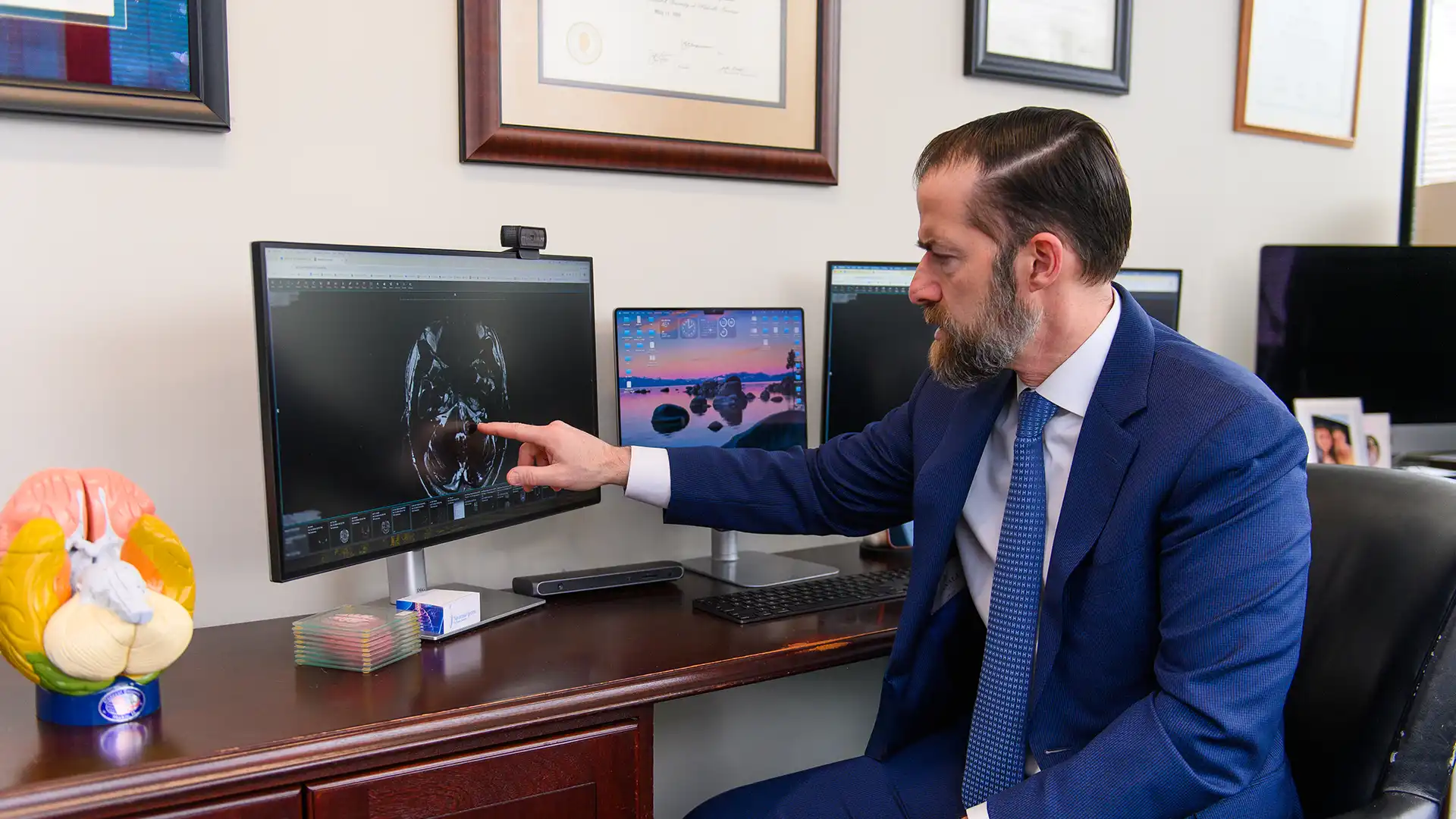

A persistent twitch near your eye or a sudden change on one side of your face can be unsettling. Facial nerve symptoms are also easy to confuse with one another. Hemifacial Spasm and Bell’s palsy both affect the same nerve, but the two conditions work differently.
Understanding the difference between Hemifacial Spasm vs Bell’s palsy, including symptoms, causes, and treatment, starts with knowing how each condition affects the facial nerve. Each one has its own causes, symptoms, and treatments. When comparing Bell’s palsy vs Hemifacial Spasm , the right diagnosis often determines the right treatment.
Understanding the Facial Nerve
The facial nerve controls blinking, smiling, and everyday expressions. It also contributes to taste, tear production, and hearing. Because it influences so many functions, problems affecting it can produce a wide range of symptoms.
The simplest way to understand the difference:
- Hemifacial Spasm causes too much nerve activity, triggering unwanted muscle contractions.
- Bell’s palsy slows the nerve down too much. Swelling blocks the nerve from working correctly, which makes the face feel weak or stop moving.
What Is Hemifacial Spasm?
Hemifacial Spasm is a nerve-related condition causing uncontrolled muscle contractions on one side of the face. Symptoms typically start as occasional twitching around the eye, easy to dismiss as stress or fatigue. Over time, contractions become more frequent and can spread to the cheek, mouth, jaw, and neck.
The most common cause of Hemifacial Spasm symptoms is a blood vessel pressing against the facial nerve near the brainstem. Each pulse of the vessel irritates the nerve and triggers abnormal electrical signals. The condition very rarely resolves on its own and typically worsens without treatment.
What Is Bell’s Palsy?
Bell’s palsy causes sudden weakness or paralysis on one side of the face. Hemifacial Spasm builds slowly over time. Bell’s palsy moves fast, many people wake up and notice something is wrong right away.
A virus likely triggers the condition by inflaming the facial nerve. The swollen nerve cannot transmit signals normally, weakening facial muscles. Common Bell’s palsy symptoms include:
- Drooping on one side of the face
- Difficulty smiling or closing one eye
- Changes in taste or increased sound sensitivity
Sudden onset of facial weakness can be the first sign of a stroke and requires immediate emergency room evaluation. That said, Bell’s palsy is not a stroke, though symptoms can appear similar to a stroke. Bell’s palsy only affects the facial nerve. A stroke usually also causes arm or leg weakness, trouble speaking, or vision problems. Many patients recover meaningfully, especially when treatment begins early.
Hemifacial Spasm vs. Bell’s Palsy: Symptom Comparison
The core distinction is straightforward: Hemifacial Spasm causes unwanted movement while Bell’s palsy causes weakness or loss of movement.
If you searched facial twitching vs Bell’s palsy, the answer is straightforward. Twitching points to Hemifacial Spasm, not Bell’s palsy.
Why Do These Conditions Happen?
Hemifacial Spasm
In most cases, a blood vessel pushes against the facial nerve near the brainstem. Doctors call this nerve and blood vessel compression, and it causes Hemifacial Spasm.
With every heartbeat, the vessel irritates the nerve, causing it to fire when it should be resting. A blood vessel pressing on the nerve causes most cases of facial twitching. Tumors, cysts, or old nerve injuries can also cause it, but much less often.
Bell’s Palsy
Bell’s palsy develops differently. One of the most common facial weakness causes is inflammation of the facial nerve, which is exactly what happens in Bell’s palsy. The nerve swells and gets stuck in a tight bony channel. That swelling stops the nerve from sending signals, so the face gets weak instead of twitching. As inflammation subsides, nerve function often recovers.
Are you out of options
to eliminate your pain?
Diagnosis: How Doctors Tell Them Apart
Recognizing facial nerve disorder symptoms early gives you the best chance at the right treatment. Diagnosis combines medical history, a nerve-related examination, and imaging. How fast symptoms start is an important clue. Bell’s palsy comes on in hours or days. Hemifacial Spasm gets worse slowly over months or even years.
During a nerve-related exam, the doctor checks how your face looks, moves, and how strong your muscles are. This helps them tell the difference between weakness and unwanted twitching. An MRI scan lets doctors see if a blood vessel is pressing on the nerve. It also helps them rule out serious problems like brain tumors or multiple sclerosis.
Treatment Options for Hemifacial Spasm
Microvascular Decompression (MVD)
Microvascular Decompression is the only treatment that addresses the structural cause of hemifacial spasm. The surgeon finds the blood vessel pushing on the facial nerve and moves it away. Then they place a small cushion between the vessel and the nerve to stop it from causing problems again. For carefully selected patients, MVD can offer long-term relief by treating the source rather than just managing symptoms.
Botox Injections
Botox is the most common first-line treatment for hemifacial spasm. It temporarily blocks nerve-to-muscle signals, reducing uncontrolled contractions. Effects typically last three to four months and require repeat injections. Botox manages symptoms effectively but does not address the underlying nerve compression.
Treatment Options for Bell’s Palsy
Steroid and Antiviral Medications
Steroid medication is the primary treatment, reducing inflammation and helping the nerve recover. Anti-inflammatory steroids are most effective when started within 72 hours of symptom onset. In some cases, doctors prescribe antiviral medications alongside steroids.
Eye Protection and Rehabilitation
When facial weakness prevents complete eye closure, protecting the cornea is essential. Artificial tears, lubricating ointment, and protective patches help prevent complications. Facial physical therapy helps with leftover weakness and coordination issues. It also treats synkinesis, which is when the face muscles move in ways you don’t intend during healing.
Many patients with Bell’s palsy recover meaningfully within three to six months. Early treatment consistently improves outcomes.
When to Seek Immediate Medical Attention
Seek emergency care right away if facial symptoms occur alongside:
- Arm or leg weakness
- Difficulty speaking or understanding speech
- Sudden vision changes
- Severe or unusual headache
- Confusion or altered mental status
These may indicate a stroke. Isolated facial twitching or weakness without these symptoms warrants prompt evaluation with a specialist, not necessarily the emergency room.
Why an Accurate Diagnosis Matters
The difference between Hemifacial Spasm vs Bell’s palsy directly influences treatment decisions and outcomes. If a doctor mistakes Hemifacial Spasm for Bell’s palsy, the wrong treatment won’t fix the nerve pressure. The twitching will keep getting worse.
The specialists at Neurosurgeons of New Jersey look at the full picture of facial nerve problems. They find the right diagnosis and walk patients through every treatment option. Accurate diagnosis is the first step toward finding relief.
Similar Nerves, Very Different Conditions
Hemifacial Spasm causes the face to move when it should not. Bell’s palsy causes the face to stop moving the way it should. Both are treatable, and both deserve an accurate diagnosis.
Are you dealing with facial twitching, weakness, or other symptoms that worry you? Contact the facial nerve specialists at Neurosurgeons of New Jersey to talk about what’s going on and what can help.
Frequently Asked Questions
Can Hemifacial Spasm be mistaken for Bell’s palsy?
Both affect the facial nerve and one side of the face. The key difference: Hemifacial Spasm causes involuntary twitching; Bell’s palsy causes weakness. A neurological exam and imaging studies can distinguish between them.
Does Bell’s palsy cause facial twitching?
Not typically. Bell’s palsy primarily causes weakness. Some people develop synkinesis while they heal, their face moves in odd ways they can’t control. This is different from the twitching that comes with Hemifacial Spasm.
What is the first symptom of Hemifacial Spasm?
For most people, it starts with occasional twitching near the lower eyelid. Over time, the twitching happens more often and spreads to other areas on the same side of the face.
Is Hemifacial Spasm permanent?
Without treatment, it usually persists and becomes more noticeable over time. Botox manages symptoms; microvascular decompression addresses the underlying nerve compression.
What doctor should I see for facial twitching or facial weakness?
Seek evaluation from a specialist familiar with facial nerve disorders, a neurosurgeon, neurologist, or other provider with experience in cranial nerve conditions.

About Dr. Anthony D'Ambrosio
Dr. Anthony D'Ambrosio is an accomplished neurosurgeon in North Jersey and a proud member of Neurosurgeons of New Jersey practicing primarily out of their Ridgewood office conveniently located on East Ridgewood Avenue. Dr. D’Ambrosio focuses his clinical practice on brain tumors, nervous system disorders, and facial pain disorders. He has expertise in a variety of complex surgical and radiosurgical techniques as well as minimally invasive procedures intended to successfully treat complex diseases of the brain. These techniques include micro-neurosurgery, microvascular decompression surgery and Gamma Knife radiosurgery. He's authored over 25 peer-reviewed journals and is the recipient of many awards.



Please call today to schedule a consultation with me.
(551) 284-3265
Request a consultation with Dr. D'Ambrosio