
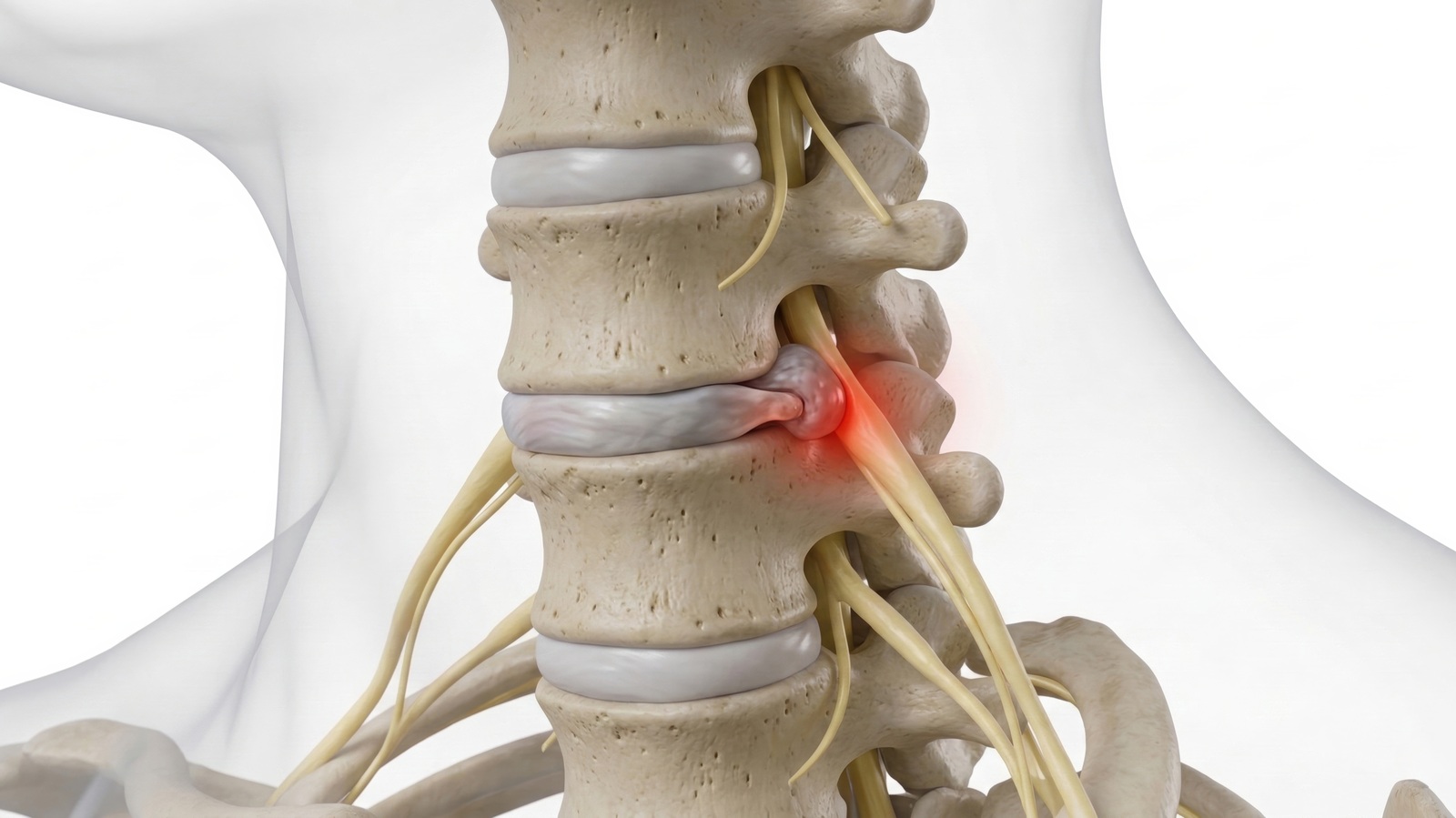

A pinched nerve in the neck can be alarming, particularly when the pain shoots down your arm or is associated with numbness and/or weakness. But for many people, cervical radiculopathy does improve on its own, often without surgery.
Recovery is not the same for everyone, though. Some people feel better within a few weeks. Others deal with symptoms for months, or find that conservative care only goes so far. Understanding what to expect and knowing troublesome warning signs can help you make better decisions about your care.
What Is Cervical Radiculopathy?
Cervical radiculopathy happens when a nerve root in the neck gets compressed or irritated, usually by a herniated disc or bone spur. Symptoms do not always stay local. They travel along the path of the affected nerve, which is why arm pain, numbness, or weakness are among the complaints you can develop.
The condition can affect any level of the cervical spine, though it most often occurs at from C5 to C7. Which nerve root is involved determines where you will develop symptoms.
Can a Pinched Nerve in the Neck Heal Without Surgery?
Yes, and in fact, most cases do. Research consistently shows that the majority of patients with cervical radiculopathy improve with conservative treatment alone. The nerve does not always require surgical decompression to recover. In many cases, reducing inflammation and giving the nerve time to heal is enough.
Conservative care typically involves physical therapy to restore mobility and reduce nerve tension, anti-inflammatory medications to calm irritation, adjustments to daily activities to avoid positions that aggravate symptoms, and cervical epidural steroid injections when pain is severe enough to limit participation in therapy.
The key variable is time. Recovery from cervical radiculopathy tends to be gradual. Most patients see meaningful improvement within six to twelve weeks of starting treatment.
It's time to get back
to doing what you love.
How Long Does Cervical Radiculopathy Recovery Take?
Recovery timelines vary, but a general framework can help set realistic expectations. Many patients notice a significant reduction in arm pain within four to six weeks of consistent conservative care. By twelve weeks, a large portion have returned to their normal activities with only mild residual symptoms, if any.
Numbness and weakness tend to resolve more slowly than pain. Nerve tissue heals at its own pace, and some patients experience gradual improvement over several months. That progression is normal and does not necessarily indicate a problem.
It is also worth noting that improvement is not always linear. You may have a good week followed by a few difficult days, particularly if you returned to activity too quickly or spent more time in an aggravating position. Small setbacks during recovery do not mean treatment is failing. They are a normal part of the process.
What matters most during recovery is consistency. Physical therapy only works if you stick with it. Stopping treatment early because symptoms have partially improved is one of the most common reasons patients stall before they fully recover.
When Does Cervical Radiculopathy Become More Concerning?
Not every case follows a straightforward recovery path. There are specific patterns that suggest the nerve compression may not resolve without more targeted intervention.
Progressive numbness or muscle weakness is one of the clearest warning signs. If pain is replaced by numbness or you are developing increased weakness, get evaluated promptly. Nerve damage that goes on too long becomes harder to reverse. You should also see a specialist if pain is worsening despite weeks of conservative care or severely compromising your activities of daily living.
Under these circumstances you should see a specialist. The goal is to identify what is driving the compression and whether a more targeted approach makes sense.
What Happens If Cervical Radiculopathy Does Not Improve?
When conservative care has not delivered enough relief, your specialist may discuss several next steps. Cervical epidural steroid injections, if not already tried, offer meaningful relief for some patients and are a reasonable option to explore before moving toward surgery.
When non-surgical options have been exhausted, procedures like anterior cervical discectomy and fusion (ACDF) or cervical disc replacement can directly address the source of nerve compression. Both procedures have strong track records for relieving arm pain and nerve-related symptoms, and recovery timelines and long-term outcomes are well understood.
It helps to go into that conversation prepared. Bring a clear account of how long you have had symptoms, what treatments you have tried, and how your pain and function have changed over time. That history gives your surgeon the context needed to make a well-informed recommendation and helps ensure nothing gets overlooked.
Your surgeon will review your imaging, symptom history, and nerve function before making any recommendation. Surgery is not the first choice, but when conservative care fails and the patient is a good fit, outcomes are often very good.
When Should You See a Spine Specialist?
If you have arm pain, numbness, or weakness that may be coming from your neck, a spine specialist can confirm the diagnosis and help you build a treatment plan. You do not need to wait until conservative care has failed to get an evaluation. An early, accurate diagnosis helps ensure you are doing the right type of therapy for the right nerve level.
At Neurosurgeons of New Jersey, our specialists review your symptoms, imaging, and nerve function together to determine the most appropriate path forward. Whether you are in the early stages of recovery or have been managing symptoms for months without progress, our team can help you understand what is happening and what your options are.
FAQs
Does cervical radiculopathy go away on its own?
For many patients, yes. Most cases improve with conservative treatment over six to twelve weeks, without the need for surgery. How quickly you recover depends on how severe the nerve compression is and how consistently you follow through with treatment.
How long does cervical radiculopathy recovery take?
Most patients see meaningful improvement within six to twelve weeks of conservative care. Numbness and weakness may continue to improve over a longer period. If you are not improving within that window, a spine specialist should take another look.
Can a pinched nerve in the neck heal without surgery?
Yes. Most pinched nerves in the neck respond well to physical therapy, anti-inflammatory medications, and adjustments to daily activity. Surgery is typically only considered when conservative treatment has not worked or when nerve-related weakness is getting worse.
What makes cervical radiculopathy worse?
Positions that increase pressure on the nerve root can aggravate symptoms. Looking down at a phone for extended periods, sleeping without proper neck support, and certain overhead movements are common triggers. Your physical therapist can help you identify and adjust the specific movements that are making things worse.
When should I see a doctor for neck nerve pain?
See a doctor if you have arm pain, numbness, or weakness that is not improving after a few weeks, if pain is replaced by numbness, weakness is getting worse, or if your symptoms are significantly affecting your daily life. A spine specialist can confirm the diagnosis and help you determine the right course of treatment.

About Dr. Michael G. Kaiser
Dr. Michael G. Kaiser is a nationally recognized neurosurgeon in North Jersey and is a proud member of Neurosurgeons of New Jersey, practicing out of their Ridgewood office conveniently located on East Ridgewood Avenue. Dr. Kaiser specializes in complex and minimally invasive spine surgeries.