

Hearing that brain surgery may be part of your treatment plan can feel overwhelming. Even if you have dealt with hemifacial spasm, the involuntary facial twitching that can disrupt daily life, for a long time, choosing surgery can still feel like a lot to think about.
If you live with hemifacial spasm, you have likely asked, “Is microvascular decompression safe?” People also want to know the risks, what recovery looks like, and how surgeons protect important nerves during surgery.
These are important questions, and you deserve clear answers.
Microvascular decompression surgery, also called MVD surgery, can help the right patient find lasting relief. Expert Neurosurgeons often use this procedure to treat hemifacial spasm, the focus of this article, as well as trigeminal neuralgia. These conditions are often the result of a normal blood vessel compressing or pulsating on a nerve resulting in severe facial pain or facial twitching.
Experienced neurosurgical teams do not recommend brain surgery lightly. Safe outcomes start with careful planning, choosing the right patients for surgery, and experienced care.
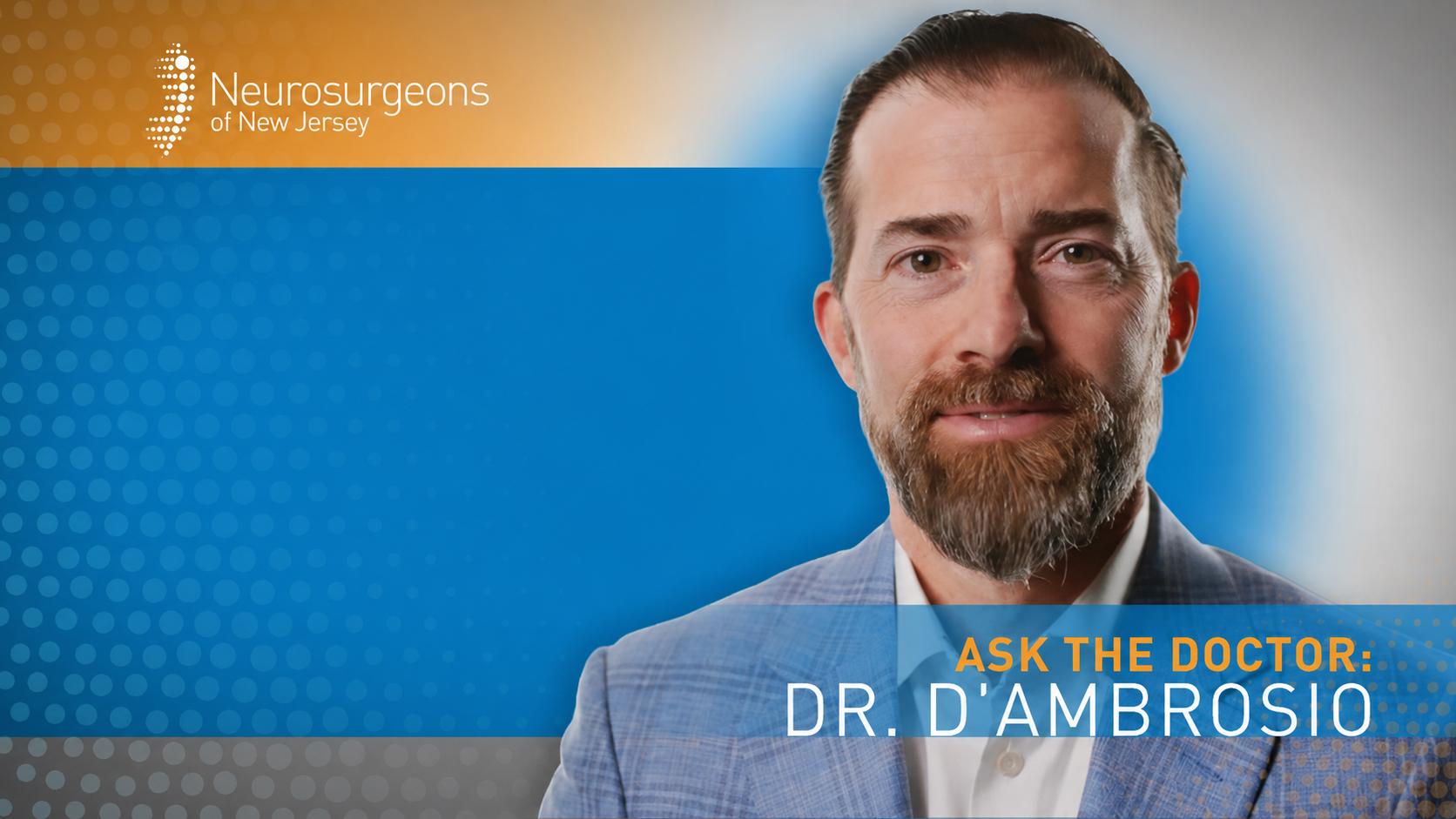
Watch leading hemifacial spasm and microvascular decompression expert Dr. Anthony D’Ambrosio explain how he evaluates safety before MVD surgery for hemifacial spasm.
What Is Microvascular Decompression Surgery?
Microvascular decompression surgery is a form of brain surgery during which care is taken to safely move a normal artery or vein away from an otherwise normal cranial nerve so that the nerve can function normally, without being stimulated or aggravated by the pressure and pulsations that the blood vessel gives off.
Some nerves leave the brain close to blood vessels. In some people, one of those blood vessels presses on a nerve over time. That pressure can irritate the nerve and disrupt how it works.
Different nerves require different treatment.
When pressure affects the facial nerve, it can cause twitching or muscle spasms, which patients, family, friends, and doctors easily see in patients with hemifacial spasm. When pressure affects the trigeminal nerve, it can cause severe, electrical facial pain resulting in trigeminal neuralgia.
Microvascular decompression for hemifacial spasm and microvascular decompression for trigeminal neuralgia treat the source of the problem (the blood vessel compressing the nerve) instead of only managing symptoms.
During surgery, the neurosurgeon creates a small opening, about the size of a quarter, behind the ear to reach the affected nerve. They find the blood vessel pressing on the nerve, gently move it away, and place a small cushion between the nerve and blood vessel.
The goal is simple: relieve the pressure while protecting and insulating the nerve. Almost like placing a pillow between the nerve and the blood vessel.
Is Microvascular Decompression Safe?
For the right patient, microvascular decompression surgery can be a very safe and effective treatment.
Expert, subspecialized neurosurgeons start by making a small incision behind the ear while the patient is fully asleep. Blood loss is often extremely low. That said, the procedure takes place near important structures, including the brainstem, cranial nerves, hearing pathways, and major blood vessels, so only an expert neurosurgeon who safely performs MVD surgery regularly can keep the risks as low as possible
That is why the real question is not simply whether MVD surgery is safe in general. The better question is whether it is the right treatment for your specific condition. A thoughtful neurosurgeon recommends surgery only when the likely benefits clearly outweigh the risks.
What Are the Risks and Complications of Microvascular Decompression Surgery?
Expert Neurosurgeons who perform MVD surgery regularly do not expect complications in most cases, and experienced neurosurgical teams work deliberately to keep risks low. That effort begins well before the day of surgery. Careful patient selection, thorough review of imaging, and honest conversations about a patient’s overall health all help ensure that surgery is only recommended when the likely benefit clearly outweighs the risk.
In the operating room, advanced intraoperative monitoring tracks critical neurological signals in real time, including hearing and facial nerve function, so the surgical team can respond immediately if anything changes. Sterile technique, precise surgical planning, and a team experienced in microvascular decompression all contribute to outcomes that are as safe as possible. Your neurosurgeon will walk you through which considerations are most relevant to your specific situation before any decision is made. Be certain to ask your neurosurgeon about important issues including their experience, outcomes, and patient satisfaction before choosing the right team for your MVD procedure.
Why Patient Selection Matters
Not everyone with facial pain or facial twitching is a good candidate for microvascular decompression. For example, some neurological conditions cause similar symptoms. In other cases, imaging may not show the type of blood vessel compression that makes surgery a good option.
Before recommending surgery, your neurosurgeon should personally review your symptoms, medical history, past treatments, and MRI imaging. This process protects patients from unnecessary brain surgery and keeps treatment decisions based on real findings.
Are you out of options
to eliminate your pain?
How Surgeons Make Microvascular Decompression Safer
Safe outcomes in brain surgery come down to preparation, discipline, communication, teamwork, and experience. Before anything begins, high-quality MRI imaging is mandatory for the expert MVD neurosurgeon to visually confirm whether a blood vessel is pressing on the nerve in the correct location and plan the safest path forward. Patient positioning in the operating room also plays a quiet but important role, since how the team positions the body affects circulation, nerve protection, and access to the surgical area.
Once surgery is underway, the care team monitors critical neurological functions in real time. This must include hearing, facial nerve activity, and brainstem signals, giving the neurosurgeon immediate, real-time, feedback and the ability to respond quickly if anything changes negatively during the microsurgical part of the MVD procedure. This, alone, reduces the risk of hearing loss and facial weakness to near zero if done correctly. Alongside all of this, experience shapes every decision in the room. A team that performs microvascular decompression regularly understands the tools, the workflow, and the kind of precise communication that keeps complex surgery on track.
What Is Recovery Like After Microvascular Decompression Surgery?
Many patients want to understand what recovery looks like before deciding on surgery, and that is a completely reasonable thing to want to know.
Recovery is different for everyone, but most people spend a short time in the hospital after the procedure. On average, patients will have surgery on “day 0”, recover in an ICU on “post-operative day 1”, and go home on “post-operative day 2”. During that stay, the care team watches for any problems, helps manage pain, and makes sure healing is on track. Many patients notice relief from their symptoms right away.
Others improve more slowly as swelling goes down and the body continues to heal. Your neurosurgeon will walk you through what to expect based on your specific condition and overall health.
Questions to Ask Before Microvascular Decompression Surgery
If you are considering microvascular decompression surgery, asking questions can help you feel more prepared.
You may want to ask:
- What does my MRI show and can we look at it together?
- Does this surgery make sense for my condition and what is the likelihood I’ll be cured?
- What risks matter most in my case?
- What results should I expect?
- Are non-surgical treatment options available?
- How often do you perform this procedure and what are your personal outcomes?
- What does microvascular decompression recovery usually look like?
Choosing brain surgery is a major decision. You should have time to make an informed decision.
Brain Surgery Should Never Feel Like a Guess
Choosing brain surgery is personal.
You deserve clear answers, thoughtful recommendations, and a surgical team that takes your safety seriously.
Microvascular decompression surgery can provide meaningful relief for the right patient. The best outcomes start with the right diagnosis, careful planning, and experienced neurosurgical care.
Our neurosurgery team can help you decide whether microvascular decompression surgery is the right treatment for hemifacial spasm, trigeminal neuralgia, or another nerve compression condition such as glossopharyngeal neuralgia and geniculate neuralgia.
Schedule an evaluation to review your symptoms, imaging, and treatment options with an experienced neurosurgical team.
Microvascular Decompression FAQ
Is microvascular decompression considered major surgery?
Yes. Microvascular decompression is major brain surgery performed near critical nerves and brain structures under general anesthesia.
How long does microvascular decompression surgery take?
Surgery time varies from patient to patient. Most procedures take approximately 2-3 from start to finish.
What conditions does microvascular decompression treat?
Surgeons use microvascular decompression to treat nerve compression conditions like hemifacial spasm and trigeminal neuralgia.
What is the success rate of microvascular decompression?
High, under the right conditions. Your condition and anatomy both affect success rates. Your surgeon can explain what outcomes are realistic for your case.
How long is microvascular decompression recovery?
Recovery timelines vary. Many patients spend ~2 days in the hospital before continuing recovery at home.
Who is a good candidate for microvascular decompression surgery?
Good candidates have symptoms that match nerve compression and imaging that strongly supports the diagnosis.
Can symptoms come back after microvascular decompression?
Yes. Most patients experience long-term relief. Others may have symptoms that return over time.

About Dr. Anthony D'Ambrosio
Dr. Anthony D'Ambrosio is an accomplished neurosurgeon in North Jersey and a proud member of Neurosurgeons of New Jersey practicing primarily out of their Ridgewood office conveniently located on East Ridgewood Avenue. Dr. D’Ambrosio focuses his clinical practice on brain tumors, nervous system disorders, and facial pain disorders. He has expertise in a variety of complex surgical and radiosurgical techniques as well as minimally invasive procedures intended to successfully treat complex diseases of the brain. These techniques include micro-neurosurgery, microvascular decompression surgery and Gamma Knife radiosurgery. He's authored over 25 peer-reviewed journals and is the recipient of many awards.


Please call today to schedule a consultation with me.
(551) 284-3265
Request a consultation with Dr. D'Ambrosio