
Leg pain, numbness, or weakness that worsens when you stand or walk can make everyday life difficult. If physical therapy, medication, or injections have not provided enough relief, your doctor may discuss lumbar laminectomy, spinal fusion, or both.
A lumbar laminectomy creates more room for the nerves in your lower back. Spinal fusion stabilizes part of the spine. These procedures are sometimes performed together, but not everyone who needs a laminectomy also needs a fusion.
What Is Lumbar Laminectomy and Fusion?
Lumbar laminectomy and fusion is a lower-back operation used to relieve pressure on spinal nerves and stabilize the spine when necessary.
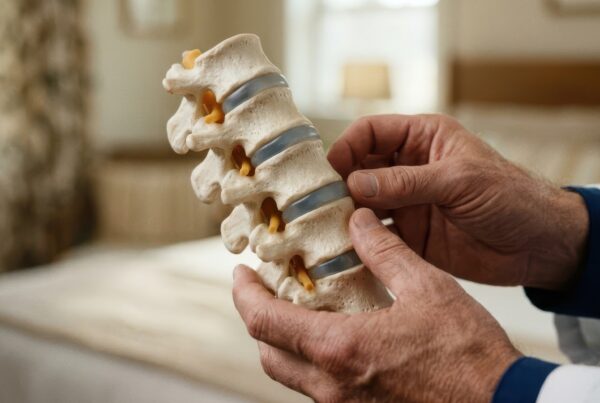
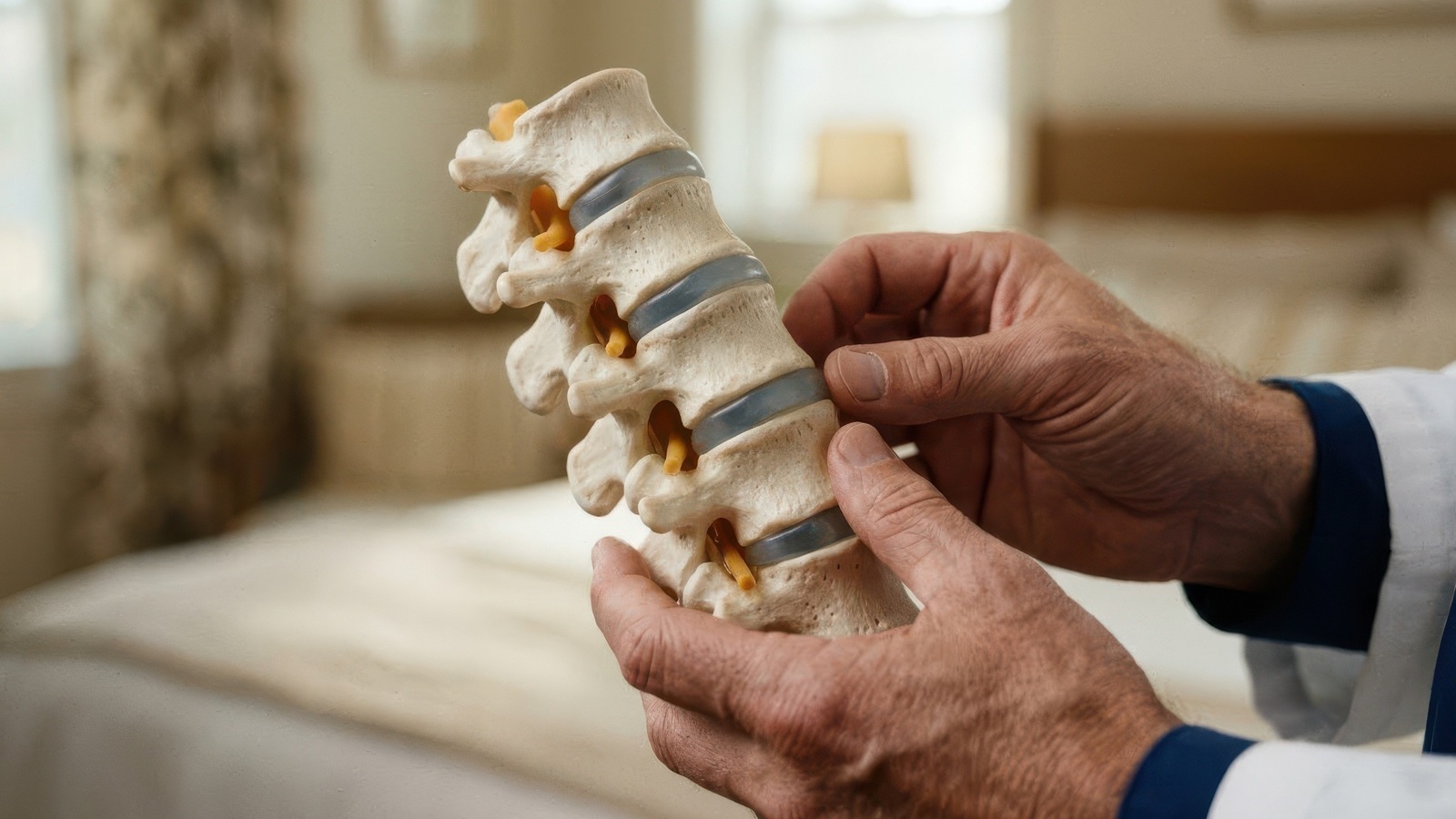
During a lumbar laminectomy, the surgeon removes part or all of the lamina, the bony covering at the back of a vertebra. Bone spurs, thickened ligaments, or disc material pressing on the nerves may also be removed. This process is called decompression.
During spinal fusion, bone-graft material is placed between or alongside two or more vertebrae. Screws, rods, cages, or other implants may hold the bones in position while they heal into one stable section. There are several types of spinal fusion surgery, and the right approach depends on your condition, anatomy, number of affected levels, and overall health.
Conditions Treated With Lumbar Laminectomy and Fusion
A surgeon may recommend laminectomy with fusion when nerves are compressed and the spine is unstable. Fusion may also be needed if removing enough bone to free the nerves would also make the spine unstable.
Lumbar spinal stenosis
Lumbar spinal stenosis is a narrowing of the spinal canal or the openings around the nerves. It may cause leg pain, numbness, heaviness, or weakness that gets worse with standing or walking and improves with sitting or leaning forward.
A laminectomy creates more room for the nerves. Fusion may be added if the spine is unstable, has an abnormal curve, or is likely to become unstable after decompression. Spinal stenosis alone does not mean fusion is always necessary. A spinal stenosis specialist can evaluate whether nonsurgical care, decompression, or decompression with fusion is most appropriate.
Lumbar spondylolisthesis
Spondylolisthesis occurs when one vertebra slips forward over the vertebra below it. This can cause spinal stenosis, back pain, leg symptoms, or abnormal movement.
When fusion is needed, it stabilizes the slipped vertebra while the laminectomy relieves nerve pressure. Some patients with stable spondylolisthesis may be treated with decompression alone.
Degenerative disc disease
Spinal discs naturally lose water, height, and flexibility with age. These changes are common and do not always cause pain. Usually surgery is not required for this condition.
Fusion may be considered when disc degeneration is linked to instability, deformity, or persistent pain from a clearly identified spinal level that has not improved with nonsurgical care.
Recurrent herniated disc
Some patients with a recurrent herniated disc can have another discectomy or decompression without fusion. Fusion may be considered when the herniation has occurred more than two times; exists along with instability, deformity, or significant mechanical back pain; or if the additional bone removal of another disc surgery would make the spine unstable.
Laminectomy Alone vs. Laminectomy With Fusion
The choice depends largely on whether the affected part of the spine is stable.
| Laminectomy alone | Laminectomy with fusion | |
| Main goal | Relieve nerve pressure | Relieve nerve pressure and stabilize the spine |
| Movement | Usually preserved | Reduced at the fused level |
| Often considered for | Compression without major instability | Existing or expected instability or deformity |
| Recovery | Usually shorter | Usually longer because the surgery is a bigger surgery |
Adding fusion does not benefit every patient with spinal stenosis or degenerative spondylolisthesis. Your surgeon should recommend the least extensive procedure likely to treat your condition successfully.
It's time to get back
to doing what you love.
Who May Be a Candidate?
Not everyone with back or leg pain needs lumbar fusion surgery. Factors that may support a surgical recommendation include:
- Leg pain, numbness, or weakness that limits daily activities
- Difficulty standing, walking, working, or sleeping
- MRI or CT findings that match your symptoms
- A slipped vertebra, deformity, or abnormal spinal movement
- Symptoms that have not improved enough with nonsurgical care
- Progressive weakness or another neurological problem
- A decompression that is expected to make the spine unstable
Many patients begin with coordinated nonsurgical spine care, such as physical therapy, pain management, medication, or injections. Before recommending surgery, your specialist should explain the expected benefits, limitations, alternatives, and risks based on your diagnosis and goals.
How Is Lumbar Laminectomy and Fusion Performed?
Lumbar laminectomy and fusion is usually performed under general anesthesia. After reaching the affected area of the spine, the surgeon removes the bone and other tissue pressing on the nerves.
Bone-graft material is then placed between or alongside the vertebrae being fused. Screws, rods, cages, or other implants may keep the spine aligned while new bone grows. The graft may come from your body, a donor, a manufactured substitute, or a combination of sources.
After the incision is closed, you are taken to a recovery area. The length of your hospital stay depends on the type of procedure, number of levels treated, mobility, pain control, overall health, and whether complications occur.
Minimally Invasive Lumbar Fusion
Some patients may qualify for minimally invasive spine surgery, which uses smaller incisions and specialized instruments. Benefits include less blood loss, less early discomfort, smaller incisions, less risk of infection and a shorter hospital stay.
This approach is not suitable for every patient. Your anatomy, previous operations, number of affected levels, and degree of compression or instability all matter. Minimally invasive spine fusion is still a significant surgery and requires a careful recovery and time for bone healing.
Risks of Lumbar Fusion Surgery
All operations involve risk. Possible complications of lumbar laminectomy and fusion include:
- Infection
- Bleeding or blood clots
- A tear in the protective covering around the nerves causing a spinal fluid leak
- Nerve irritation or injury
- Implant loosening, movement, or breakage
- Failure of the bones to fuse
- Persistent or returning symptoms
- Degeneration at nearby spinal levels
Smoking or nicotine use, diabetes, osteoporosis, poor nutrition, and certain medications can interfere with bone healing. Following your surgeon’s instructions can help reduce some risks.
Contact your surgical team for fever, increasing redness, swelling, drainage, worsening incision pain, uncontrolled pain, or new weakness.
Lumbar Laminectomy and Fusion Recovery
Recovery varies depending on your age, health, bone quality, procedure, and number of fused levels. Always follow your surgical team’s instructions.
The first two weeks
Early recovery focuses on pain control, wound care, and safe movement. Short, frequent walks are usually encouraged. You may need to avoid bending, twisting, and lifting more than the limit set by your surgeon.
Fatigue, stiffness, and incision soreness are common. Report fever, drainage, increasing redness, uncontrolled pain, or new weakness promptly.
One to three months
Your activity level should gradually increase. This means longer walks outside and possibly light workouts on a treadmill, stationary bike or elliptical machine. Driving can usually resume soon after you discontinue prescription pain medicine. Return-to-work timing depends on how physical your job is and where you are in the recovery. The details of this are highly dependent on the details of your surgery, the rate of your recovery, and your surgeon’s preferences.
Do not drive until your surgeon clears you and you are sure you can control the vehicle safely.
Three to twelve months
Strength, endurance, and walking may continue to improve. Heavy lifting and high-impact exercise may remain restricted while the fusion heals.
Bone healing often takes six to twelve months and sometimes longer. Follow-up examinations and imaging help your surgeon decide when you can safely return to unrestricted activity. Our complete spinal fusion recovery timeline provides a closer look at each stage.
Outcomes After Lumbar Laminectomy and Fusion
Many properly selected patients experience meaningful improvement in leg pain, walking, and daily function. Results are usually more predictable for leg symptoms caused by a clearly compressed nerve than for back pain without an identifiable source.
Outcomes depend on your diagnosis, duration of nerve compression, amount of instability, general health, bone quality, nicotine use, number of treated levels, and adherence to recovery instructions.
Success may mean walking with less leg pain, returning to work, reducing medication use, or preventing further nerve damage. No surgeon can guarantee complete pain relief, full neurological recovery, or that additional spine treatment will never be needed.
Neurosurgeons receive extensive training in the brain, spinal cord, and nerves. Spine neurosurgeons apply this expertise to evaluate how spinal conditions affect your strength, sensation, mobility, and everyday function.
This experience is relevant during a lumbar laminectomy, when the surgeon removes bone and other tissue to relieve pressure on spinal nerves. The procedure requires careful work around the nerve roots while preserving as much healthy spinal structure as possible. When fusion is being considered, a spine neurosurgeon also evaluates whether additional stabilization is needed or whether decompression alone may be sufficient.
At Neurosurgeons of New Jersey, our Neuro-Spine First approach considers the spine and nervous system together. Our fellowship-trained spine neurosurgeons assess your symptoms, examination findings, and imaging results to understand the source of your discomfort and how it affects nerve function. This evaluation helps guide a treatment plan tailored to your condition, with attention to relieving pressure, protecting the nerves, and maintaining spinal stability.
When to Seek Spine Care in New Jersey
Consider seeing a spine specialist if back or leg symptoms continue despite nonsurgical treatment, interfere with daily life, or include numbness or weakness, especially if things are getting worse.
Seek emergency medical care immediately for:
- New trouble urinating or emptying your bladder
- New loss of bladder or bowel control
- Numbness around the groin, genitals, buttocks, or inner thighs
- Rapidly onset or rapidly worsening leg/foot weakness
- Severe symptoms affecting both legs
These may be signs of cauda equina syndrome, a rare but serious condition requiring emergency care.
Frequently Asked Questions
How painful is recovery after lumbar laminectomy and fusion?
Pain and soreness are expected, especially during the first several days and weeks. Medication, gentle walking, and proper positioning can help. Contact your surgical team if pain suddenly worsens or occurs with fever, drainage, or new weakness.
Is lumbar laminectomy with fusion major surgery?
Yes. It is major spine surgery performed under general anesthesia. The complexity and recovery time depend on the surgical approach and number of spinal levels treated.
How long does recovery take after an L4-L5 laminectomy with fusion?
Some patients return to light activities within several weeks, while broader improvement often takes several months. The bones may need six to twelve months or longer to fuse fully.
Does everyone who has a laminectomy need fusion?
No. Many patients can have a laminectomy without fusion when the spine is stable. Fusion may be recommended when instability or deformity is present or when decompression is expected to create instability.
Can lumbar fusion eliminate all back and leg pain?
It can, but no procedure carries a guarantee of complete pain relief. Among carefully selected patients, most do improve, especially when leg symptoms are coming from a clearly compressed nerve, but, even in patients who are satisfied with their surgical result, some pain, numbness, or weakness may remain.

About Dr. Alfred T. Ogden
Dr. Alfred T. Ogden is an accomplished neurosurgeon in North Jersey and is a proud member of Neurosurgeons of New Jersey, practicing out of their Ridgewood office conveniently located on East Ridgewood Avenue. Dr. Ogden is internationally recognized as a leader in minimally invasive spine surgery.