
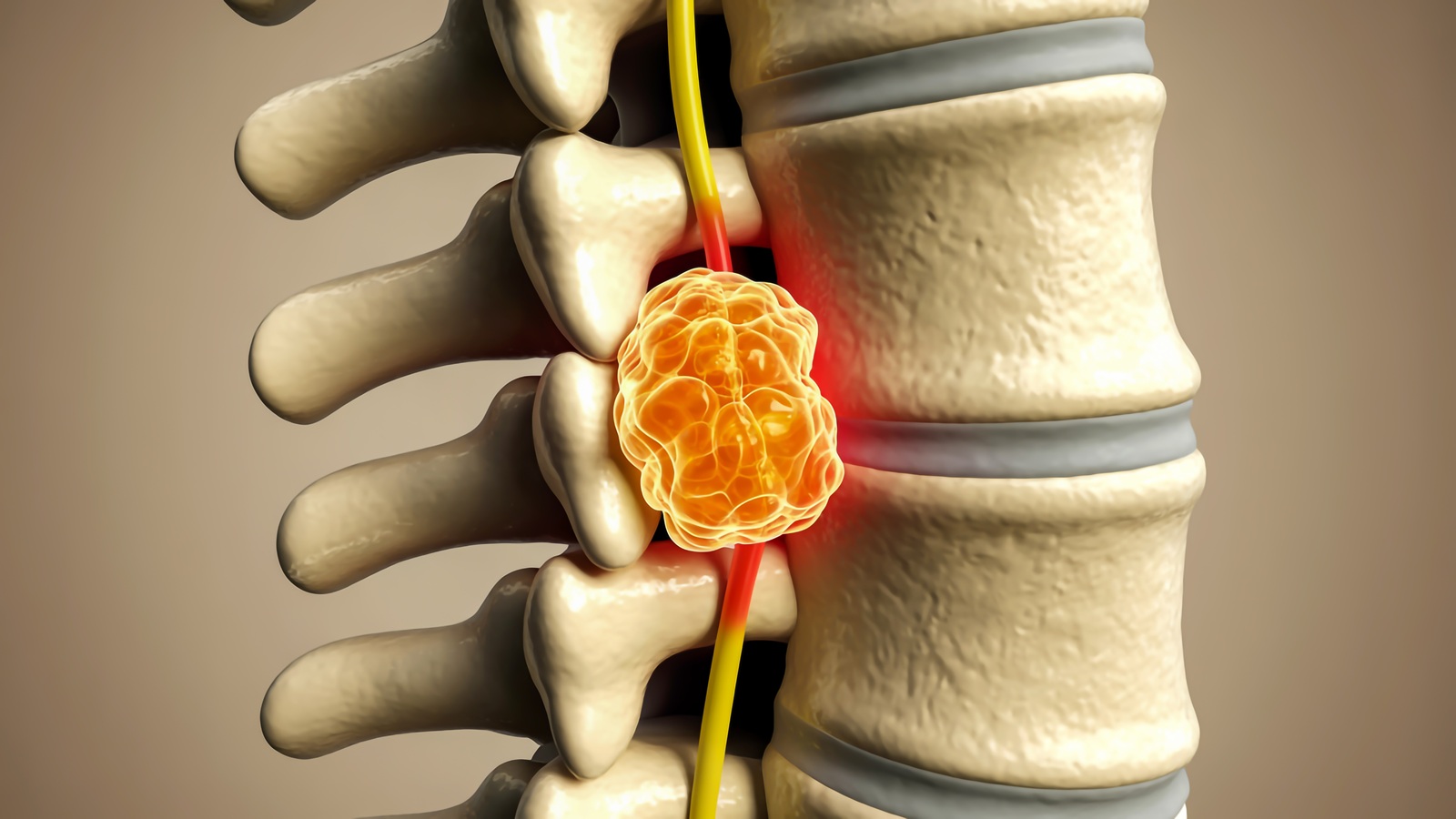

Back pain that will not quit can be frightening, especially when it wakes you at night or keeps getting worse no matter what you try. You may wonder if it is something serious, like a tumor on the spinal cord (also called a spinal cord tumor).
Most spinal cord tumors are not cancer, however, cancer can spread to the bones of the spine and sometimes involve the spinal cord. Confused? Clear answers are within reach. This guide walks you through what these tumors are, the warning signs to watch for, how doctors find them, and the care that can help.
What Is A Tumor On The Spinal Cord?
A spinal cord tumor is an abnormal growth of cells in or around your spinal cord and spine. Most of these are benign, which means they are not cancer. Others are cancerous, which means they can grow and spread. Cancer from somewhere else in the body can spread to the bone of the spine and affect the spinal cord. Also there are some rare tumors that come from the spine bone itself. Some of these are benign; some are cancerous.
Doctors sort these tumors by where they start. A primary bone tumor begins in the bone of the spine itself. A metastatic tumor starts as cancer elsewhere in the body and then spreads to the spine bone.
About 95% of spinal cancers begin as tumors that start in other parts of the body and spread to the spine. Therefore, there is cancer in a spine bone, it probably spread from somewhere else in the body. The good news is that, if the tumor doesn’t involve the bone and is coming from the spinal cord or the soft tissues around it, it is most likely benign. Overall, cancerous tumors that begin in the brain or spinal cord account for less than 2% of all cancers diagnosed each year in the United States. To go deeper, explore the types of spinal tumors and how each one behaves.
Spinal Cord Tumor Symptoms To Watch For
Although back or neck pain is extremely common and usually not due to a tumor, these symptoms are the most common first symptoms of a spinal cord tumor. The pain is often deep and aching, is not tied to an injury, and can feel worse at night or when you lie down.
Other signs can appear as the tumor presses on nearby nerves. Watch for:
- Numbness or tingling in your arms or legs
- Muscle weakness
- Trouble walking or keeping your balance
- Changes in bladder or bowel control
These signs do not always point to a tumor, but they are worth checking. Read more about the link between back pain and spinal cord tumors.
Is My Back Pain A Spinal Tumor Or Something Else?
Here is some relief: most back pain comes from muscle strain, arthritis, or a worn disc, not a tumor. Still, a few clues help you tell everyday pain from pain that deserves a closer look.
If you have a history of cancer, get checked sooner.
It's time to get back
to doing what you love.
How Spinal Cord Tumors Are Diagnosed
An MRI is the main test for a spinal tumor. It uses magnetic fields to show the tumor’s size, shape, and exact location. A physical exam is also very important, and, when needed, a CT scan for a closer look at the bone.
To tell a benign tumor from a cancerous one, your doctor may order a biopsy. This is a small tissue sample your doctor examines under a microscope.
If cancer is the concern, one fact helps. Lung, prostate, and breast cancers are the three most common cancers that tend to spread to the spine. Learn more about benign spinal tumor testing and what your workup may include.
Treatment Options For A Tumor On The Spinal Cord
Your treatment depends on the tumor’s type, size, and location.
For small, slow-growing, benign tumors, your doctor may suggest watchful monitoring with repeat MRIs over time. This lets your team track the tumor while you avoid an operation you may not need. See how doctors weigh monitoring versus removing a tumor.
When a tumor needs to come out, surgeons can sometimes remove many of them with minimally invasive spine surgery, which uses smaller openings to help you recover faster. For cancerous tumors, your team will add radiation and/or chemotherapy and work together across specialties. Learn more about spinal tumor surgery and what to expect.
When To See A Spine Specialist
Reach out to a doctor for back pain that lasts more than a few weeks, gets worse at night, or comes with numbness, weakness, or balance trouble. Seek urgent care right away for weakness or new bladder or bowel changes.
Acting early truly matters. The earlier you tell your doctor about your symptoms, get a diagnosis, and start treatment, the better your outcome is likely to be. Knowing what comes next can also ease your mind, so read about recovery after spinal tumor surgery.
Get Answers From A New Jersey Spine Team
Most spinal cord tumors are treatable, and many are not cancer at all. The best next step is a clear diagnosis, so you know exactly what you are facing and what your choices are.
Our fellowship-trained spine neurosurgeons will listen, explain your options in plain language, and help you choose the care that fits your goals.
Frequently asked questions
How serious is a tumor on the spine?
Most spinal cord tumors are benign and treatable, whereas tumor in the spine bone are much more likely to be cancerous, with about 95% of spinal cancers starting elsewhere in the body before spreading to the spine. Early diagnosis and treatment protect nerve function and lead to better outcomes.
What is the survival rate for spinal cord tumors?
Survival rates vary widely based on tumor type, location, and whether the tumor is benign or cancerous. Benign tumors often have excellent outcomes with treatment, while metastatic tumors depend on the primary cancer type and stage.
What is the most common tumor of the spinal cord?
Metastatic tumors that spread from lung, prostate, and breast cancers are the most common tumors affecting the spinal cord, and touch 30 to 70 percent of cancer patients during their disease. Primary spinal cord tumors account for less than 2% of all cancers diagnosed annually in the United States.
What types of bone cancer can develop in the spine?
Primary bone cancers in the spine are rare, while metastatic cancers from lung, prostate, and breast are most common. Doctors classify spinal tumors by location and whether they started in the spine (primary) or spread from elsewhere (metastatic).

About Dr. Alfred T. Ogden
Dr. Alfred T. Ogden is an accomplished neurosurgeon in North Jersey and is a proud member of Neurosurgeons of New Jersey, practicing out of their Ridgewood office conveniently located on East Ridgewood Avenue. Dr. Ogden is internationally recognized as a leader in minimally invasive spine surgery.