
Chronic Lower Back Pain Stole Precious Moments With Her Son
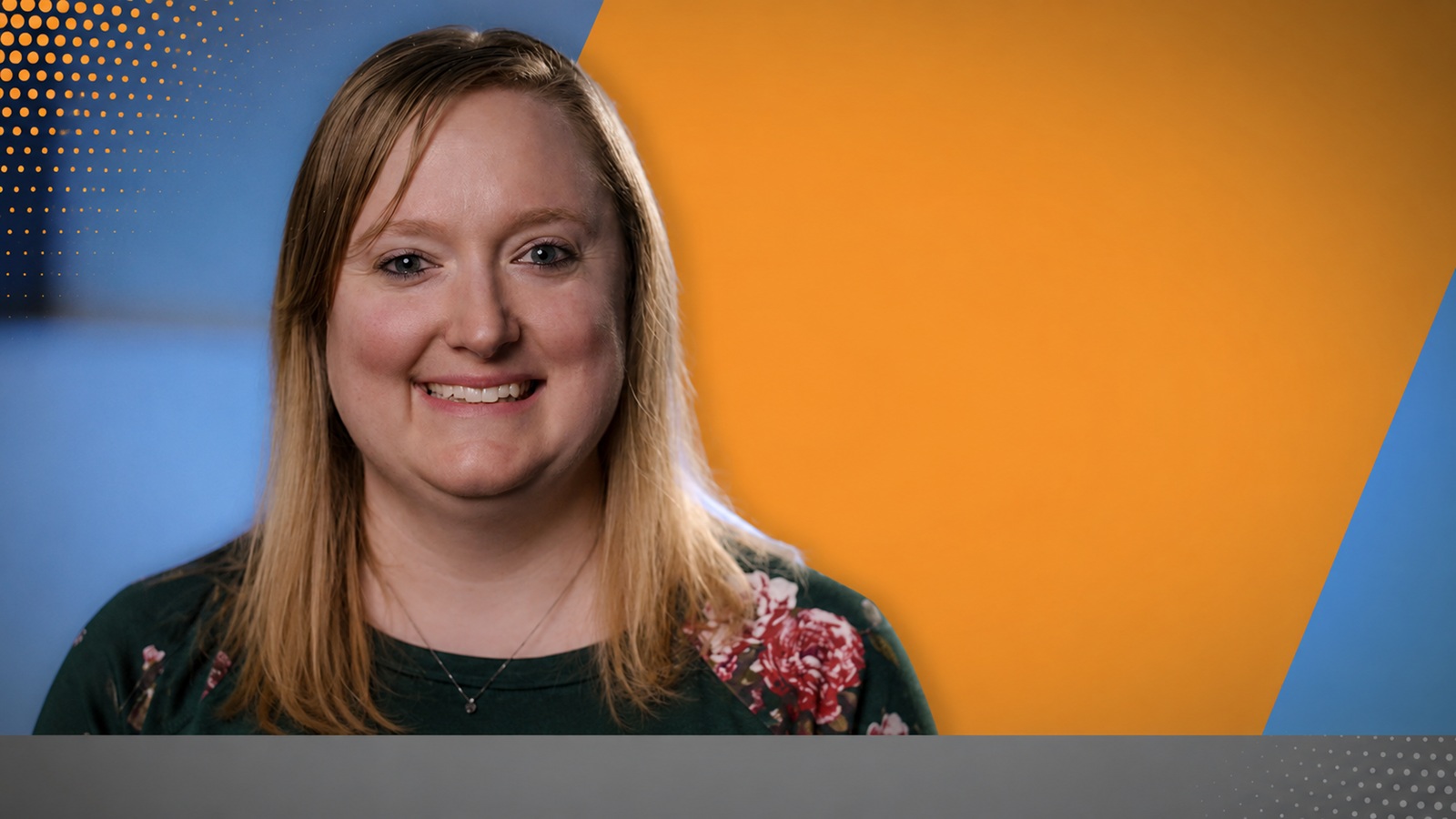
Becoming a mother was supposed to be one of the happiest chapters of Erin’s life. She had recently gotten married, welcomed her first child, and was settling into life with her three-month-old son. Like most new parents, her days revolved around feedings, diaper changes, and soaking up every moment she could with her growing family.
Then one simple movement changed everything.
While lifting her son from the bed, Erin twisted awkwardly and felt a sharp pain in her lower back. At first, she assumed she had strained a muscle and expected it to improve with time. Instead, the pain lingered. As the weeks turned into months, everyday tasks became increasingly difficult. Picking up her baby, playing on the floor, or even getting through a normal day became painful reminders that something wasn’t right.
“It takes a toll on you,” Erin says. “I couldn’t play with my son. I couldn’t pick him up.”
Eventually, the pain became so severe that one morning she couldn’t get out of bed.
“I physically couldn’t move,” she recalls. “The pain was just so horrible.”
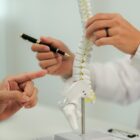
Her husband rushed her to the emergency room, where MRI scans and X-rays finally provided an explanation. She had bulging discs and spinal stenosis in her lower back, two conditions that were placing pressure on the nerves responsible for her pain.
When Chronic Back Pain Is More Than a Muscle Strain
Many people experience back pain after lifting something heavy or twisting the wrong way. In most cases, those injuries improve within a few weeks with rest, activity modification, or physical therapy. However, pain that continues worsening or begins interfering with daily life may indicate an underlying spinal condition.
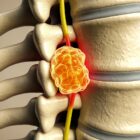
In Erin’s case, imaging revealed bulging discs and spinal stenosis. A bulging disc occurs when one of the discs between the vertebrae extends beyond its normal boundary and irritates nearby nerves. Spinal stenosis develops when the spaces inside the spine narrow, placing additional pressure on those nerves.
Together, these conditions can cause persistent lower back pain, numbness, tingling, weakness, or pain that travels into the hips and legs. As symptoms progress, even routine activities like standing, walking, lifting a child, or getting out of bed can become increasingly difficult.
Like most patients, Erin’s physicians didn’t recommend surgery first. Instead, they began with conservative treatment.
Trying Conservative Treatments for Chronic Lower Back Pain
Erin was determined to avoid surgery if there was another option. Over the next several years, she worked closely with pain management specialists, hoping each new treatment would finally provide lasting relief.
The plan changed repeatedly as one treatment after another failed to produce meaningful improvement. She underwent SI joint injections, epidural steroid injections, nerve blocks, and relied on prescription anti-inflammatory medications and muscle relaxers just to make it through the day. Every new appointment brought another possibility and another reason to hope that her life might soon return to normal.
Instead, months gradually turned into years.
Rather than improving, Erin found herself living around her pain. She depended on medications simply to function and continued missing out on the moments that mattered most with her young family. The life she imagined as a new mother felt increasingly out of reach, and despite exhausting nearly every conservative option available, the pain never truly let up.
Then something completely unexpected changed the way she viewed surgery.
How One Spine Surgery Success Story Changed Erin’s Perspective
In January 2025, Erin received a phone call she never expected. Her husband was at home when severe back pain suddenly brought him to the floor.
“I’m in the living room,” he told her. “I can’t move.”
Testing revealed that he had an L5-S1 disc herniation causing severe nerve compression. Like Erin, he first pursued conservative treatment. He completed physical therapy and received an epidural injection, hoping surgery wouldn’t be necessary.
Instead, his symptoms became worse.
After conservative treatments failed to provide relief, Dr. Anthony Conte recommended an L5-S1 microdiscectomy to relieve pressure on the compressed nerve. He carefully explained the procedure, what recovery would look like, and why surgery offered the best opportunity to eliminate the nerve compression causing her husband’s pain.
Erin remembers sitting beside him after surgery, unsure what to expect. Then he woke up.
“I’ll never forget it,” she says. “He looked at me and said, ‘I have no pain.'”
Watching her husband’s recovery completely changed the way she thought about spine surgery. She saw firsthand not only the technical success of Dr. Conte’s work but also the confidence and compassion he brought to every step of the process. After seeing her husband wake up pain-free, Erin knew that if she ever needed spine surgery, she wanted Dr. Conte to perform it.
Hope.
“If he can take care of this,” she remembers thinking, “I want him to take care of me.”
It's time to get back
to doing what you love.
When It Was Time to Consider Lumbar Fusion Surgery
Even after seeing her husband’s remarkable recovery, Erin still wasn’t convinced surgery was the right decision for her.
Then she had a conversation with her pain management physician that shifted her entire perspective.
She and her husband hoped to expand their family and have another child. Her physician explained that the medications she relied on every day weren’t compatible with that goal. Even if she attempted to stop taking them, there was no guarantee her pain wouldn’t return during pregnancy.
For the first time, Erin realized she wasn’t deciding whether to have surgery. She was deciding what kind of future she wanted.
Managing the pain wasn’t enough anymore. If she wanted to move forward with the life she envisioned, she needed to address the problem itself.
Why Dr. Anthony Conte Recommended Lumbar Fusion Surgery
When Erin met with Dr. Anthony Conte, she already felt confident in the surgeon sitting across from her. She had watched him transform her husband’s life and knew she wanted the same level of care for herself. During the consultation, Dr. Conte carefully reviewed her MRI, explained exactly what was causing her pain, and walked her through every available treatment option. After years of uncertainty, she finally understood not only what was wrong with her spine, but why lumbar fusion offered the best long-term solution.
Unlike a herniated disc that can sometimes be treated by simply relieving pressure on a nerve, Erin’s spine showed instability at the L5-S1 level. Because that segment of her spine continued causing pain every time it moved, stabilizing the area was just as important as relieving nerve compression.
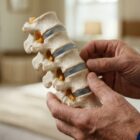
During a lumbar fusion, the damaged disc is removed and replaced with a spacer, often called a cage, that restores proper spacing between the vertebrae. Screws and rods hold the bones in position while they gradually fuse together into one stable segment.
The goal isn’t simply to reduce pain today. It’s to eliminate painful motion, restore stability, and provide lasting relief so patients can return to the activities that chronic back pain once made impossible.
After years of unsuccessful conservative treatment, Erin finally felt confident she understood why surgery was being recommended.
Life After Lumbar Fusion Surgery
Erin underwent lumbar fusion surgery in November 2025.
Although she had spent years worrying about surgery, her experience turned out to be far different than she imagined. Erin underwent lumbar fusion surgery with Dr. Anthony Conte in November 2025. Although she had spent years worrying about surgery, her experience was far different than she imagined. From her first consultation through recovery, she says Dr. Conte and his team made her feel supported, answered every question, and gave her confidence that she was in the right hands.
Just four months later, the difference was remarkable.
The pain that had controlled her life for years was gone.
She no longer relied on pain medication and continued attending physical therapy to rebuild her strength. More importantly, she was able to focus on being a wife, a mother, and a nurse instead of constantly planning her life around chronic pain.
To Erin, the biggest victory wasn’t simply recovering from surgery. It was getting her future back.
For years, Erin measured her life by what chronic back pain prevented her from doing. She worried about caring for her son, depended on medications just to function, and wondered whether she’d ever feel like herself again. After exhausting every reasonable conservative treatment, lumbar fusion gave her the opportunity to move forward instead of simply managing her symptoms.
Today, she’s pain-free, off medication, and continuing to build strength through physical therapy. More importantly, she’s able to focus on the people and experiences that matter most instead of the pain that once dictated every decision she made. Watching spine surgery change her husband’s life gave her the confidence to pursue treatment herself, and together they’ve been able to reclaim a future that once felt uncertain.
Looking back, Erin believes one of the most important decisions she made was choosing the surgeon she trusted. Watching Dr. Conte care for her husband gave her confidence during one of the most difficult moments of her own life. Today, she’s grateful not only for the pain relief she experienced after lumbar fusion but also for the opportunity to move forward with her family and future.
Could Lumbar Fusion or Spine Surgery Help You?
Chronic lower back pain doesn’t have to become your normal. If spinal stenosis, a bulging disc, or another spinal condition is preventing you from enjoying your family, returning to work, or doing the activities you love, our spine specialists are here to help.
At Neurosurgeons of New Jersey, we begin with conservative treatment whenever appropriate and recommend surgery only when it offers the best opportunity for lasting relief. Every treatment plan is tailored to the patient’s symptoms, lifestyle, and long-term goals.
Schedule a consultation with Dr. Anthony Conte and the spine specialists at Neurosurgeons of New Jersey to learn whether lumbar fusion or another treatment option may be right for you.
Frequently Asked Questions
How do you know when you need lumbar fusion surgery?
Lumbar fusion is typically considered after conservative treatments such as physical therapy, medications, or injections have failed to provide lasting relief. It may also be recommended when spinal instability or severe degeneration is contributing to chronic pain.
What is the difference between a bulging disc and spinal stenosis?
A bulging disc occurs when a spinal disc extends beyond its normal position and irritates nearby nerves. Spinal stenosis is the narrowing of the spaces inside the spine, which places pressure on the spinal cord or nerves. Some patients have both conditions at the same time.
Is lumbar fusion the first treatment for chronic back pain?
No. Most patients begin with non-surgical treatments, including physical therapy, medications, activity modification, or injections. Surgery is generally recommended only when these treatments no longer provide meaningful relief or when structural problems require stabilization.
How long does recovery take after lumbar fusion?
Recovery varies depending on the individual and the complexity of the procedure. Many patients begin walking shortly after surgery and gradually return to daily activities over the following weeks and months while participating in physical therapy.
Can lumbar fusion help improve quality of life?
For carefully selected patients, lumbar fusion can significantly reduce pain, improve mobility, and make it easier to return to work, family activities, and other parts of everyday life that chronic back pain once limited.
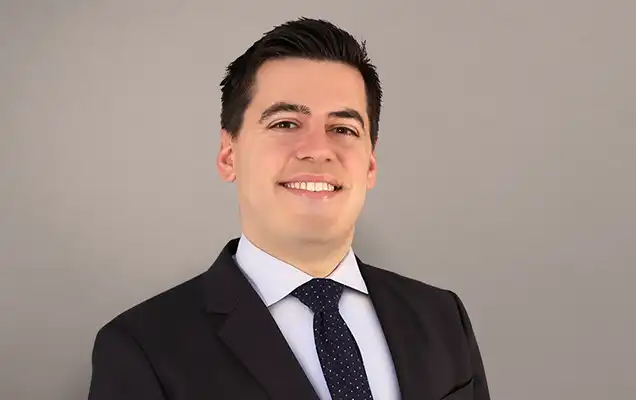
About Dr. Anthony Conte
Dr Conte is a distinguished graduate of an eight-year combined BA/MD program, receiving his bachelor's degree magna cum laude from Siena College and his Doctor of Medicine from Albany Medical College. During his time in Albany, he was inducted into the prestigious Alpha Omega Alpha Honor Society. He completed his residency training at Georgetown University, where he not only served as Chief Resident but also received extensive training in minimally invasive spine surgery techniques. Following his residency, Dr Conte pursued a subspecialized fellowship in complex and reconstructive spine surgery at Northwestern University.Dr Conte’s medical practice is primarily focused on the treatment of various spinal pathologies using minimally invasive techniques. He is skilled in performing minimally invasive cervical and lumbar fusions through posterior, lateral, and anterior approaches, often utilizing imaging guidance and intraoperative navigation to minimize incisions and reduce surgical time. A strong advocate for cervical and lumbar arthroplasties and disc replacements, he aims to preserve motion in the spine and limit future degeneration. Additionally, Dr Conte specializes in managing complex spine conditions, including revision spine reconstruction surgery, scoliosis, spinal tumors, and spinal vascular lesions. His expertise also extends to treating a variety of brain conditions, such as tumors and hemorrhages.