
For Chiari Malformation Awareness Month, Neurosurgeons of New Jersey separates common misconceptions from medical reality and explains what patients should know about symptoms, diagnosis, and care.
Chiari malformation can be confusing because it affects people differently. Some people have no symptoms. Others experience headaches, neck pain, dizziness, balance problems, numbness, swallowing difficulties, or other neurological symptoms.
An MRI can identify the structural change associated with Chiari. However, an MRI alone cannot show whether Chiari is responsible for a person’s symptoms or whether treatment is needed.
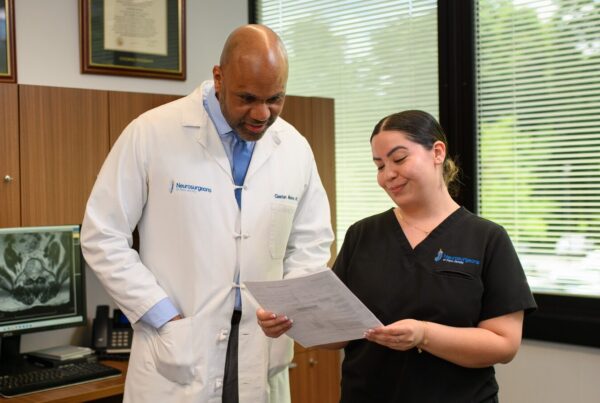
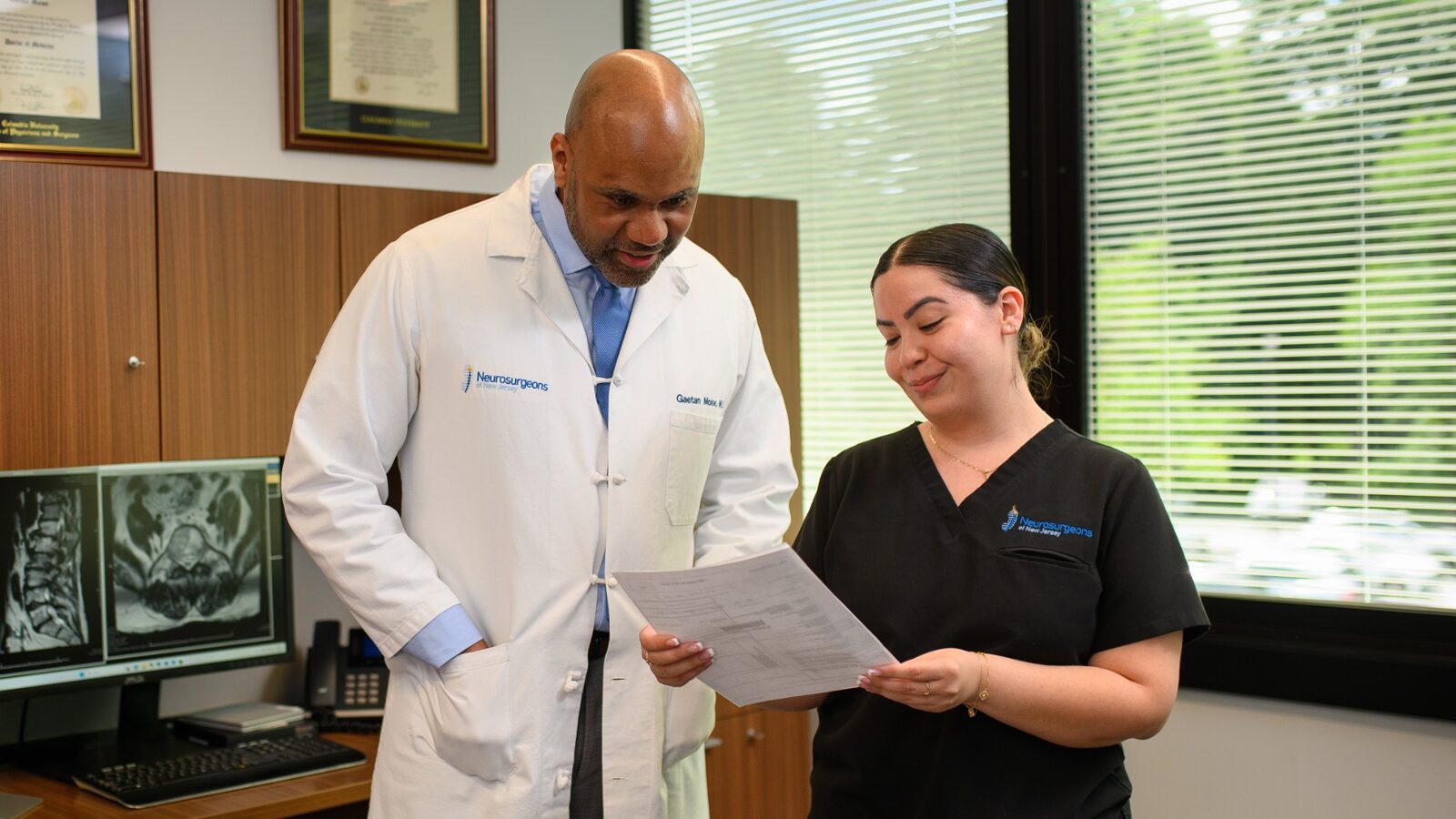
To spread more awareness of Chiari Malformation, Dr. Gaetan Moise, a board-certified neurosurgeon with Neurosurgeons of New Jersey, addresses 10 common myths about the condition.
Chiari Malformation Type 1: 10 Myths vs. Reality
1. Myth: Chiari Malformation Always Causes Obvious Symptoms
Reality:
Some people with Chiari have no symptoms and only discover the condition after having an MRI for another reason.
When symptoms do occur, they vary. They may include headaches, neck pain, dizziness, balance problems, numbness, swallowing problems and other neurological changes.
Source: Mayo Clinic
2. Myth: Frequent Headaches Usually Mean You Have Chiari
Reality:
Headaches have many possible causes. Frequent headaches do not automatically mean a person has Chiari.
A headache associated with Chiari often occurs at the back of the head and may become worse after coughing, sneezing or straining. A medical evaluation can help identify the cause.
Source: Mayo Clinic
3. Myth: Chiari Malformation Is Another Type of Migraine
Reality:
Chiari is a structural condition, not a migraine disorder.
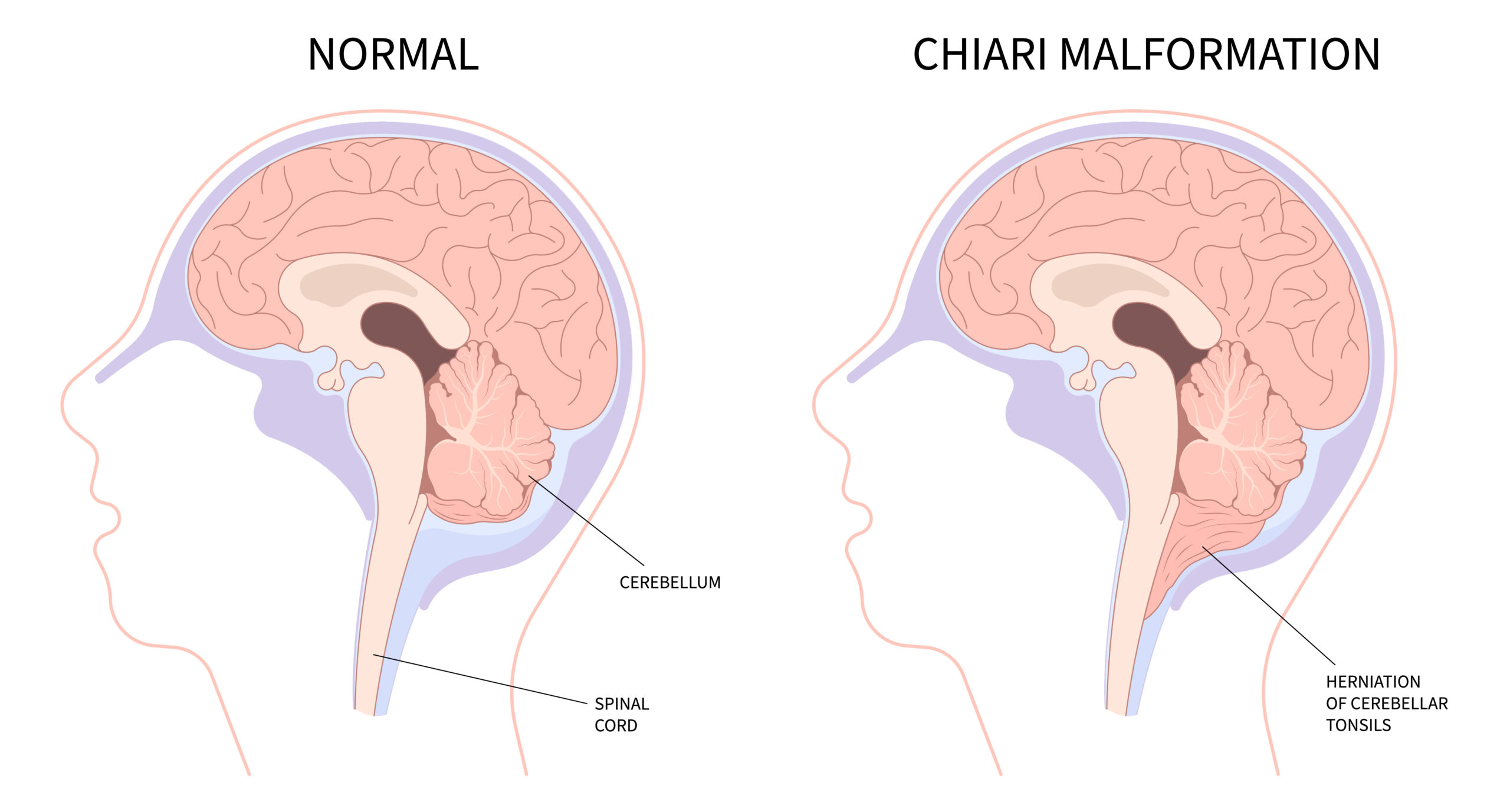
It occurs when tissue in the lower part of the brain extends into the spinal canal. Headaches can be one symptom, but they are only one part of the condition.
Source: Mayo Clinic
4. Myth: Chiari Only Affects Children
Reality:
Chiari can affect children and adults.
The age at which symptoms appear can also depend on the malformation type. With Type 1, symptoms may not become noticeable until late childhood, adolescence or adulthood.
Source: Mayo Clinic
5. Myth: Everyone Diagnosed With Chiari Needs Brain Surgery
Reality:
Not everyone diagnosed with Chiari needs surgery.
People who have no symptoms may only need monitoring. Doctors may recommend follow-up examinations and imaging rather than immediate intervention.
Source: Mayo Clinic
“A Chiari finding on an MRI does not automatically mean it is causing a patient’s symptoms or that surgery is needed. The decision depends on the full clinical picture, including symptoms, neurological findings, and imaging,” explains Dr. Moise.
6. Myth: If an MRI Shows Chiari, It Explains All Your Symptoms
Reality:
An MRI finding does not automatically prove that Chiari is causing a patient’s symptoms.
Doctors look at the person’s symptoms, neurological examination and imaging together. In some cases, Chiari may be discovered incidentally while a patient is being evaluated for something else.
Source: Mayo Clinic
7. Myth: The Number of Millimeters on an MRI Determines How Severe Chiari Is
Reality:
Doctors cannot judge symptom severity from tonsillar descent alone.
A person with measurable descent may have few symptoms, while another person may have more significant problems. Doctors also consider neurological findings and the movement of cerebrospinal fluid.
Sources: PubMed
“The amount of tonsillar descent does not necessarily correspond to how severe a patient’s symptoms are. Symptoms, neurological findings and cerebrospinal fluid dynamics all need to be considered together,” says Dr. Moise.
8. Myth: Chiari Only Affects the Brain
Reality:
Chiari involves the area where the brain and spinal cord meet and can affect the normal flow of cerebrospinal fluid.
It may also be associated with syringomyelia. This condition occurs when a fluid-filled cavity, called a syrinx, develops inside the spinal cord.
Source: National Institute of Neurological Disorders and Stroke
9. Myth: Chiari Symptoms Will Always Get Worse
Reality:
Chiari does not follow the same course in every person.
Some people remain stable and may need only monitoring. Others develop symptoms or complications that require additional evaluation and care.
Source: Mayo Clinic
10. Myth: Chiari Only Causes Headaches
Reality:
Headaches are well known, but Chiari can cause other neurological symptoms.
These may include neck pain, dizziness, balance and coordination problems, numbness, swallowing difficulties and vision problems. The condition can also affect structures near the top of the spinal column.
Source: Mayo Clinic
What Is Chiari Malformation?
Chiari malformation occurs when tissue from the lower part of the brain extends into the spinal canal.
Type 1 is the most common form. Some people have no symptoms. When symptoms occur, their type and severity can vary widely.
This variation is one reason doctors do not make decisions based on MRI findings alone. They consider symptoms, neurological findings, imaging and, when appropriate, cerebrospinal fluid flow.
Chiari Malformation Treatment: Does Everyone Need Surgery?
No. Care depends on the individual.
A person without significant symptoms may need monitoring rather than immediate treatment. Doctors may consider decompression surgery when symptoms are significant, neurological problems are progressing or related complications are present.
The goal of decompression is to create more space around the affected area and improve cerebrospinal fluid flow. Whether surgery is appropriate depends on the patient’s complete clinical picture.
One Patient’s Path to Diagnosis
For Monica, the path to a diagnosis began with symptoms that initially seemed relatively minor.
Before her diagnosis, she describes her life as mostly normal aside from neck stiffness and back problems. In March 2022, she began experiencing numbness around her face and ear while reclining and watching television.
An MRI later revealed Chiari.
Monica sought a second opinion and met with Dr. Moise. She recalls that the diagnosis and possibility of surgery initially came as a shock.
What helped, she says, was having the procedure and recovery explained clearly before making a decision.
“He was very detailed in explaining what the surgery entailed [and] what I should expect afterwards.”
Monica ultimately underwent surgery with Dr. Moise.
She says her recovery went more smoothly than she expected. After surgery, she noticed improvements in problems that had affected her daily life, including headaches and balance.
“Not having to deal with my daily headaches as much, having more balance, being able to just do my daily activities much easier.”
Her experience represents one possible path after a Chiari diagnosis. It is not the only one.
Some people never require surgery. Others may need monitoring or surgical care based on their symptoms, neurological findings, imaging and individual circumstances.
Monica’s experience is an individual patient story. Outcomes and recovery following Chiari care vary from patient to patient.
What Patients Should Understand About Chiari
One of the most important points for patients is that an imaging result is only part of the diagnosis.
Doctors need to determine whether the structural finding matches the patient’s symptoms and neurological examination.
As Dr. Moise explains:
“A Chiari finding on an MRI does not automatically mean it is causing a patient’s symptoms or that surgery is needed. The decision depends on the full clinical picture, including symptoms, neurological findings, and imaging.”
That distinction can help patients better understand why one person may need only monitoring while another may be considered for surgery.
Frequently Asked Questions About Chiari Malformation
What is Chiari malformation?
Chiari malformation is a structural condition in which part of the cerebellum extends into the spinal canal. Some people have no symptoms, while others develop headaches or neurological problems.
What are common Chiari malformation symptoms?
Symptoms may include headaches, neck pain, dizziness, balance problems, numbness, coordination problems, difficulty swallowing and other neurological changes.
Does Chiari always require surgery?
No. Some people do not require immediate intervention and may be monitored. Doctors may consider surgery when symptoms or related complications become significant.
Can doctors find Chiari accidentally on an MRI?
Yes. Doctors sometimes discover Chiari during imaging performed for another reason, especially when a person has few or no symptoms.
Does the number of millimeters on an MRI determine severity?
No. Tonsillar descent is only one part of the evaluation. Doctors also consider symptoms, neurological findings, cerebrospinal fluid flow and related conditions.
What does a Chiari headache feel like?
A typical Chiari headache often occurs near the back of the head. Coughing, sneezing, straining or physical exertion may make it worse.
Can adults develop Chiari symptoms?
Yes. Some people with Type 1 do not develop noticeable symptoms until adolescence or adulthood.
What is syringomyelia, and how is it related to Chiari?
Syringomyelia occurs when a fluid-filled cavity called a syrinx develops inside the spinal cord. Changes in cerebrospinal fluid flow related to Chiari can be associated with this condition.
How do doctors determine whether Chiari is causing symptoms?
Doctors consider the pattern of symptoms, neurological examination and MRI findings. They may also assess cerebrospinal fluid flow rather than relying on a single imaging measurement.
When should someone with Chiari see a neurosurgeon?
A neurosurgical evaluation may be appropriate for significant or worsening headaches, balance problems, numbness, weakness, swallowing problems or other neurological symptoms.
About Dr. Gaetan Moise
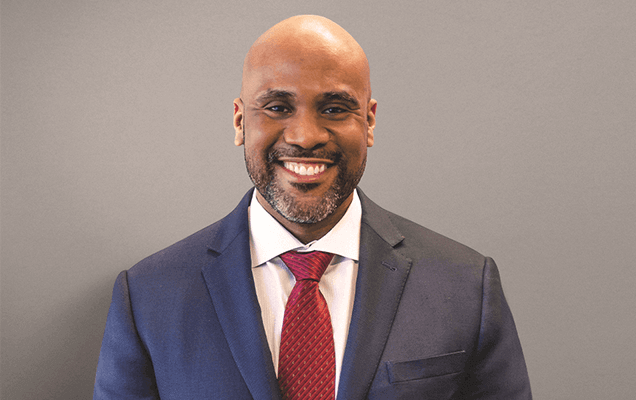
Dr. Gaetan Moise is an accomplished neurosurgeon in North Jersey and is a proud member of Neurosurgeons of New Jersey, practicing out of their Ridgewood office conveniently located on East Ridgewood Avenue. His compassionate evidence-based, results-driven approach is guided by his desire to help patients achieve happy, pain-free lives through non-surgical and appropriate surgical solutions. Dr. Moise’s techniques are influenced by the advancements in minimally invasive surgery technology as well as advances in the understanding of the intricacies of the nervous system, brain, and spinal cord. Dr. Moise is a member of The Congress of Neurological Surgeons and the American Association of Neurological Surgeons. He is accepting new patients.