

After a fall at home in 2023, Anita Hastings suffered a severe cervical spinal cord injury that left her unable to move her arms and legs. Following emergency ACDF surgery with neurosurgeon Dr. Jonathan Yun, months of rehabilitation, and continued recovery, Anita now walks 4 to 6 miles a day with a walker, drives, and has regained much of her independence.
Key Takeaways About Spinal Cord Injury
- Approximately 18,000 new traumatic spinal cord injuries occur in the U.S. each year.
Source: National Spinal Cord Injury Statistical Center - More than 300,000 Americans are estimated to be living with traumatic spinal cord injury.
Source: National Spinal Cord Injury Statistical Center - More than 15 million people worldwide are living with spinal cord injury.
Source: World Health Organization - Falls and road traffic injuries are among the leading causes of traumatic spinal cord injury worldwide.
Source: World Health Organization
Anita’s Injury and Emergency Treatment
In September 2023, Anita fell at home and was unable to move. She remained there for approximately 12 to 14 hours before a friend found her and emergency help arrived.
According to Dr. Yun, Anita suffered a fracture-dislocation of the cervical spine, involving fractures and disruption of the bones and ligaments that severely compressed her spinal cord. She also presented with quadriplegia, meaning her arms and legs were paralyzed.
“Ms. Hastings came to the Valley Hospital in September 2023 as an emergency after sustaining a fall at home. She suffered a traumatic spinal cord injury known as a fracture/dislocation, where, in her cervical spine, she essentially had a fracture and complete disconnection of her spine involving her bones and ligaments, which severely compressed her spinal cord. In addition to that, she had quadriplegia, meaning that all of her extremities, arms and legs, were paralyzed.” — Dr. Jonathan Yun
Anita remembers how uncertain her future seemed at the time.
“There were two people that said I was going to walk. Everybody else said no.” — Anita Hastings
How ACDF Surgery Was Used in Anita’s Treatment
ACDF, or anterior cervical discectomy and fusion, can relieve pressure on the spinal cord and stabilize the cervical spine. In Anita’s case, ACDF was part of an emergency two-step surgical approach used to decompress the spinal cord, reduce the fracture-dislocation, and stabilize her neck after a severe traumatic injury.
“In these cases, urgency is key, so we performed an emergency two-step surgery, where we decompressed the spinal cord, reduced the fracture, and stabilized the spine.” — Dr. Jonathan Yun
Anita’s treatment was specific to the nature and severity of her injury. Not every cervical spinal cord injury requires ACDF or the same surgical approach.
Complete vs. Incomplete Spinal Cord Injury
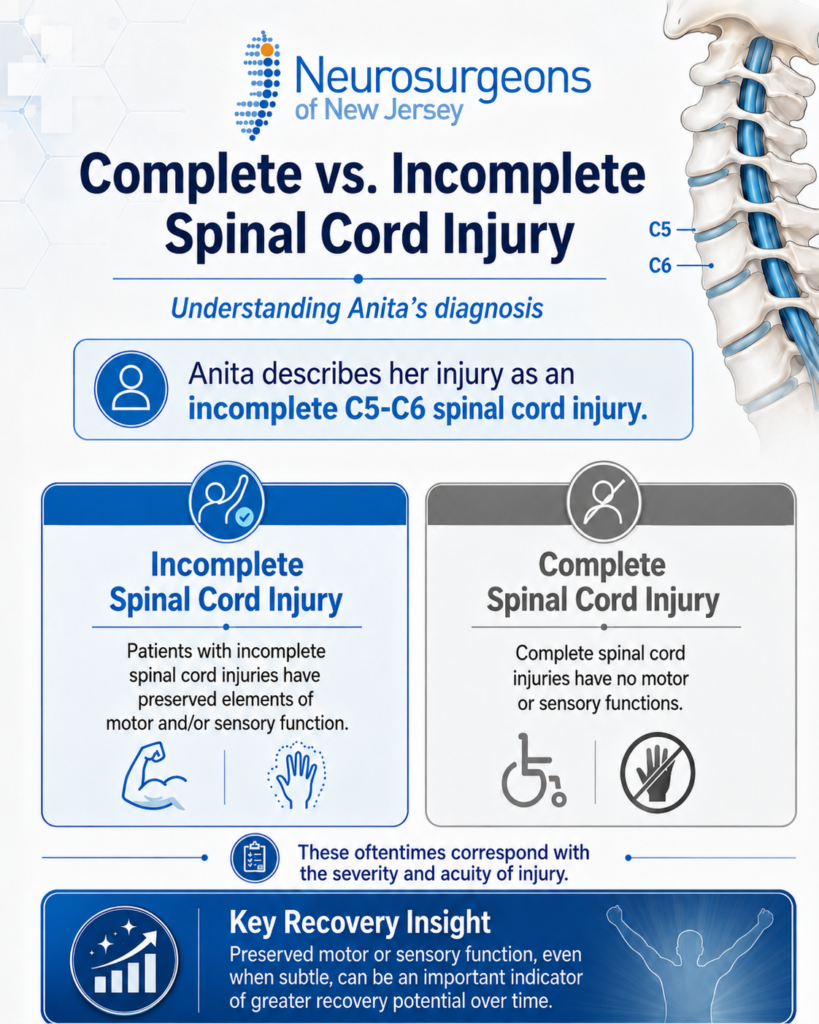
Anita describes her injury as an incomplete C5-C6 spinal cord injury.
Dr. Yun explains:
Patients with incomplete spinal cord injuries have preserved elements of motor and/or sensory function, whereas complete spinal cord injuries have no motor or sensory functions. These oftentimes correspond with the severity and acuity of injury.
If there are preserved functions, even if subtle, this can predict a greater degree of spinal cord recovery with time.
Why Recovery Can Be Difficult to Predict Early
Dr. Yun explains:
In a surgeon’s toolbox are the options of neurological decompression and spinal stabilization, essentially getting the spinal cord out of harm’s way and preventing ongoing injury and symptoms.
Once in a better environment, we rely on the patient’s inherent biologic healing processes to begin the recovery process.
Anita’s experience demonstrates how neurological status immediately after injury may not necessarily represent a patient’s eventual level of function.
It's time to get back
to doing what you love.
Why Timing Can Matter
When a traumatic injury causes severe spinal cord compression, rapid evaluation and treatment can be important.
Dr. Yun explains:
What we know about the nervous system is that the length of time of symptoms can predict the length of time of recovery.
With that knowledge, in patients who present with acute injuries and sudden-onset symptoms, their best chance at functional recovery often comes with rapid surgical intervention and neurologic decompression.
For Anita, Dr. Yun and his team performed emergency surgery to relieve pressure on the spinal cord, reduce the fracture, and stabilize her cervical spine.
Anita’s Recovery Over Time
Anita’s surgery was only the beginning of her recovery.
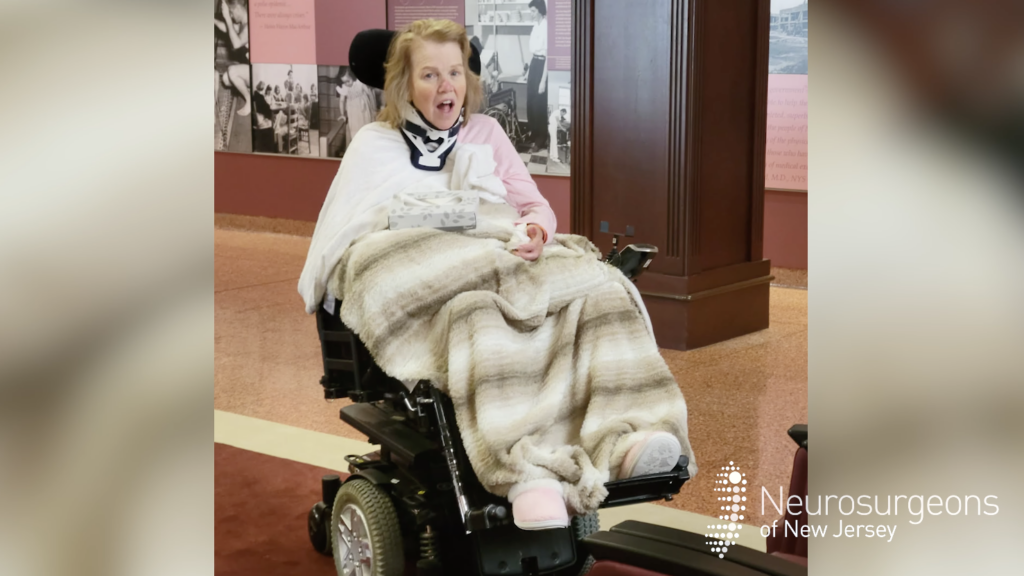
After leaving the hospital, she spent approximately 90 days in rehabilitation, followed by another 10 weeks in assisted living. When she eventually returned home, she still used a specialized wheelchair and Hoyer lift and required around-the-clock assistance.
Dr. Yun continued to follow her recovery over the next two years.
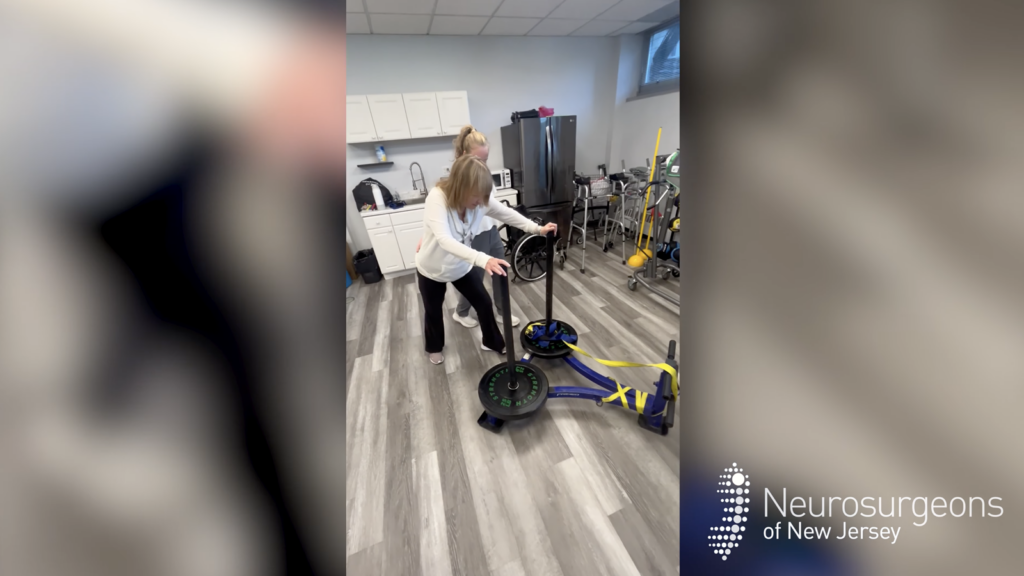
“Over the next two years, we kept a very close eye on her, and she put in the hard work of working with physical therapy and rehabilitation. Initially, when I saw her in the office shortly after surgery, she was still quite weak and wheelchair bound.” — Dr. Jonathan Yun
Over time, that began to change.
“Eventually, she regained function, the ability to walk and use her arms/hands, and really turned her life around.” — Dr. Jonathan Yun
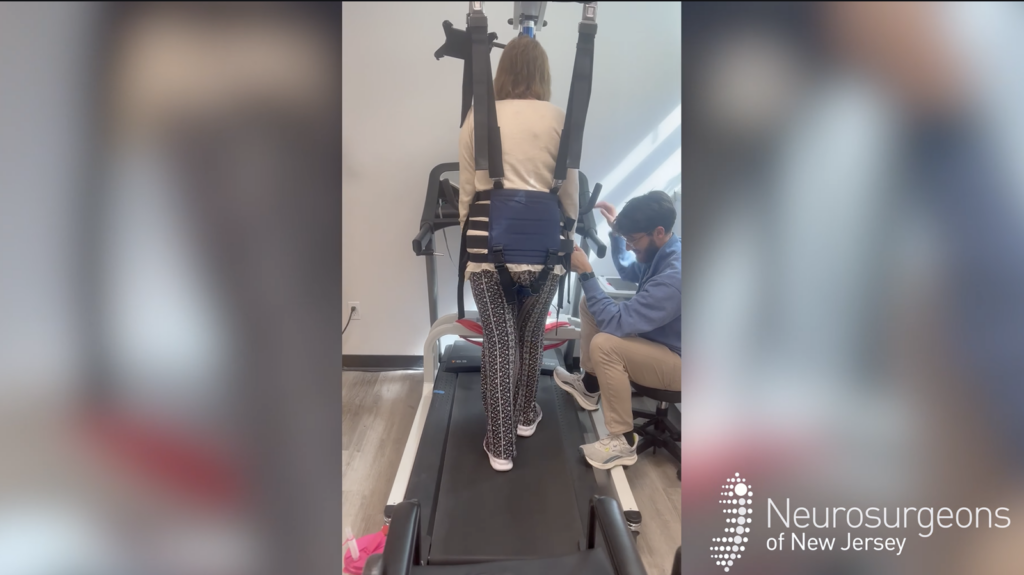
Today, Anita says she:
- Walks 4 to 6 miles per day with a walker
- Drives
- Uses her arms and hands
- Goes out more confidently
- Continues working toward greater mobility and independence
How Long Can Recovery Continue?
Dr. Yun explains:
We know that the brain and spinal cord recover at slow rates, which can be quite frustrating for patients. In the laboratory, we found that neurons of the central nervous system grow at very slow rates.
With that in mind, we always maintain a degree of optimism for ongoing recovery even months to years after an injury.
Anita’s own progress took place over an extended period, with continued rehabilitation and functional gains long after she left the hospital.
What Can Influence Recovery?
Dr. Yun explains:
The main factors that predict recovery are the severity of symptoms and the length of time the symptoms have been present.
Beyond that, an active, ongoing physical therapy regimen and participating in rehabilitation are strong indicators of positive recovery.
Anita’s experience highlights the combination of emergency treatment, long-term follow-up, rehabilitation, and continued physical effort that can be involved in recovery after a severe spinal cord injury.
Why an Initial Prognosis Is Not Always the Final Outcome
Dr. Yun explains:
The initial prognosis of spinal cord injury is based on the best objective data available at this time of diagnosis.
However, as we know in medicine overall, nothing is 100% certain. Therefore, we as physicians and patients should strive to work towards expecting better outcomes, specifically in terms of spinal cord injury. This includes timely diagnosis and rapid medical and surgical intervention as well as active, ongoing participation in therapy and rehabilitation.
Anita’s experience is one example of why recovery should be evaluated over time rather than solely through the lens of the patient’s condition immediately following an injury.
Her outcome is individual and should not be interpreted as a prediction of recovery for every patient with spinal cord injury.
Building on a Stable Foundation
“If anything, I would say that it shows the resilience of Ms Hastings from an otherwise devastating injury. I was there to make sure her foundation was stable enough so that she could build on that to get better.” — Dr. Jonathan Yun
For Anita, that process meant months of rehabilitation, adapting to life with significant physical limitations, and continuing to work toward greater independence even after returning home.
When a Possible Spinal Cord Injury Is an Emergency
A suspected spinal cord injury following an accident requires immediate medical attention.
Emergency warning signs after trauma can include:
- Sudden weakness or paralysis
- Loss of sensation, numbness, or tingling
- Severe neck or back pain or pressure
- Difficulty walking or maintaining balance
- Loss of bladder or bowel control
- Difficulty breathing
If a spinal cord injury is suspected after an accident, call 911 or seek emergency medical assistance rather than scheduling a routine medical appointment. Avoid moving the injured person unless necessary for immediate safety.
Source: Mayo Clinic, Spinal Cord Injury: Symptoms and Causes
Anita’s Message to Others
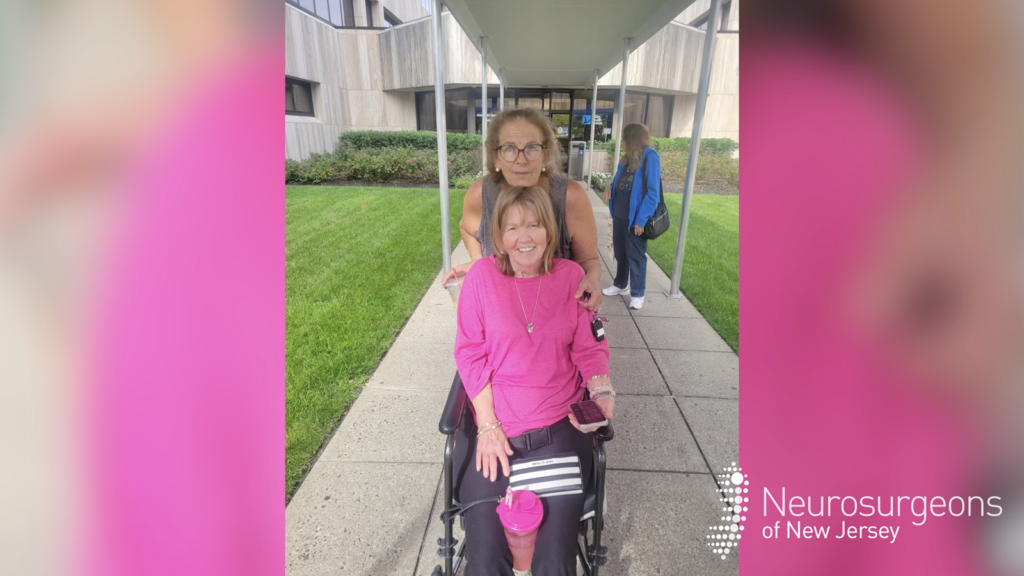
“When I see people who were like me, I talk to them. I try to help them because there’s always hope.” — Anita Hastings
5 Things Patients and Families Should Know
- Complete and incomplete spinal cord injuries are different.
- Neurological recovery cannot always be predicted immediately.
- Timing can matter when the spinal cord is acutely compressed.
- Recovery may continue for months or even years.
- Ongoing physical therapy and rehabilitation can play an important role in recovery.
About Dr. Jonathan Yun
Dr. Jonathan Yun is a board-certified neurosurgeon in New Jersey specializing in minimally invasive and complex spine surgery, including spinal decompression, fusion, cervical spine injuries, and robotic-assisted procedures. He uses advanced navigation and minimally invasive techniques to provide personalized treatment focused on relieving neurological compression, restoring function, and improving quality of life.
Frequently Asked Questions
What is ACDF surgery?
ACDF, or anterior cervical discectomy and fusion, is a neck surgery that removes a damaged disc to relieve pressure on the spinal cord or nerves. The affected vertebrae are then fused together to stabilize the spine.
Is ACDF used for every cervical spinal cord injury?
No. ACDF may be used when conditions such as a damaged disc, fracture, instability, or spinal cord compression require surgical treatment. The appropriate approach depends on the type and severity of the injury.
Can ACDF surgery reverse a spinal cord injury?
ACDF can relieve pressure on the spinal cord and stabilize the cervical spine, but it cannot guarantee restoration of neurological function or reverse all spinal cord damage that has already occurred. Recovery varies based on the individual injury.
What is the difference between a complete and an incomplete spinal cord injury?
Patients with incomplete spinal cord injuries have preserved elements of motor and/or sensory function, whereas complete spinal cord injuries have no motor or sensory functions. These oftentimes correspond with the severity and acuity of injury.
If there are preserved functions, even if subtle, this can predict a greater degree of spinal cord recovery with time.
How long can spinal cord injury recovery continue?
We know that the brain and spinal cord recover at slow rates, which can be quite frustrating for patients. In the laboratory, we found that neurons of the central nervous system grow at very slow rates.
With that in mind, we always maintain a degree of optimism for ongoing recovery even months to years after an injury.
When should someone seek emergency care for a possible spinal cord injury?
After an accident or trauma, symptoms including sudden weakness or paralysis, numbness, loss of sensation, severe neck or back pain, difficulty walking, or breathing problems require immediate medical evaluation. If a spinal cord injury is suspected, call 911 or seek emergency medical assistance.

About Dr. Jonathan Yun
Dr. Jonathan Yun is a board-certified neurosurgeon who focuses on helping patients with spine disorders. He uses advanced, minimally invasive techniques to reduce recovery time and make surgery safer and less painful. With tools like computer-guided systems, advanced imaging technologies, and robotic-assisted surgery, Dr. Yun is able to provide precise, tailored care. His expertise covers a wide range of treatments, from highly targeted procedures to alleviate pressure on nerves to performing minimally-invasive fusions and correcting spinal deformities. Dr. Yun is currently accepting new patients.