
If walking to the mailbox leaves your legs heavy, numb, or aching, pay attention to that. Especially if sitting down for a few minutes makes everything feel better.
Lumbar spinal stenosis is one of the most common spine conditions in adults over 50. For many patients, it develops so gradually that months or even years pass before they realize what’s happening.
Shorter walks. More rest stops. Avoiding hills. Giving up activities they used to enjoy without quite understanding why.
Getting a clear diagnosis changes that. It gives you something concrete to work with and a path forward that doesn’t involve simply doing less.
What Is Lumbar Spinal Stenosis?
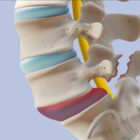
Running through the center of your vertebrae is the spinal canal. It houses and protects the spinal cord and the nerve roots that branch out from it. Lumbar spinal stenosis happens when that canal narrows in the lower back. The narrowing puts pressure on the nerves traveling through it.
The word stenosis simply means narrowing. It’s a gradual process, and symptoms build slowly until they start interfering with things that used to feel effortless.
The lumbar spine runs along the lower portion of your back, from roughly your waistline to your pelvis. It’s the section most commonly affected by stenosis, and the place where age-related changes tend to concentrate first.
What Causes Lumbar Stenosis?
The most common cause is the wear and tear that accumulates in the spine over time. As the discs between your vertebrae age, they lose height and begin to bulge.
The joints that connect your vertebrae, called facet joints, develop arthritis and can grow bone spurs. The ligaments that hold the spine together thicken and stiffen. Any one of these changes can reduce the space available for your nerves. When several happen together, the narrowing becomes significant enough to cause symptoms.
Lumbar spinal stenosis most often affects patients between the ages of 50 and 80. In some cases it appears earlier, particularly in people with certain structural or genetic predispositions.
Less commonly, stenosis develops from a herniated disc pressing into the spinal canal, a vertebra slipping forward over another, a spinal injury, or in rare cases, a tumor or cyst near the spine. Understanding the specific cause matters because it shapes the treatment approach.
The Hallmark Symptom: Neurogenic Claudication
Most patients with lumbar spinal stenosis describe a predictable and frustrating pattern. Walking or standing triggers pain, heaviness, cramping, or numbness in the legs, sometimes in both at once. Sitting down or leaning forward brings relief, often within a few minutes.
Neurogenic claudication is leg pain, heaviness, or numbness that builds during walking or standing and eases when you sit or lean forward. It’s one of the most telling signs of lumbar spinal stenosis. When you stand upright or extend your back, the nerves in the lumbar spine face increased pressure. That pressure can temporarily reduce blood flow to the nerves, triggering symptoms.
Leaning forward opens the spinal canal just enough to relieve that pressure. Sitting, leaning on a shopping cart, or walking slightly hunched all produce the same effect.
Many patients find they can walk much farther on an uphill grade than on flat ground. The forward lean that comes naturally on an incline takes pressure off the nerves. Some find that cycling is far more comfortable than walking for exactly the same reason.
Neurogenic claudication is one of the most recognizable patterns physicians at Neurosurgeons of New Jersey see when evaluating patients for lumbar stenosis. Identifying it accurately is a critical step toward the right diagnosis.
Other symptoms can include lower back pain, weakness in one or both legs, and in more advanced cases, changes in bladder or bowel function. The last symptom warrants prompt medical attention.
It's time to get back
to doing what you love.
How Lumbar Stenosis Is Diagnosed
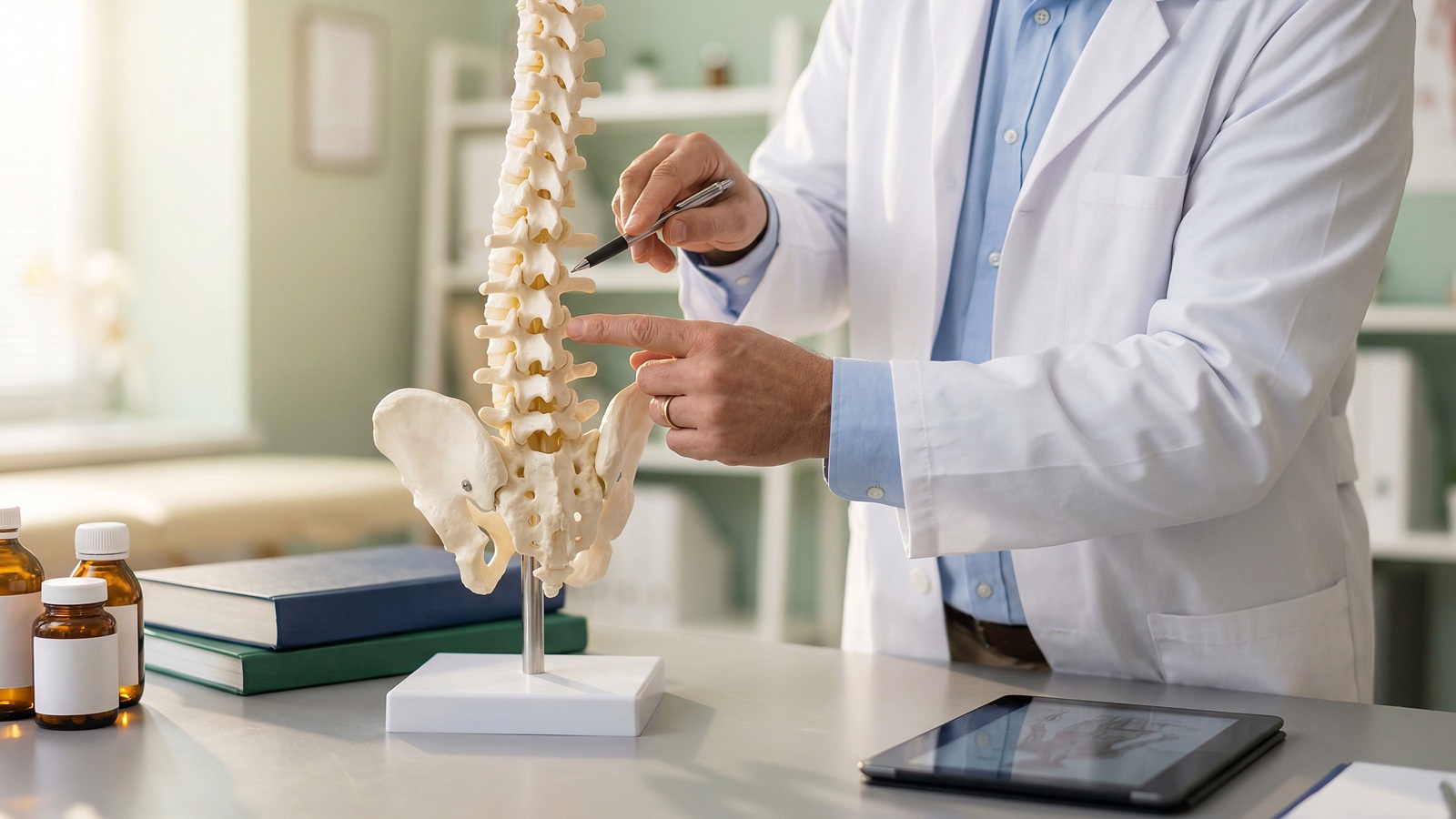
Diagnosis starts with a thorough conversation. Your physician will ask about your symptoms, when they started, and what makes them better or worse. Symptoms that worsen with walking and ease with sitting are often the clearest diagnostic signal a physician has.
A physical examination follows, assessing your reflexes, muscle strength, sensation, and gait. Watching how a patient walks and moves can reveal a great deal about which nerve levels are involved.
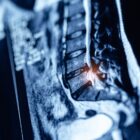
MRI gives your physician a detailed view of the spinal canal, discs, facet joints, and nerve roots. It shows exactly where the narrowing is occurring and which structures are under pressure. In cases where MRI isn’t possible, a CT scan or CT myelogram can provide similar structural information.
Neurosurgeons of New Jersey operates across multiple locations throughout New Jersey. Patients can access an initial evaluation and follow-up care close to home.
Treatment Options for Lumbar Spinal Stenosis
Lumbar stenosis treatment starts with the least invasive options. From there, care advances based on how well symptoms respond.
Physical therapy focuses on strengthening the muscles around the spine, improving posture, and reducing nerve pressure through smarter movement. For many patients, those changes make a real difference in daily comfort. Anti-inflammatory medications help manage pain during flare-ups. For patients whose symptoms make it hard to stay active or participate in therapy, epidural steroid injections can provide targeted relief directly where it’s needed.
When conservative treatment stops providing adequate relief and stenosis is significantly affecting quality of life, surgery becomes worth discussing. A laminectomy is the most common surgical procedure for lumbar spinal stenosis. It removes the bone and tissue, narrowing the canal and compressing the nerves. When performed with a minimally invasive approach, a laminectomy relieves symptoms effectively while preserving the surrounding muscles and tissue.
When stenosis comes with spinal instability, a fusion may be recommended alongside decompression. The goal is to stabilize the spine once the narrowing has been addressed. Your surgeon will walk through exactly what’s involved and why, based on what your imaging and exam show.
The specialists at Neurosurgeons of New Jersey evaluate each patient individually. Treatment recommendations reflect the full clinical picture, not just a single finding on a scan.
Living With Lumbar Stenosis Before Treatment
One of the harder parts of lumbar spinal stenosis is that it tends to limit the activities patients value most. Patients often describe giving up the same kinds of things before they seek care. Walking the neighborhood, working in the garden, standing comfortably at a family gathering, traveling without planning rest stops around pain.
That progression isn’t inevitable. Many patients manage symptoms effectively with a combination of physical therapy, activity modification, and injections for extended periods. Others reach a point where those tools no longer provide enough relief and decide surgery is the right next step.
Either way, the decision belongs to the patient. The care team’s role is to make sure every decision is well-informed, clearly explained, and built around what matters most to the patient making it.
When to See a Specialist
If walking triggers leg symptoms that ease when you sit down, or if you’ve started quietly limiting your activity to avoid discomfort, that’s a good time to get evaluated. Seeking an assessment doesn’t commit you to any particular treatment. It gives you an accurate diagnosis and a clear picture of where things stand.
Progressive leg weakness, significant difficulty walking, or any changes in bladder or bowel function all call for prompt attention rather than a wait-and-see approach. These symptoms can indicate a level of nerve compression that benefits from timely intervention.
With multiple office locations across New Jersey, Neurosurgeons of New Jersey makes it easy to access a specialist evaluation and follow-up care without a long commute or a long wait.
Frequently Asked Questions
What is the difference between lumbar stenosis and a herniated disc?
A herniated disc occurs when disc material pushes out of its normal boundary and presses on a nerve. Lumbar stenosis refers to a general narrowing of the spinal canal that compresses nerves over a broader area. The two conditions can coexist, and both can produce radiating leg symptoms. Imaging helps distinguish between them and guides the right treatment approach.
Is lumbar spinal stenosis serious?
It’s a condition that deserves attention and proper management.
For most patients, it’s manageable with the right treatment approach. In cases where nerve compression is severe or progressive, timely intervention becomes more important.
Can lumbar stenosis get worse over time?
It can, though the rate of progression varies considerably between patients. Some people remain stable for years with conservative management. Others experience gradual worsening that eventually leads them to consider surgical options.
Does lumbar stenosis always require surgery?
No. Many patients manage their symptoms effectively with physical therapy, medication, and injections for extended periods. Surgery becomes worth discussing when conservative approaches stop providing adequate relief or when symptoms are significantly limiting daily life.
What is neurogenic claudication?
Neurogenic claudication is leg pain, heaviness, or numbness that builds during walking or standing and eases when you sit or lean forward. It’s one of the most telling signs of lumbar spinal stenosis and an important part of how physicians recognize and diagnose the condition.
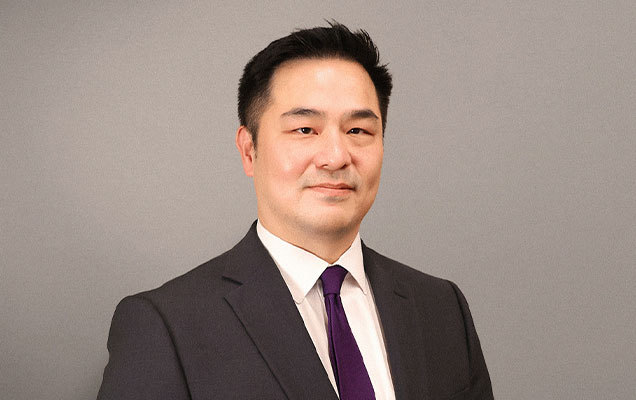
About Dr. Jonathan Yun
Dr. Jonathan Yun is a board-certified neurosurgeon who focuses on helping patients with spine disorders. He uses advanced, minimally invasive techniques to reduce recovery time and make surgery safer and less painful. With tools like computer-guided systems, advanced imaging technologies, and robotic-assisted surgery, Dr. Yun is able to provide precise, tailored care. His expertise covers a wide range of treatments, from highly targeted procedures to alleviate pressure on nerves to performing minimally-invasive fusions and correcting spinal deformities. Dr. Yun is currently accepting new patients.