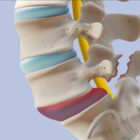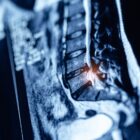
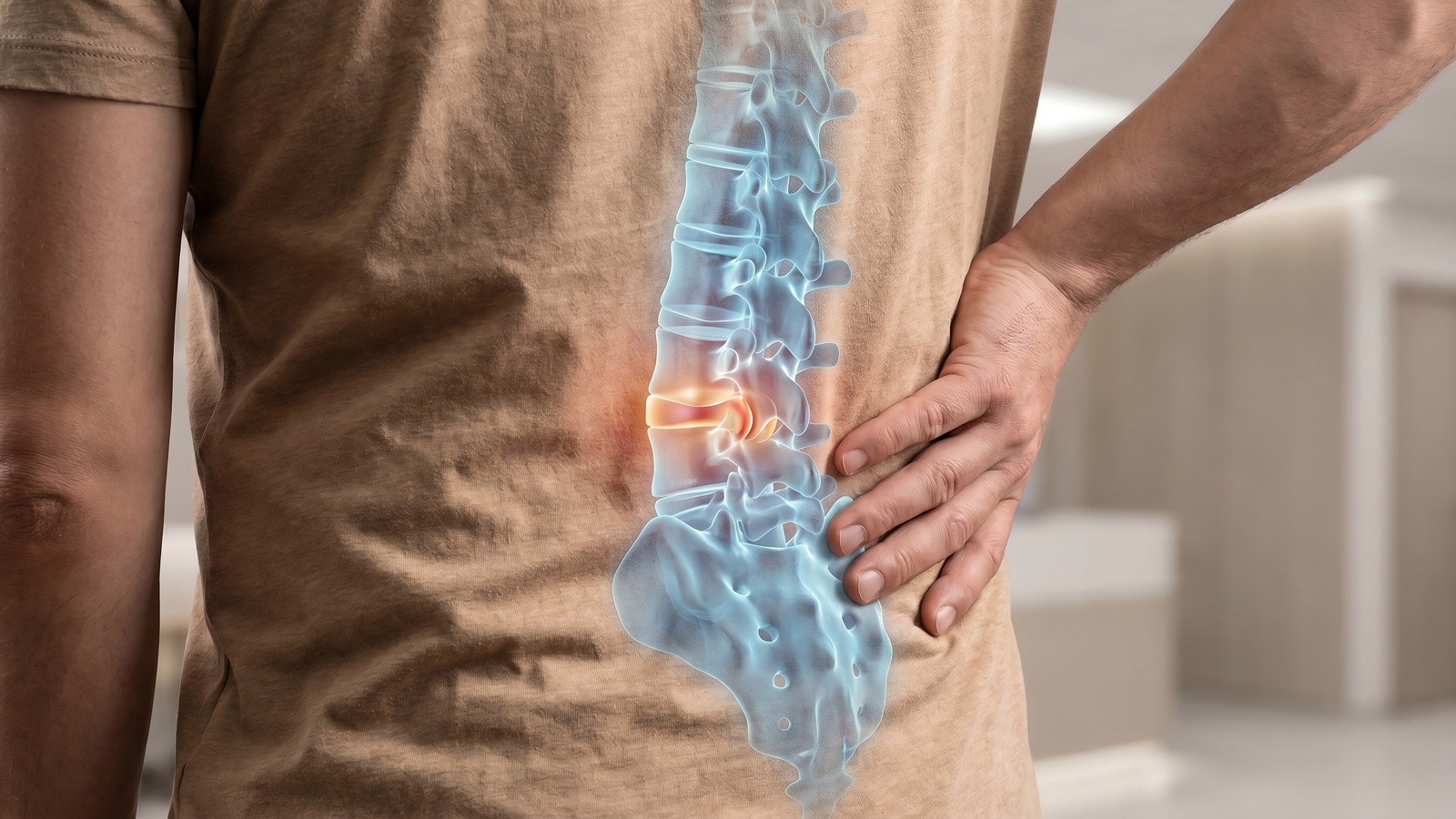

A bulging disc in the lumbar spine is one of the most common findings on MRI scans. Also called a lumbar bulging disc, this condition occurs when one of the discs in the lower back extends beyond its normal boundaries.
Many people are surprised to learn they have a bulging disc in the lumbar region because not every disc abnormality causes symptoms. However, when a bulging disc presses on nearby nerves, it can lead to lower back pain, sciatica, numbness, or weakness in the legs.
Understanding what a lumbar bulging disc means, what symptoms it can cause, and when treatment may be necessary can help you make informed decisions about your care.
What Is a Bulging Disc in the Lumbar Spine?
The lumbar spine consists of five vertebrae in the lower back. Between each vertebra is a spinal disc that acts as a cushion and helps absorb shock during movement.
A bulging disc occurs when the outer ligament layer of the disc weakens and protrudes outward beyond its normal boundary. Unlike a herniated disc, the outer layer remains intact and the inner disc material does not break through.
Bulging discs are often associated with age-related wear and tear, sometimes called degenerative disc disease. They may also develop after repetitive strain or injury.
Many people have a lumbar bulging disc without experiencing symptoms. In fact, MRI scans frequently reveal bulging discs in people who have no pain at all.
What Are the Symptoms of a Lumbar Bulging Disc?
Lumbar disc symptoms vary depending on the size and location of the bulge and whether nearby nerves are affected.
Some people experience only mild discomfort, while others develop symptoms that interfere with daily activities.
Common symptoms of a bulging disc in the lower back include:
- Lower back pain
- Pain that radiates into the buttocks or legs
- Sciatica
- Numbness or tingling in the legs or feet
- Muscle weakness
- Pain that worsens with sitting, bending, or certain movements
When a bulging disc compresses a nerve root, symptoms often occur on one side of the body and may follow the path of the affected nerve.
Is a Lumbar Bulging Disc Serious?
Not necessarily. A bulging disc in the lumbar region can range from a minor imaging finding to a condition that causes significant nerve compression.
When evaluating a lumbar bulging disc, your doctor will look at the full picture: the size and location of the bulge, whether spinal nerves are being compressed, how severe your symptoms are, and whether things are improving or getting worse. The neurological examination plays a key role in that assessment as well.
The MRI report alone does not determine how serious the condition is. Many people have disc abnormalities that never require surgery or extensive treatment.
It's time to get back
to doing what you love.
Bulging Disc vs. Herniated Disc
Although the terms are sometimes used interchangeably, a bulging disc and a herniated disc are not the same. A bulging disc occurs when the disc extends beyond its normal boundaries while the outer layer remains intact. A herniated disc occurs when the outer layer tears and some of the soft inner material pushes outward.
Both conditions can cause nerve compression and similar symptoms, including back pain, sciatica, numbness, and weakness. The severity of symptoms depends more on the amount of nerve irritation than on the specific diagnosis.
Can a Lumbar Bulging Disc Heal on Its Own?
Many people improve without surgery.
Conservative care is typically the first step. That usually means a combination of physical therapy, anti-inflammatory medications, activity modification, and in some cases epidural steroid injections to reduce nerve irritation.
Symptoms may improve as inflammation decreases and pressure on the nerves lessens. While the disc itself may not return to its original shape, many patients are able to manage symptoms successfully and return to normal activities.
When Is Surgery Considered?
Surgery is not necessary for most lumbar bulging discs.
However, surgery may be considered when:
- Symptoms persist despite conservative treatment
- Leg pain becomes severe
- Muscle weakness develops
- Numbness worsens
- Nerve compression significantly affects quality of life
The goal of surgery is typically to relieve pressure on the affected nerve and improve symptoms.
A spine specialist can help determine whether surgical treatment is appropriate based on your symptoms, imaging, and neurological examination.
When Should You See a Spine Specialist?
You should consider an evaluation if you experience:
- Persistent lower back pain
- Sciatica or pain radiating into the legs
- Numbness or tingling
- Muscle weakness
- Difficulty standing, walking, or performing daily activities
- Symptoms that do not improve with conservative treatment
A spine specialist can determine whether a lumbar bulging disc or another spinal condition may be contributing to your symptoms.
Understanding Your MRI Results
Learning that you have a bulging disc in the lumbar spine can be concerning, especially if the finding appears unexpectedly on an MRI report.
Fortunately, many lumbar bulging discs do not require surgery and can be managed successfully with conservative treatment. The most important question is not simply what the MRI shows, but whether the disc is causing symptoms and affecting nerve function.
At Neurosurgeons of New Jersey, our specialists evaluate the entire picture, including your symptoms, imaging, and neurological function, to determine the most appropriate treatment approach. Whether you are seeking answers about a recent MRI or exploring treatment options for ongoing lower back pain, our team can help you understand your diagnosis and next steps.
FAQs
What is a bulging disc in the lumbar region?
A bulging disc in the lumbar region occurs when one of the discs in the lower back extends beyond its normal boundaries. Many bulging discs do not cause symptoms, but they can lead to pain or sciatica if they compress nearby nerves.
What are the symptoms of a lumbar bulging disc?
Common lumbar disc symptoms include lower back pain, sciatica, numbness, tingling, muscle weakness, and pain that radiates into the buttocks or legs.
Can a bulging disc in the lower back heal on its own?
Many people improve with conservative treatments such as physical therapy, medications, and activity modification. Symptoms often improve even if the disc itself does not completely return to its original shape.
Is a lumbar bulging disc the same as a herniated disc?
No. A bulging disc occurs when the outer layer of the disc remains intact but extends outward. A herniated disc occurs when the outer layer tears and the inner material pushes through.
Does every lumbar bulging disc require surgery?
No. Most lumbar bulging discs can be managed without surgery. Surgical treatment is typically reserved for patients with persistent symptoms, significant nerve compression, or progressive neurological deficits.

About Dr. Jonathan Yun
Dr. Jonathan Yun is a board-certified neurosurgeon who focuses on helping patients with spine disorders. He uses advanced, minimally invasive techniques to reduce recovery time and make surgery safer and less painful. With tools like computer-guided systems, advanced imaging technologies, and robotic-assisted surgery, Dr. Yun is able to provide precise, tailored care. His expertise covers a wide range of treatments, from highly targeted procedures to alleviate pressure on nerves to performing minimally-invasive fusions and correcting spinal deformities. Dr. Yun is currently accepting new patients.