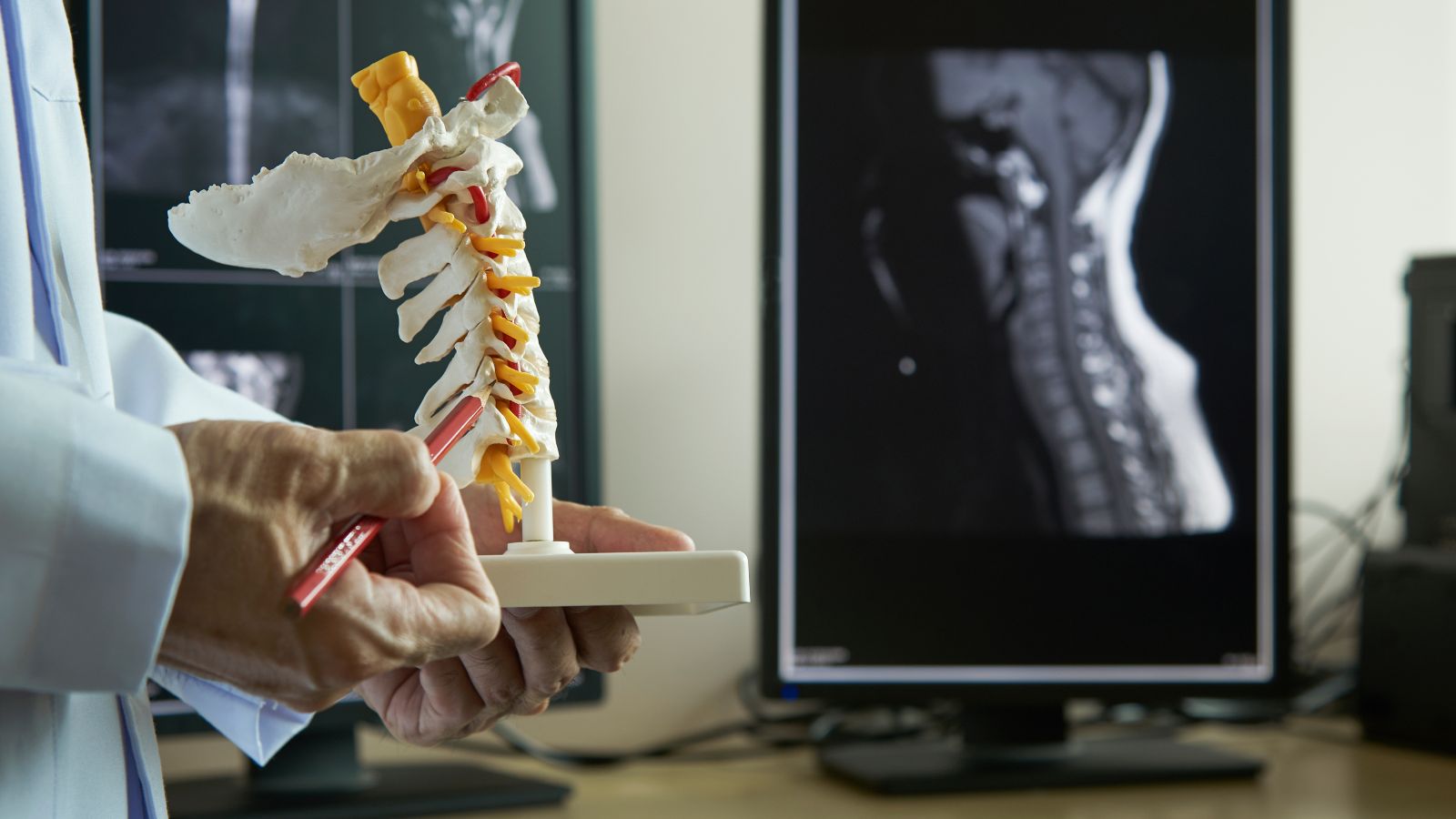

What Is Spinal Decompression?
Spinal decompression surgery relieves pressure on the spinal cord or nerves caused by conditions like a herniated disc, spinal stenosis, or bone spurs. During the procedure, your surgeon removes or repositions tissue to open up space and reduce nerve compression.
Types of Spinal Decompression Surgery Include:
- Laminectomy: Removal of part of the vertebral bone (lamina) to relieve pressure.
- Discectomy: Removal of a damaged disc pressing on nerves.
- Foraminotomy: Widening the openings (foramina) where nerves exit the spine.
This procedure is often recommended when leg or arm pain is more severe than back or neck pain—especially when symptoms don’t improve with nonsurgical treatments.
What Is Spinal Fusion?
Spinal fusion is a procedure that permanently connects two or more vertebrae to eliminate motion between them. It’s typically used to treat spinal instability, fractures, or degenerative conditions like spondylolisthesis.
During surgery, bone grafts (natural or synthetic) are placed between the vertebrae, and hardware such as screws or rods may be used to hold the spine in place while the bones heal and fuse.
| Spinal Decompression | Spinal Fusion | |
|---|---|---|
| Goal | Relieve nerve pressure | Stabilize the spine |
| Estimated Recovery Time | Typically shorter | May take several months |
| Mobility | Preserved | Reduced at fused segment |
| Ideal For | Pinched nerves, herniated discs | Instability, fractures, severe arthritis |
It's time to get back
to doing what you love.
Which Option Is Right for You?
The right treatment depends on your diagnosis, symptoms, overall health, and lifestyle goals.
- Spinal decompression may be ideal if nerve compression is the main source of pain and your spine is stable.
- Spinal fusion may be recommended if your spine is unstable or if decompression alone would leave the spine structurally weak.
Often, these procedures are combined—decompression first, followed by fusion if instability is present.
Talk to a Spine Specialist
At NSONJ, our spine specialists tailor every treatment plan to the individual. Whether you’re exploring minimally invasive options or weighing surgery for the first time, we help you understand your choices—and what to expect every step of the way.
Ready to learn more? Schedule a consultation with our team today by calling
551-284-3265 and take the next step toward lasting relief.
FAQs
What Are the Risks Associated With Each Procedure?
Both procedures carry some risks, as with any surgery, but serious complications are rare. These may include infection, bleeding, blood clots, or nerve irritation. In spinal fusion, there’s also a small chance the bones may not fully fuse (called nonunion), though this is uncommon and can often be managed with follow-up care. At NSONJ, we take every measure to reduce these risks and support your recovery.
Will I Need Physical Therapy After Either Procedure?
Yes, physical therapy is typically recommended after both decompression and fusion to help rebuild strength and mobility. Physical therapy is especially important after a spinal fusion procedure to rebuild flexibility. Always follow your surgeon’s recommendations regarding physical therapy.
How Do I Know Which Procedure Is Right for My Condition?
Schedule a consultation with Neurosurgeons of New Jersey to go over your treatment options and learn more about the extent of your condition. Our experienced surgeons will use diagnostics and imaging studies to identify the best procedure based on your symptoms, overall health, and spinal stability.
What Is the Success Rate for Each Procedure?
Success rates are high for both procedures when properly matched to the patient’s condition. Factors that influence success include age, health, the condition of the spine, and how well the patient adheres to post-surgical treatment. Completing all physical therapy and other post-surgical follow-up care is critical to achieving a positive outcome.
Dr. Anthony Conte, MD
Dr. David Estin, MD, FACS
Dr. Christopher Gillis, MD, FRCSC, FAANS
Dr. Jonathan H. Lustgarten, MD
Dr. Ty J. Olson, MD, FACS

About Eatontown
Our team of board certified physicians, located in Eatontown, New Jersey, are dedicated to bringing you the latest developments and treatment options for spinal surgery. We strive to produce the most clarified & clear content to help you make informed decisions on your medical journey. The road to feeling like your true self should not feel lonely- Let us help you. Please call us to schedule a consultation and speak to one of our team members.