
If you saw the words lumbar spondylosis or lumbar stenosis on your MRI report and felt confused, you are not alone. Doctors use these terms together so often that many patients assume they mean the same thing. They do not.
Spondylosis refers to the normal wear and tear that builds up in your lower back as you age. Stenosis refers to the narrowing that can develop when that wear starts to crowd your spinal nerves. Although spondylosis can lead to stenosis, many people live with spondylosis and never develop stenosis or feel any symptoms at all.
Understanding the difference helps you make sense of your diagnosis and know what to ask your doctor.
Spondylosis vs. Stenosis: What Is the Difference?
When comparing lumbar stenosis vs spondylosis, the easiest way to understand the difference is to think about cause and effect.
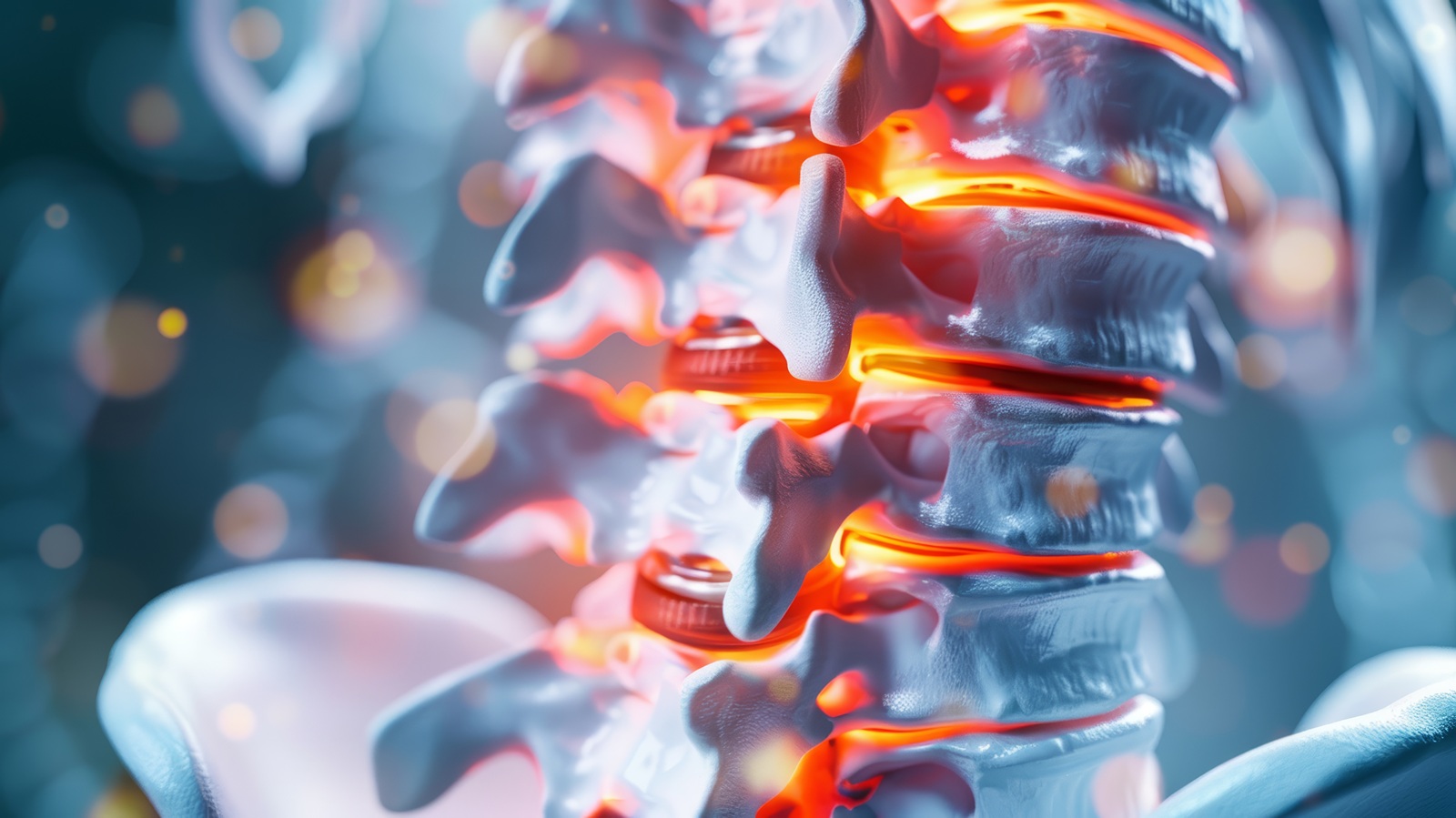
Lumbar spondylosis refers to age-related degeneration within the lower back. Over time, discs lose water content, joints develop arthritis, and bone spurs may form. These changes are common and often occur gradually over many years.
Lumbar stenosis refers to the narrowing around the spinal nerves that may or may not occur to a significant degree as a result of these age-related changes. This narrowing can reduce the space available for nerve roots and lead to symptoms such as leg pain, numbness, tingling, weakness, or difficulty walking.
A simple way to remember the distinction is:
- Spondylosis = degeneration
- Stenosis = narrowing
In many cases, lumbar stenosis develops because of long-term degenerative changes caused by spondylosis. As discs lose height, joints enlarge, ligaments thicken, and bone spurs develop, the available space around spinal nerves may gradually decrease.
However, not everyone with spondylosis develops stenosis. Many people have age-related degeneration visible on MRI without significant nerve compression or symptoms. Understanding this relationship helps explain why MRI reports often mention both conditions together while still treating them as separate diagnoses.
It's time to get back
to doing what you love.
What Is Lumbar Spondylosis?
Your lower back carries much of your body weight every day. It helps you stand, walk, bend, and lift, and over time all of that work causes changes in the spine. A doctor reading your MRI may note worn or flattened discs, bone spurs, arthritic joints, or thickened spinal ligaments.
These findings do not always mean something is seriously wrong. Many people have significant wear and tear on their MRI and still live active, pain-free lives. That is why your doctor looks at your symptoms and how you feel day to day, not just what shows up on imaging.
What Is Lumbar Spinal Stenosis?
Lumbar spinal stenosis happens when the spaces inside your spine get too narrow and press on your nerves. When bone spurs grow in, discs push in, or the walls of the spinal canal thicken, the space gets smaller and the nerves inside start to feel the squeeze.
That pressure sends symptoms into your legs, not just your back. You might feel leg pain that comes on when you stand or walk, numbness or tingling in your legs and feet, weakness or a heavy feeling in your legs, or trouble walking more than a short distance.
One of the biggest clues is timing. Symptoms tend to get worse the longer you stay on your feet and ease up when you sit down or lean forward. Doctors call this pattern neurogenic claudication.
If your legs ache, feel heavy, or go numb after walking and settle down when you rest, bring it up with your doctor. It is one of the clearest signs of lumbar stenosis.
Lumbar Spondylosis vs. Stenosis: Quick Comparison
How Do Doctors Diagnose These Conditions?
Your doctor will not rely on your MRI alone to figure out what is going on. They will ask how far you can walk before your legs bother you, whether sitting or leaning forward brings relief, and they will do a physical exam to check your strength, balance, and reflexes. Putting your imaging together with your symptoms and exam results gives a much clearer picture of what steps to take next.
What Treatment Options Are Available?
Treatment depends on how much your symptoms affect your daily life. Many people do well without surgery. Physical therapy can help build strength and improve how you move. Activity changes reduce flare-ups. Medications help manage pain or nerve symptoms, and steroid injections can lower swelling around the nerves and ease discomfort. None of these can “cure” the disease however.
When those options do not help enough or symptoms keep getting worse, your doctor may talk to you about surgery. Surgery creates more space in the spinal canal to take pressure off the nerves.
When Should You See a Spine Specialist?
Do not assume leg pain, numbness, or weakness is just part of getting older. Nerve pressure is not something to ignore. If your symptoms make it hard to walk, work, or get through your day, schedule an evaluation. The spine specialists at Neurosurgeons of New Jersey will review your imaging, hear your concerns, and build a treatment plan around your needs. Contact us today!
Frequently Asked Questions
Is lumbar spondylosis the same as lumbar stenosis?
No. Spondylosis means wear and tear. Stenosis means narrowing around the spinal nerves. One can lead to the other, but they are not the same condition.
Can you have spondylosis without stenosis?
Yes. Many people show wear and tear on their MRI but never develop nerve compression or any symptoms.
What is neurogenic claudication?
It is leg pain, heaviness, or numbness that builds up while you stand or walk and goes away when you sit down or lean forward. It is one of the main signs of lumbar spinal stenosis.

About Dr. Alfred T. Ogden
Dr. Alfred T. Ogden is an accomplished neurosurgeon in North Jersey and is a proud member of Neurosurgeons of New Jersey, practicing out of their Ridgewood office conveniently located on East Ridgewood Avenue. Dr. Ogden is internationally recognized as a leader in minimally invasive spine surgery.